
AI Applications for Digital Asset Operations: How BMS DAM Unifies Multicloud Files, Editing, and Global Distribution
For teams working with digital assets, the difficulty is rarely file volume alone. It is locating the correct file, updating it quickly, and distributing it across regions. In the AIApplications view, BMS DAM is useful because it shows how artificial intelligence can be embedded in day-to-day content operations: centralized access, browser-based edits, synchronized versions, global delivery, and AI-assisted tagging and retrieval. Instead of keeping assets passively stored, a DAM platform can turn them into a workflow that is faster, more consistent, and more responsive to business needs.
Where digital asset workflows break down
As digital operations continue to expand, enterprises generate and call many assets every day. Product manuals, installation guides, promotional videos, and campaign posters have become important carriers for external brand communication and market development. When business scale grows, materials often end up scattered across different clouds, departments, and regions. Marketing may not find the latest manual, e-commerce teams may still use an outdated product image, and design, legal, and sales exchange files repeatedly. This creates version mismatch and collaboration inefficiency, which slows product promotion and weakens brand consistency.
From isolated storage to one operating platform
Longfu Information Technology (Shanghai) Co., Ltd. introduced Digital Asset Manager (DAM) within its Longfu Marketing Suite—Bravo Marketing Suite (BMS). As part of the BMS Digital Experience Platform, BMS DAM supports an efficient, unified, and intelligent digital asset platform. Its value is not limited to solving a storage problem; it covers storage, editing, distribution, intelligent processing, and cross-region collaboration so assets can move from passive storage to active operational use.
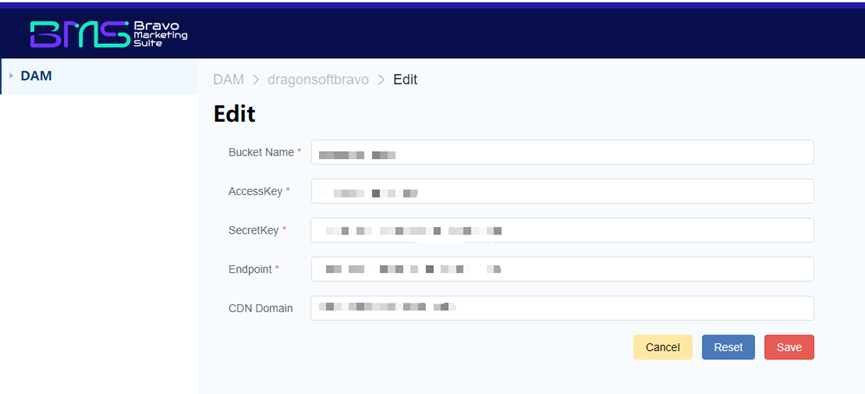
For multi-cloud environments, BMS DAM can bring materials stored on Alibaba Cloud, Tencent Cloud, AWS, and Azure into one interface. Marketing staff no longer need to log into multiple cloud drives to locate one manual. They can access and manage all resources centrally, reducing duplicate operations and resource waste.
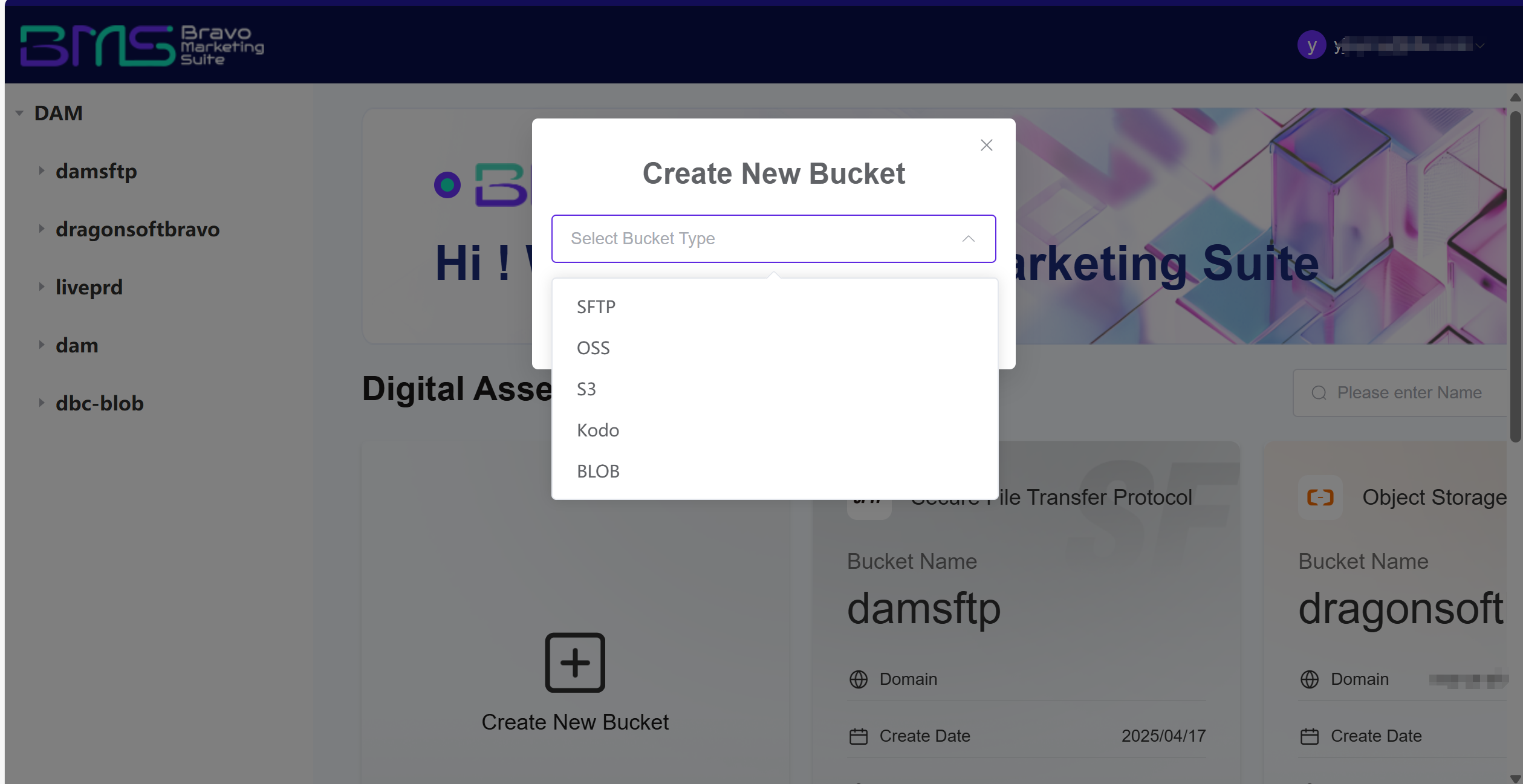
Application workflow: how to use DAM in daily operations
- Map the current asset landscape: identify which files sit in different clouds, departments, and regions.
- Consolidate access by bringing Alibaba Cloud, Tencent Cloud, AWS, and Azure materials into the BMS DAM interface.
- Use AI-assisted organization: let the system identify images and videos and apply precise tags for faster classification.
- Perform lightweight edits in the browser instead of depending on Photoshop for cropping, resizing, watermarking, and quick text or ratio changes.
- Publish updates so referenced pages show the latest version automatically, while old files remain archived and rollback-ready.
- Distribute final content through built-in CDN networks to support North America, Europe, and Southeast Asia access.
- Extend the workflow with AI recommendations, derivative generation, and future multimodal search using a reference image or video.
Lightweight editing and version synchronization
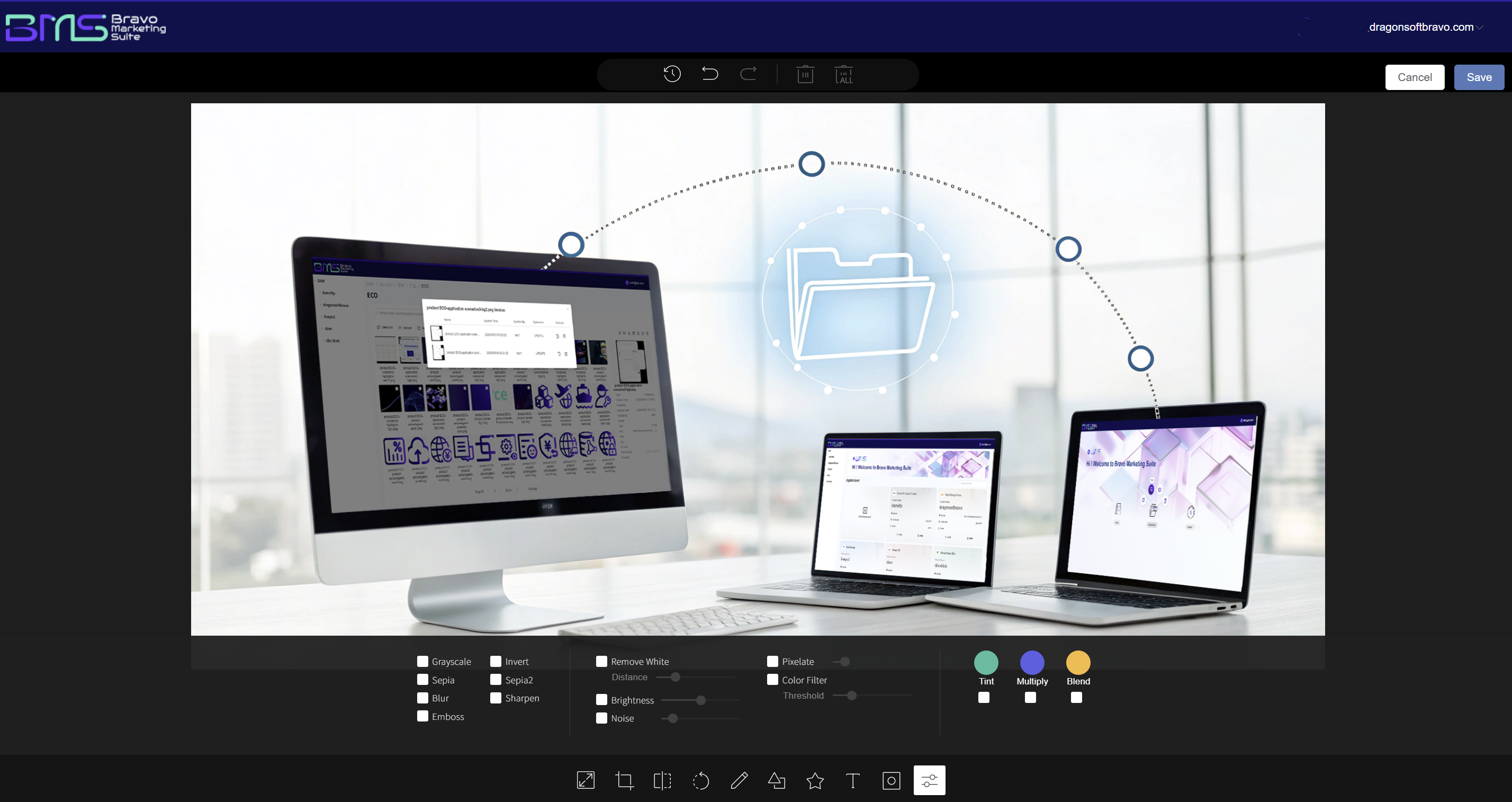
In content creation and release, BMS DAM makes editing lighter. Users can complete cropping, resizing, and watermarking in a browser without relying on professional software such as Photoshop. During a temporary promotion, a marketer can adjust poster copy and proportions in a few minutes and quickly create versions for the official website, e-commerce platforms, and social media. This reduces the risk of missing an opportunity while waiting for design rework.
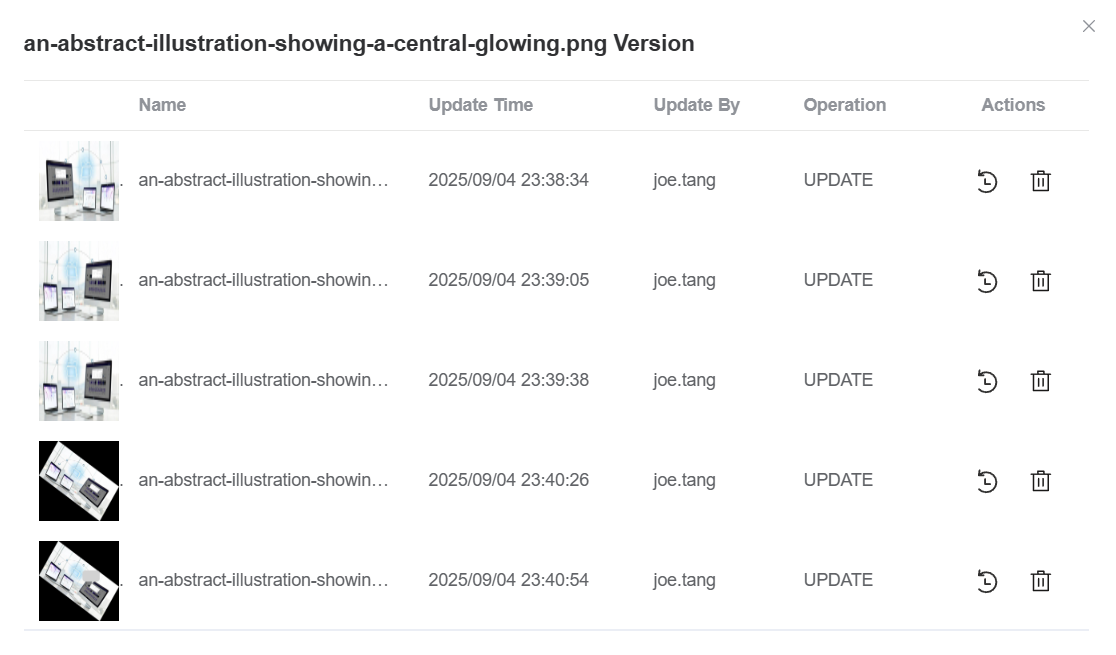
Version management strengthens the same workflow through the rule one update, synchronized across all channels. When a material is modified in BMS DAM, every page that references it automatically shows the newest version. Old files are automatically archived and can be rolled back. For a product manual update, the official site, e-commerce pages, and distributor channels can update at the same time, without manual replacement, saving time and preserving information consistency.
With these capabilities, marketing personnel can produce publishable assets immediately inside the DAM platform. From online advertising to a global website, from e-commerce campaigns to offline promotion, one image can generate multiple versions in a few minutes. This saves time and keeps brand image consistent.
Global delivery and cross-region access
For global operations, access speed matters as much as organization. BMS DAM includes multiple CDN networks for fast distribution and loading around the world. Whether users are in North America, Europe, or Southeast Asia, images and videos on the corporate site or e-commerce platform can load quickly, giving overseas customers a smoother experience.
AI applications inside the asset workflow
AI becomes practical when it enters asset handling. BMS DAM can automatically identify image and video content and apply accurate tags, helping teams organize materials faster. It supports intelligent image recognition, automatic cropping, and generation, so a marketing team can obtain needed versions quickly across scenarios. With multimodal search, users may look for assets not only by keyword but also by uploading a reference image or video; the system can match similar materials and improve lookup efficiency. AI can also recommend related content based on existing assets and usage scenarios, or generate derivative versions such as e-commerce images with watermarks or replaced backgrounds, helping teams create more marketing materials in a short time.
Business scenarios where the application path changes operations
| Scenario | How the asset workflow is used | Operational value |
|---|---|---|
| New product launch | Store product materials centrally and distribute them quickly to global teams. | Reduces duplicate work and supports faster launch coordination. |
| Global marketing | Local teams make localization edits directly in DAM, then use CDN acceleration to publish. | Removes the need to send materials back to designers and speeds campaign response. |
| Multi-channel operations | Generate multiple channel-adapted versions from one approved asset. | Maintains brand image consistency across website, e-commerce, social, and offline use. |
| Cross-team collaboration | Design, marketing, sales, and legal view and use the latest files in one platform. | AI tagging and recommendations make collaboration more transparent and efficient. |
Operating value by team
- Operations teams: centralized asset management reduces ineffective searching and transmission.
- Marketing teams: fast online editing improves response speed for campaigns.
- Global businesses: CDN acceleration supports consistent cross-region access experiences.
- The wider enterprise: AI makes asset management smarter, versions more controllable, and collaboration more efficient.
Common misconceptions before adopting DAM
- DAM is only a cloud drive. A cloud drive mainly solves the storage problem, while BMS DAM adds editing, version management, global acceleration, and AI intelligence for enterprise content operations.
- Only professional designers can use DAM. Browser-based editing lets marketing and operations personnel complete cropping, resizing, watermarking, and text changes, lowering the usage threshold.
- Cross-region access will be slow. BMS DAM connects to multiple CDN networks and supports global acceleration, helping users in North America, Europe, and Southeast Asia access materials quickly.
- AI features only generate visuals. The described AI capabilities include smart tagging and classification, image recognition and cropping, content generation, multimodal search, and recommendations of related or derivative materials, improving reuse and production efficiency.
- DAM only fits large companies. Industrial manufacturing, automotive equipment, cross-border e-commerce, and digital marketing teams can benefit when they have multi-channel, multi-region, and multi-team content management needs.
Action recommendations for evaluation
- Audit where assets are scattered before choosing a platform or workflow.
- Verify that Alibaba Cloud, Tencent Cloud, AWS, and Azure files can be managed from one interface.
- Test the browser editing path with real campaign needs such as crop, resize, watermark, and channel adaptation.
- Confirm version behavior matches one update, synchronized across all channels, with archive and rollback available.
- Check loading experience in North America, Europe, and Southeast Asia under CDN distribution.
- Start with AI tagging, then move to recognition, cropping, generation, multimodal search, and derivative content.
- Define roles for marketing, e-commerce, design, legal, and sales so everyone works from the latest files.
Summary: moving from passive storage to active growth
Digital assets are becoming strategic resources for enterprises. As business territory expands, centralized material management, cross-region accelerated delivery, and intelligent operations directly affect brand consistency and market response speed. BMS DAM shows how multi-cloud unified storage, lightweight editing, real-time version management, global CDN acceleration, and AI empowerment can improve both efficiency and quality across digital operations. It addresses scattered materials, slow updates, and inefficient collaboration, while helping digital assets move from a state of being passively stored to a role of actively driving growth.