
AIdataNewsGlobal AI Applications: Using Meta’s Style Sketch as a Practical Outfit-Planning Tool
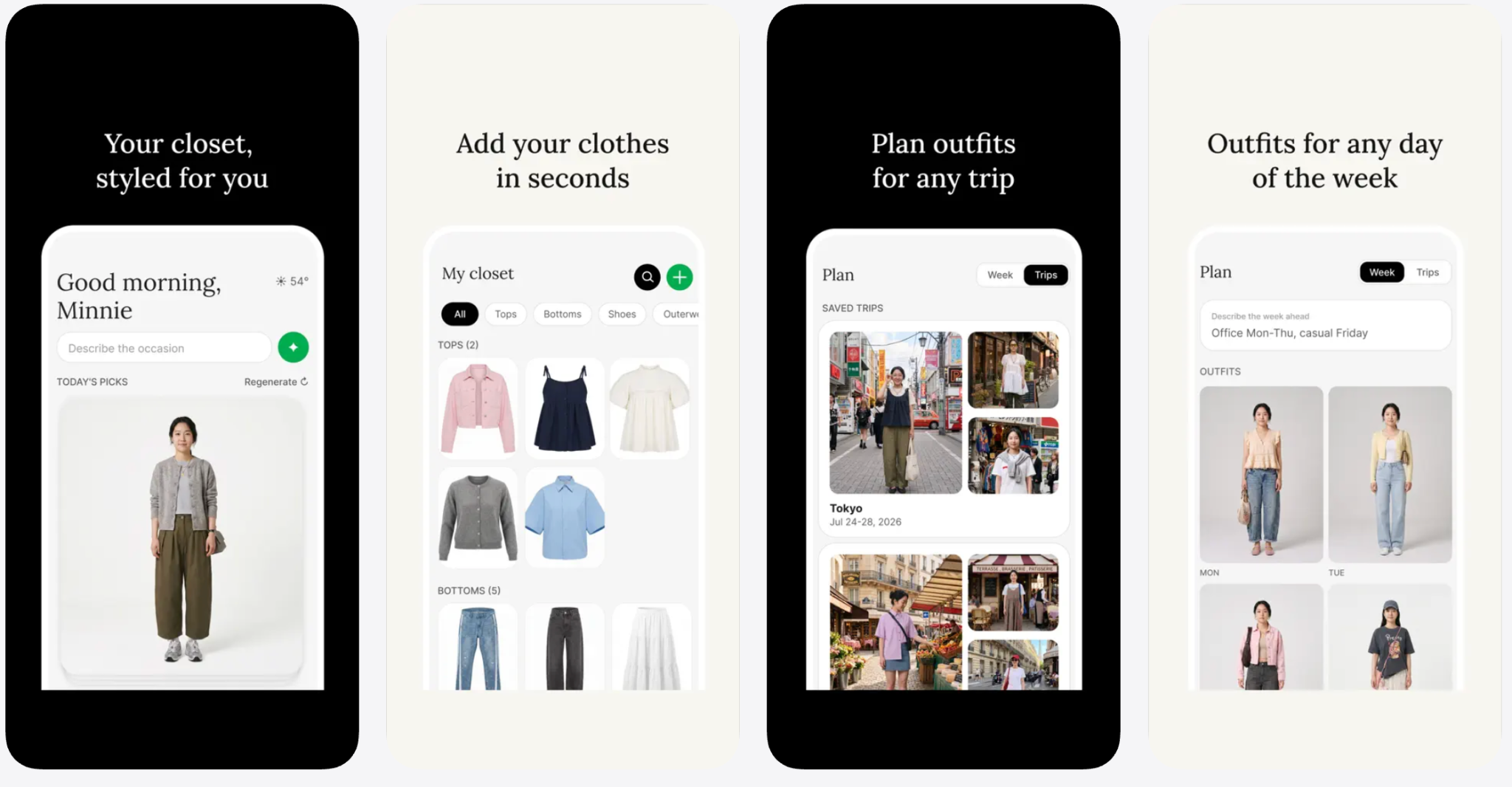
Consumer AI tools become easier to assess when they turn existing personal data into a repeatable decision. Meta’s Style Sketch follows this pattern: it builds a virtual wardrobe from photos already shared on Facebook or Instagram, then uses that wardrobe for outfit suggestions, weather-aware daily choices, travel packing, and sharing selected looks with friends.
Why Existing Photos Matter More Than a New Catalog
For users, the practical value lies in reducing manual setup. The app can connect to Facebook or Instagram and assemble a wardrobe from previously shared pictures. It also supports more controlled sources: photographing single items, recording short videos, or importing relevant images from the phone album. This matters because a wardrobe app is only as useful as the inventory it can see, and this input design lets users begin with what they have already produced.
Input-to-Output Map
- Wardrobe source: linked Facebook or Instagram photo history, single-item photos, short videos, and phone album imports.
- Personal context: style preferences, body shape, weather conditions, destination, trip length, and planned activities.
- Generated outputs: outfit recommendations, new combinations around a selected garment, daily clothing suggestions, day-by-day travel outfits, a packing plan, trend inspiration, and shareable outfit results.
- Visual review: outfits can be shown on a virtual model matched to the user’s body type and skin tone.
- Availability: free download on iOS and Android in Indonesia, Singapore, and Thailand; Meta has not announced other regions.
Step Tutorial: A Practical Trial Run
- Open Style Sketch on an iOS or Android device available in one of the announced markets: Indonesia, Singapore, or Thailand.
- Connect either Facebook or Instagram so the app can use photos already shared there as wardrobe material.
- Add items that are not represented by social photos, using item-by-item photos, short videos, or imports from the phone album.
- Check whether the assembled wardrobe contains the garments the user expects to wear; incomplete or outdated photos can weaken later suggestions.
- Ask for outfit options based on the current wardrobe, personal style, and body shape, or choose a specific garment and request new combinations around it.
- For everyday decisions, request suggestions that account for weather and review the rendered look on the virtual model.
- For a trip, enter destination, trip length, and planned activities, then inspect the day-by-day outfit plan and packing list.
- Use trend inspiration only when it helps clarify preferences, and share a finished look with friends if the user wants social feedback.
Use Cases and Value Judgement
| Scenario | What the user supplies | What the app returns | What to judge |
|---|---|---|---|
| Daily dressing | Wardrobe, style, body shape, weather | Outfit suggestion rendered on virtual model | Whether the suggestion uses owned clothes and suits the day’s conditions |
| Reusing an item | One chosen garment | New outfit combinations around that item | Whether it reveals combinations that might otherwise remain unused |
| Trip preparation | Destination, trip length, planned activities | Day-by-day outfits and packing plan | Whether the plan stays practical across activities and days |
| Social feedback | A generated outfit | Option to share the look with friends | Whether sharing makes outfit decisions easier to discuss with friends |
Common Mistakes
- Assuming linked social posts equal a complete wardrobe; recent purchases, retired clothes, or private items may be missing unless manually added.
- Ignoring the privacy disclosure. The app store information says Style Sketch may process personal information and user content such as photos and videos.
- Skipping context inputs. Weather, destination, trip length, and planned activities are what make daily and travel suggestions more concrete.
- Expecting global availability too soon. The stated launch markets are Indonesia, Singapore, and Thailand, with no announced other-region timeline.
- Confusing visual output with full suitability; a look on a matched virtual model helps judgment, but final choices still depend on user preference and practical comfort.
Action Advice
- Begin with one bounded task: a single weather-based outfit, one existing garment to reuse, or one short trip. This gives a clearer test than open-ended browsing.
- Review account permissions before linking Facebook or Instagram, and decide whether photo history is appropriate to use as app input.
- Import representative items manually if social photos are sparse, repetitive, or no longer reflect the wardrobe you actually use.
- Check Google Play’s stated controls, including encryption during transmission and the option to request deletion, but read the full privacy disclosure before proceeding.
- Limit expectations to the announced markets and platform availability: iOS and Android in Indonesia, Singapore, and Thailand.
As an AI application, Style Sketch is best understood as a workflow wrapper around personal photo data: it does not ask users to start a wardrobe inventory from zero, then turns that inventory into choices shaped by style, body shape, weather, and travel plans. For people who already have relevant photos on Facebook or Instagram, the practical question is whether those photos are representative enough and whether the generated outfits fit the tasks they need to solve.