
AIdataNewsGlobal AI Applications: Starbucks' Drive-Thru Personalization and Order-Handling Guide
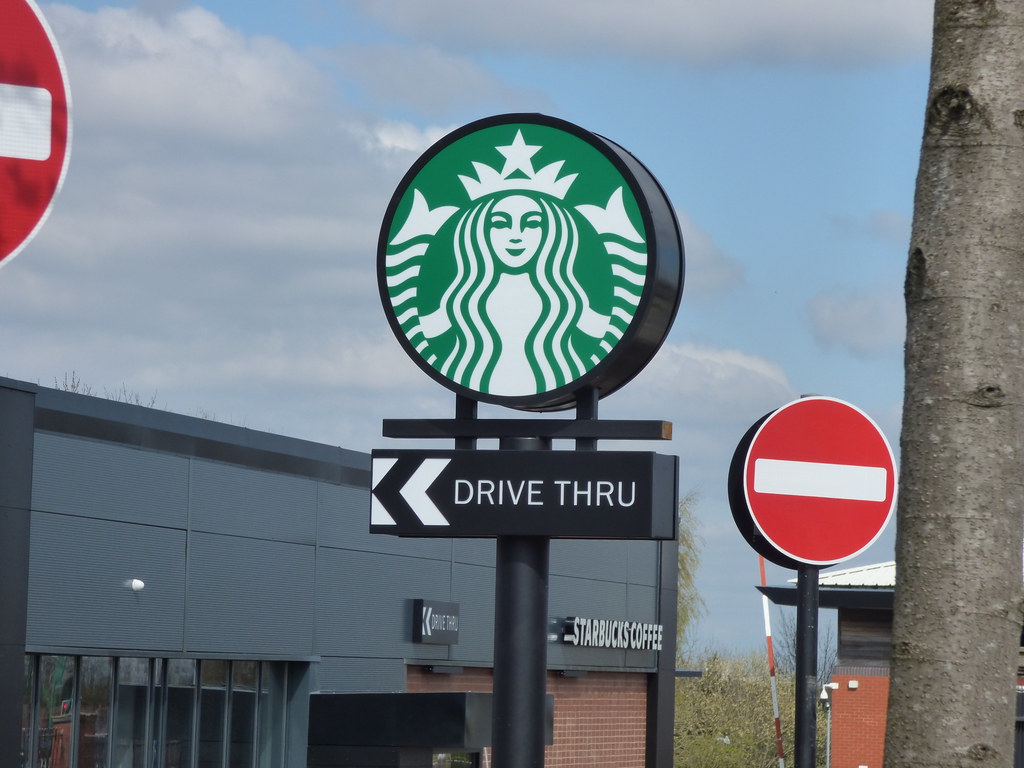
For teams that have watched retail AI announcements move from concept to store operations, Starbucks presents a useful application case because it does not aim to remove the employee from the ordering conversation. The company's planned drive-thru intelligence combines two smaller changes: show a member a menu shaped by their previous habits, and help the barista or support staff capture what the customer says. The timing, scope and technology partner have not been disclosed, but the direction is clear: AI is being positioned as a workflow layer around a physical service counter.
According to the company's management, Starbucks is studying a more intelligent drive-thru approach in which enrolled members can be identified when they arrive. The digital menu could then be shaped by purchase history, personal preferences and frequently ordered drinks. The company expects the ordering and payment flow to become less cumbersome for returning customers. At the same time, the plan is not a full replacement for human order taking: AI models are expected to work behind the scenes to support staff while the customer still speaks with a real employee.
Why the Drive-Thru Is the First Place to Look
The drive-thru matters because it is a high-volume, high-pressure channel. The company states that about half of Starbucks customers use the drive-thru. In that setting, small operational improvements can have visible effects: fewer misheard customizations, shorter service times, smoother peak-hour queues and higher throughput per lane. This is why the pilot focuses less on a dramatic self-service robot and more on order accuracy and personalized prompts.
Starbucks Chief Executive Officer Brian Niccol describes the intent as giving employees more time for customer communication while improving order handling and store capacity. The company expects backend AI testing to begin in fiscal 2027, but it has not published the number of test stores, the AI vendor or the schedule for a wider rollout.
Application Map: Where AI Would Fit
| Workflow stage | Human role | AI or digital-system role | Business value | Main caution |
|---|---|---|---|---|
| Arrival and member recognition | Employee greets or observes the customer | Identify an enrolled member and prepare a tailored view | Faster recognition, more relevant menu | Need authorization and correct matching |
| Menu presentation | Customer selects or confirms an idea | Highlight drinks based on history, preference and common choices | Reduces scanning effort, supports personalization | Recommendations can overstate certainty |
| Order capture | Customer speaks to a barista or service employee | Assist with transcribing complex requests and reducing noise or accent errors | Lower correction rate and smoother production | Manual review remains necessary |
| Payment | Employee completes the interaction | Simplify payment after recognition and order entry | Shorter lane dwell time | Account security and consent |
| Queue and production | Staff prepare drinks | Smart Queue sorts orders from counter, drive-thru, mobile app and delivery | Reduces cross-channel interference | Sorting rules must match store reality |
| Delivery ordering inside the Starbucks app | Customer places order on the same platform | Integration is expected to start in the second fiscal quarter and should keep loyalty points earning or redemption visible | One app for multiple purchase paths | Consistent loyalty rules across channels |
| Discovery outside the store | Customer describes mood or context | The Starbucks ChatGPT app beta launched in April 2026 can suggest drinks and let users refine recipes, select a store and pay in the app or website | Turns vague preferences into an order | Poor prompts can create unrealistic expectations |
| Platform modernization | Employees use scheduling, point-of-sale and mobile tools | Broader upgrades planned for fiscal 2027 integrate orders, inventory and staff management | Better operations visibility | Dependency management across systems |
Step-by-Step: How an Operations Team Can Evaluate This Kind of Pilot
- Start with the channel, not the model. Identify the most repetitive, error-sensitive interaction—in this case, drive-thru ordering and queue handling—before deciding where AI can assist.
- Separate customer-facing change from back-office change. Starbucks keeps human conversation in the foreground and tests AI in the background for order entry, which is easier to explain and correct.
- Use only authorized data for personalization. The described system depends on member identity, historical purchases, preferences and common drinks. Teams should make the consent path explicit before showing tailored content.
- Design for correction. The system should allow an employee to confirm, edit or reject the suggested order, especially when the customer uses complex customizations.
- Connect to existing workflow layers. Starbucks has already introduced Smart Queue, which organizes orders from store counter, drive-thru, app and delivery channels. A new menu or payment pilot needs to preserve that sequencing logic.
- Look for adjacent consumer behavior. The April 2026 ChatGPT app beta shows customers may begin from mood, weather or style references rather than a product list. That can inform menu copy, but it should not be confused with a fully automated store ordering system.
- Pilot with narrow metrics. Management has not disclosed test locations or a vendor, so evaluation should focus on observable results such as order accuracy, time in lane, staff confidence and privacy incidents.
- Plan for integration, not one-off features. The larger modernization includes scheduling, point-of-sale, mobile application updates and delivery consolidation starting in the second fiscal quarter.
From Menu to Mood: What the ChatGPT Test Adds
Paul Riddle, the company's digital business leader, has framed the issue as a gap between how people think and how menus are organized. Customers may not start with a list of drinks; they may start with a feeling, a weather condition, a time of day or an outfit. In the ChatGPT beta launched in April 2026, users could ask in plain language for a less-sweet afternoon coffee or a drink matching current conditions and preferences. They could then refine a recipe, choose a store and complete payment through the Starbucks app or official website. For application teams, the lesson is that AI can translate vague demand into a structured order, but the store-side workflow still has to execute it.
Checklist Before Launching a Personalized Drive-Thru
- Enrollment clarity: Does every member know that recognition and personalization depend on opt-in data?
- Misidentification protocol: Can staff quickly correct a wrong profile without stopping the lane?
- Data minimization: Does the system use only history, preferences and commonly ordered drinks?
- Human override: Does the barista have the final decision on the entered order?
- Noise and accent resilience: Is the AI tested in real drive-thru sound conditions, not only clean audio?
- Loyalty continuity: Can customers understand how points are earned, redeemed or kept consistent across app and delivery?
- Vendor and scope transparency: If the plan is at pilot stage, has the company communicated which variables are still unknown?
- Capacity measurement: Are success metrics tied to throughput and error reduction, not only menu clicks?
Common Misreadings
- Misreading 1: Starbucks is replacing staff with AI. Management says technology investment is intended to reduce repetitive order-management time, so employees can spend more energy on drink preparation and customer service. AI is positioned as support.
- Misreading 2: This is the same as a voice-ordering kiosk. Starbucks is choosing a human-plus-machine path after the industry has seen other approaches. McDonald's and IBM tested an AI voice-ordering system but ended the pilot in 2024. The Starbucks plan keeps a person in the ordering conversation.
- Misreading 3: Personalization is automatic nationwide rollout. Backend AI models are expected to start testing in fiscal 2027. Test store count, AI vendor and full promotion schedule are not public.
- Misreading 4: Recommendation means privacy is solved. To identify members and use consumption history, Starbucks must handle identity, habit and account data. Consent, protection and wrong-profile handling are real deployment risks.
- Misreading 5: Only the drive-thru is changing. The plan is tied to broader digital work, including Smart Queue, the ChatGPT app beta, scheduling and POS modernization, and delivery consolidation starting in the second fiscal quarter.
Action Recommendations for AI Application Owners
For an AI product team, the Starbucks example suggests a practical sequence: first reduce friction in the staff workflow, then personalize the customer view, then connect all channels through one account and order system. A company with physical service locations should begin where the cost of errors is visible—order entry, queue sequencing, payment prompts and loyalty status—rather than where the technology sounds most impressive.
Another practical recommendation is to keep the AI's authority limited during early pilots. If the system can transcribe but not confirm, or recommend but not auto-send, the team can collect failure cases while preserving trust. Once error rates drop, teams can test tighter integration with member profiles, point-of-sale terminals, mobile apps and inventory systems.
Finally, teams should treat personalization as an operations problem, not only a recommendation-engine problem. The benefit of showing a familiar member a tailored menu is only as large as the store's ability to make the suggested drink, record the custom order, bill the right account and keep the lane moving. That is why Starbucks' modernization around scheduling, POS, mobile ordering and loyalty points matters: it gives the application layer somewhere reliable to land.
What This Means for the Next Generation of Service AI
The broader signal is that service AI may look less like a fully automated counter and more like a set of quiet helpers. A drive-thru could still be run by people, but the menu, order form, queue order and payment path may become dynamic, adjusting to known member context and real-time store load. Starbucks' drive-thru direction, along with its existing Smart Queue and consumer-facing recommendation tests, shows how an established brand may use AI to increase efficiency while protecting its human service identity.