
AIApplications: Three AI Agents Ran Tiger Brokers' Live OOH Campaign in Singapore — Workflow, Tradeoffs and the Human Approval Layer
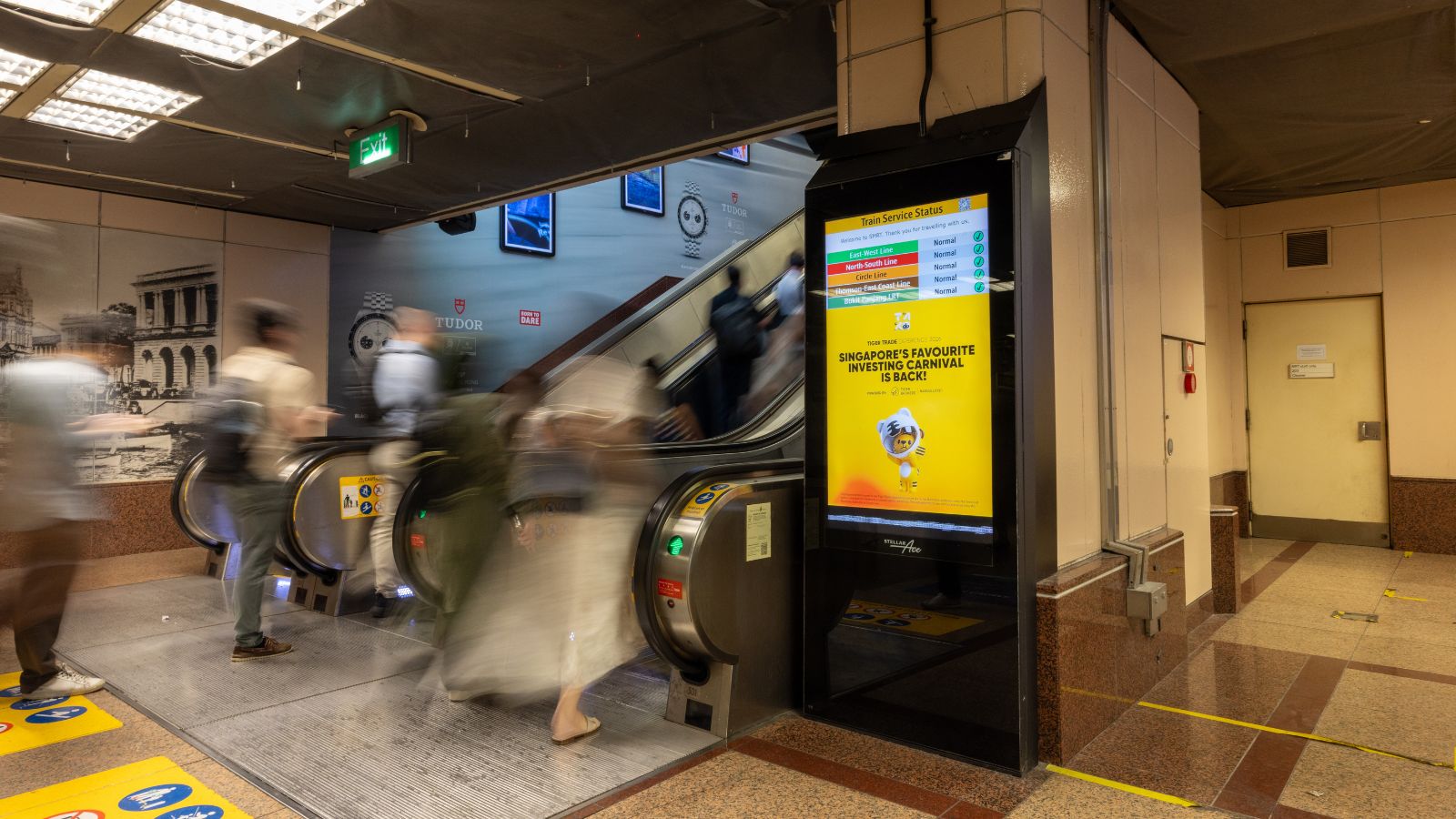
It ran as a real workflow, not a demo. Between 21 October and 3 November 2026, Tiger Brokers activated a commercial campaign across more than 260 digital screens in Singapore, with three AI agents covering media planning, sales assessment and creative production while human teams kept sign-off. The architecture is a clean three-way split — buyer agent, sales agent, creative agent — plus an approval gate before anything went live.
What an agentic OOH campaign actually is
Straight answer: it is a campaign in which AI agents interpret objectives, weigh the information available and coordinate tasks across the advertising process, rather than simply carrying out predefined instructions. The push was staged to promote Tiger Brokers' annual flagship event, "Tiger Trade Experience 2026". The Tiger Brokers pilot, run with Stellar Ace and advertising technology company Adzymic, is described by the partners as Asia's first live agentic out-of-home campaign.
The distinction matters for budget holders. Programmatic buying automates the transaction; agentic advertising automates the judgement around it — inventory discovery, evaluation of locations and formats, media planning and creative adaptation. The industry is still writing the plumbing. The IAB Tech Lab has published an Agentic Ad Management Protocol and a set of agentic advertising standards that let agents plan, negotiate and execute transactions with each other, and the IAB released its AI Transparency & Disclosure Framework V2 on 18 August 2026, which asks teams to confirm four things before a campaign goes live: whether AI was used, which tool was used, whether disclosure is needed, and whether any label is visible. For a pilot, that checklist is the line between an agentic workflow and an unaccountable one. (IAB Tech Lab agentic advertising standards; IAB AI Transparency & Disclosure Framework V2)
How the three-agent workflow ran
Campaign execution revolved around a workflow involving three AI agents, each handling a distinct part of the job.
| Agent | What it read | What it produced | Human checkpoint |
|---|---|---|---|
| Buyer agent | Stellar Ace's media inventory and Tiger Brokers' requirements | A media plan | Tiger Brokers reviewed and approved the plan before Stellar Ace accepted the media buy |
| Sales agent | The proposed media plan | An assessment on behalf of the media owner | Cut down manual coordination between buyer and owner |
| Creative agent | Tiger Brokers' brand guidelines and individual screen specifications | Format-specific advertising creatives | Creative checks and operational handling by both teams |
The buyer agent examined Stellar Ace's media inventory and put forward a media plan shaped by Tiger Brokers' requirements, while the sales agent evaluated that plan on behalf of the media owner, cutting down on the manual coordination otherwise needed between the two sides.
The creative agent, for its part, read Tiger Brokers' brand guidelines alongside individual screen specifications to generate advertising creatives suited to the different formats.
Where humans kept the final say
Tiger Brokers reviewed and approved the proposed media plan before Stellar Ace accepted the media buy, and both teams carried out creative checks and handled the operational requirements needed to take the campaign live.
According to the companies, the pilot was intended to show how agentic AI could be applied to a genuine commercial advertising campaign rather than a simulated setting, while leaving teams in control of commercial decisions, brand suitability and campaign delivery.
The governance context is catching up fast. A 2026 Liferay report found that 54% of companies are running AI agents in production or actively piloting them, which is exactly the point where a human approval gate stops being optional. The Tiger Brokers pilot kept that gate at the media-buy step — the same pattern we have seen in other AI-driven commerce workflows, where speed is only useful if someone can still say no. (human approval gate)
What the partners said
Ernest Teh, marketing director of Tiger Brokers Singapore, said the pilot showed the potential for AI to simplify media planning.
"At Tiger Brokers, we are always looking for innovative ways to engage our audiences more effectively. This agentic pilot has been an encouraging experience, demonstrating the potential for AI to streamline media planning and we see the potential for agentic AI to transform how brands plan and activate our advertising campaigns in the future," he said.
Tony Heng, president of Stellar Experience, said the pilot marked a step towards a more connected advertising ecosystem.
"Agentic advertising presents an opportunity to move towards a more connected advertising ecosystem. We are in an era of advertising where planning, buying, and delivery can be fundamentally transformed. Speed, agility and accountability will define how we deliver value," he said.
"This pilot, conducted for a real campaign with a real advertiser and actual OOH inventory is a huge step in Stellar Ace's move towards AI-enabled OOH advertising," Heng added.
Kenniess Wong, co-founder and executive director of Adzymic, said the collaboration builds on the company's efforts to develop agentic advertising infrastructure.
"Earlier this year, we started building agentic infrastructure for advertising. With Tiger Brokers and Stellar Ace, we put it to work on a live OOH campaign," Wong said.
"This is a first step towards what we set out to build: intelligent agents working together across the advertising value chain, so teams can spend their time on judgement rather than coordination," he added.
The offline playbook this campaign sits on
The campaign follows Tiger Brokers' efforts to reach retail investors through interactive experiences that carry investing beyond its trading platform. Last year, Tiger Brokers Singapore hosted its flagship "Tiger Trade Experience 2025: What's your secret sauce" event at Plaza Singapura, drawing more than 4,000 attendees over two days. Before the event, the brokerage firm launched an online quiz that sorted investors into different trading personalities, among them 'Salt', 'Wasabi' and 'Sambal Chilli', to drive engagement and attendance.
The activation turned Plaza Singapura's atrium into "Tastemakers corp", a finance-themed experiential space with interactive missions, trading tools and games. Visitors could explore the Tiger Innovation Lab, take part in giant Jenga and a human claw machine at Tiger PLAYce, and win limited-edition merchandise.
Common pitfalls when you try to copy this
- Treating the agent's media plan as final. The pilot still required Tiger Brokers' sign-off before Stellar Ace accepted the buy; skip that and you have automation without accountability.
- Skipping a proof-of-play baseline. DOOH measurement starts with records showing where and when an ad displayed; without that log, the agent's plan cannot be audited. Programmatic DOOH adds in-flight reporting and third-party outcome measurement on top of that baseline.
- Under-specifying screen formats. The creative agent had to read individual screen specifications; feed it only brand guidelines and the outputs will not fit the inventory.
- Ignoring disclosure. The IAB framework asks whether AI use needs to be disclosed and whether the label is visible — a step that is easy to lose when agents move fast.
- Buying more screens than the pilot needs. The value here came from 260 screens in one market, not from scale for its own sake.
Action steps: a rollout path for a first agentic pilot
- Define the objective in commercial terms first — what the campaign must achieve, not what the agent should do.
- Split the workflow into bounded agent roles, one per decision, with a named human owner for each.
- Wire the agents to real inputs: media inventory, brand guidelines and screen specifications.
- Put an approval gate at the money step, before the media buy is accepted.
- Instrument proof-of-play and in-flight reporting so the pilot can be evaluated, not just delivered.
- Run it as a live campaign with a real advertiser and actual inventory, then publish what failed.
FAQ
Did the AI agents buy the media themselves?
No. The buyer agent proposed a media plan and the sales agent assessed it, but Tiger Brokers reviewed and approved the plan before Stellar Ace accepted the media buy. The agents coordinated; humans committed the budget.
How many screens were involved?
More than 260 digital advertising screens in Singapore, running from 21 October to 3 November 2026.
What did the creative agent actually do?
It read Tiger Brokers' brand guidelines alongside individual screen specifications and generated advertising creatives suited to the different formats, with both teams carrying out creative checks afterwards.
Why does this matter outside advertising?
Because the pattern — bounded agents, real inputs, an approval gate at the money step, and an auditable log — transfers to any workflow where an agent can move budget or publish content without a human in the loop.
Decision checklist
| Question | If yes, proceed | If no, stop |
|---|---|---|
| Is there a named human owner for each agent role? | Assign one before build | Do not start |
| Can the agent read real inventory, guidelines and specs? | Wire the inputs | Do not start |
| Is there an approval gate before money moves? | Keep it | Add one |
| Can you log proof of play and report in flight? | Instrument first | Add it |
| Is the pilot live with a real advertiser and real inventory? | Run it | Simulate first |
参考来源
- IAB Tech Lab — Agentic Advertising and AI Initiatives
- IAB — AI Transparency & Disclosure Framework V2 (18 August 2026)
- Liferay — Companies Are Adopting AI Agents Faster Than They Can Govern Them (2026)
- AdRoll — DOOH Measurement: Metrics, Methods & Attribution (April 2026)
- ExchangeWire — Stellar Ace, Adzymic & Tiger Brokers Bring Asia's First Agentic OOH Campaign to Life in Singapore (12 November 2026)
- Marketing-Interactive — Tiger Brokers puts AI agents to work in OOH campaign (12 November 2026)