
Vibe Workflows in Practice: How 2025 AI Applications Move From Chat Prompt to Business Workflow
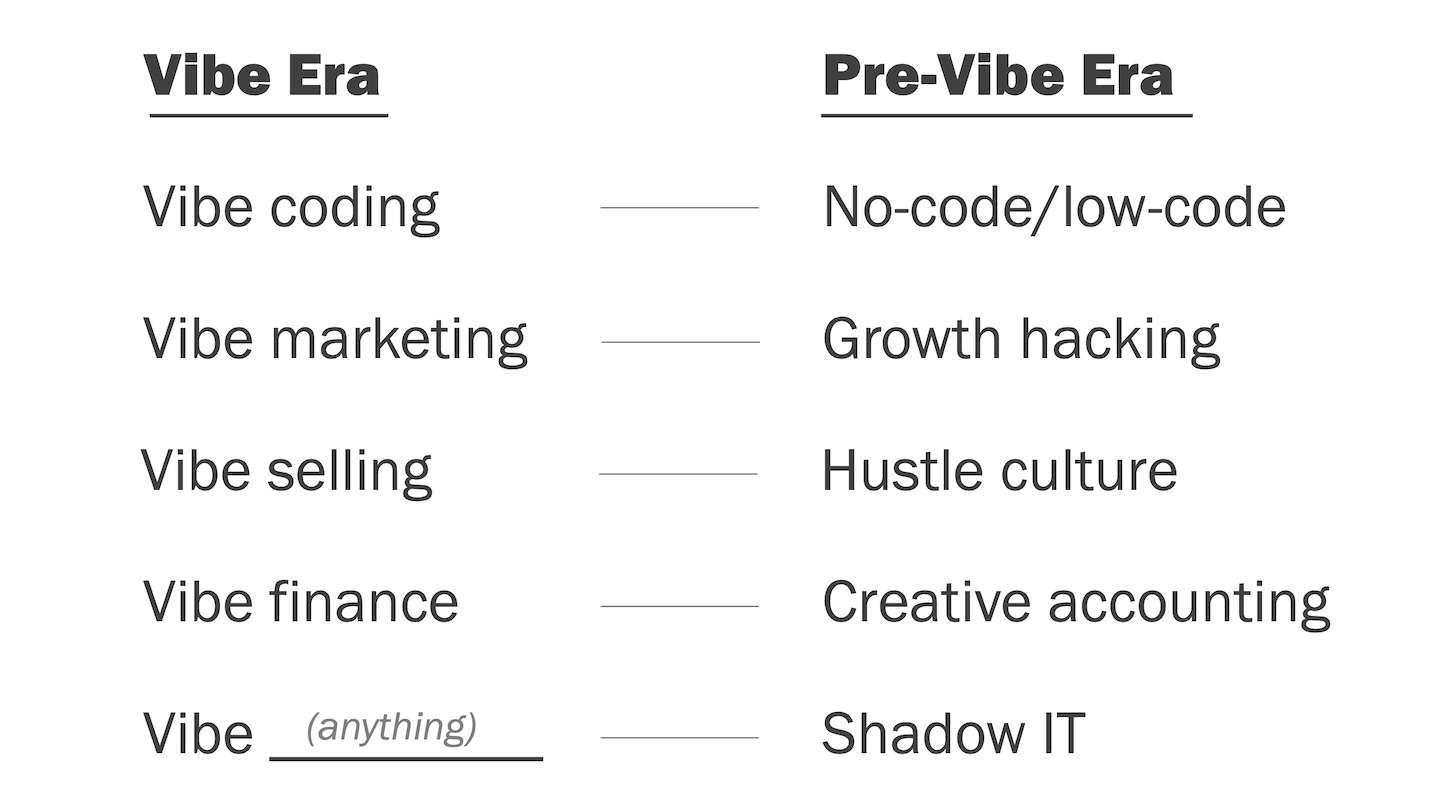
Short answer: Vibe, in the 2025 AI application sense, is a low-friction method for building and testing software, content, and campaign assets by conversing with AI tools, iterating quickly, and letting the audience decide what deserves production polish. It is not a license to skip governance; it is a faster experimental path for business users.
Some commentators joked that after 1967, the Summer of Love, 2025 had become a Summer of Vibes. The newest AI buzzword is Vibe, and it has even outpaced agentic, which is a high bar. Both words can be stretched to mean many things, but Vibe is especially useful when we ask a practical question: where should AI sit in a business workflow?
What is vibe coding, and why did the term spread?
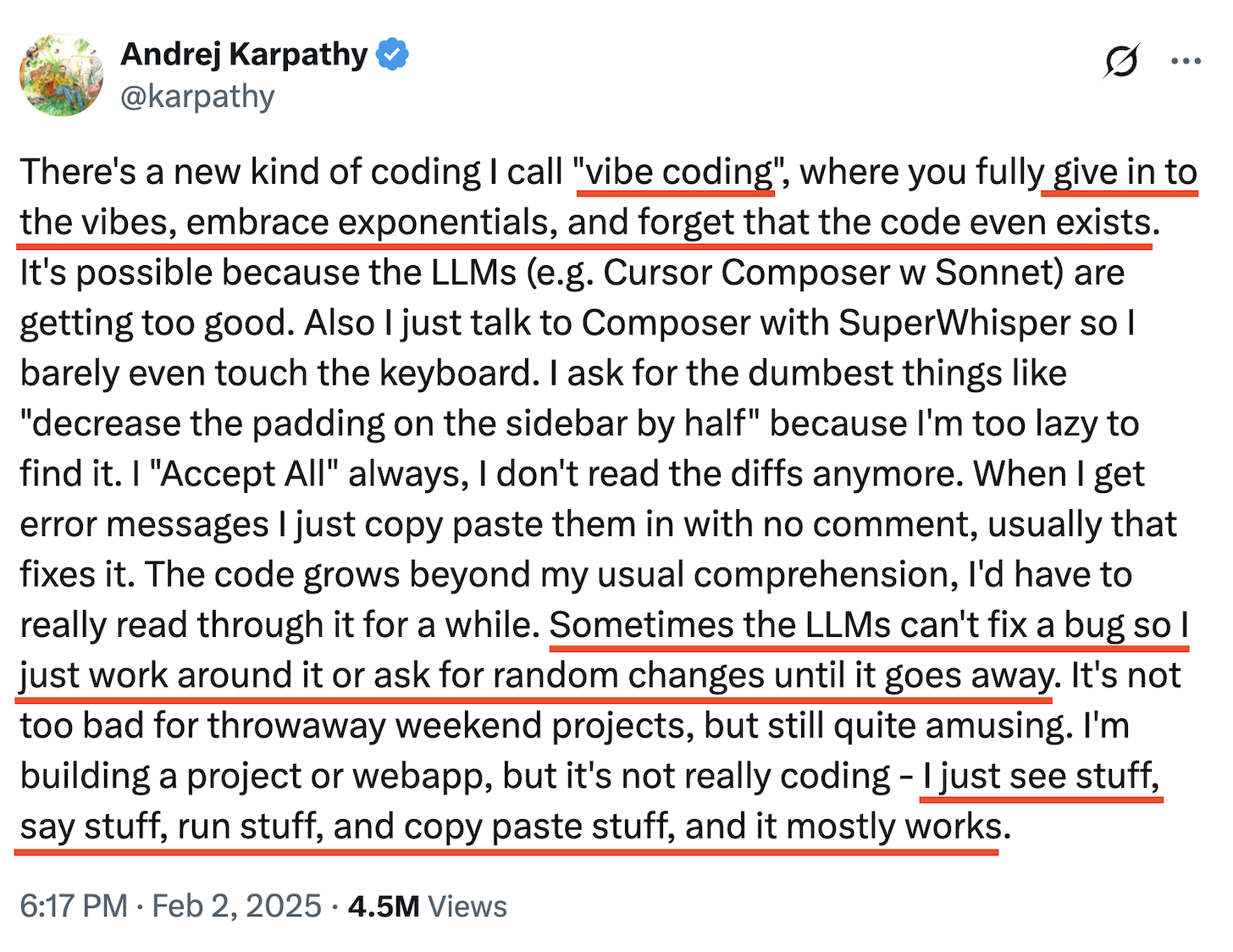
The phrase came from a post by Andrej Karpathy, one of OpenAI’s original co-founders. He used vibe coding to describe quickly making software by talking with an LLM-powered coding assistant.
I just see stuff, say stuff, run stuff, and copy paste stuff, and it mostly works.
To me, this is no-code/low-code development’s next generation, accelerated by AI. That is exciting, and it recalls the 60’s slogan Power to the people.
A timeline check helps explain the momentum. Karpathy’s original February 2, 2025, post on X made the phrase easy to quote and easy to argue with. By March 2025, Merriam-Webster had listed “vibe coding” in its slang-and-trending section, and Collins Dictionary later named it its Word of the Year 2025. Collins managing director Alex Beecroft said the choice “perfectly captures how language is evolving alongside technology,” as Euronews reported.
I am sure the it mostly works caveat will unsettle some people. No-code critics have long claimed that people who cannot code should not build their own apps. They would be horrified by a bug-fixing method that says just work around it or ask for random changes until it goes away.
Andrej, however, is a world-class computer scientist who certainly knows how to code. Yet he is advocating “give in to the vibes, embrace exponentials, and forget that the code even exists.”
As an aside, the word vibe sounds like a strange fusion of 1960’s counterculture and 2020’s techno-optimism. I am not implying recreational drugs are involved, and I would not be surprised to find Haribo gummies beside the keyboard.
How should non-engineers decide what to build with AI?
Over recent months, vibe coding has spread rapidly. Jason Lemkin of SaaStr recently joined the trend, spending 100+ hours vibe coding an app with Replit as a non-engineer, though the results were mixed. He shared the highs and lows along the way in a series of LinkedIn posts.
Afterwards, he wrote a strong post about which apps make sense for non-engineers to vibe code, from safe green light apps such as internal dashboards or personal workflows to here-be-dragons red light apps, such as trying to rebuild Salesforce from the ground up. (I am not sure even Salesforce would attempt to rebuild Salesforce from the ground up.)
I turned his examples into a visual continuum I call the Lemkin Scale of Vibe Coding, ranging from 1 viable vibing to 10 unviable vibing:
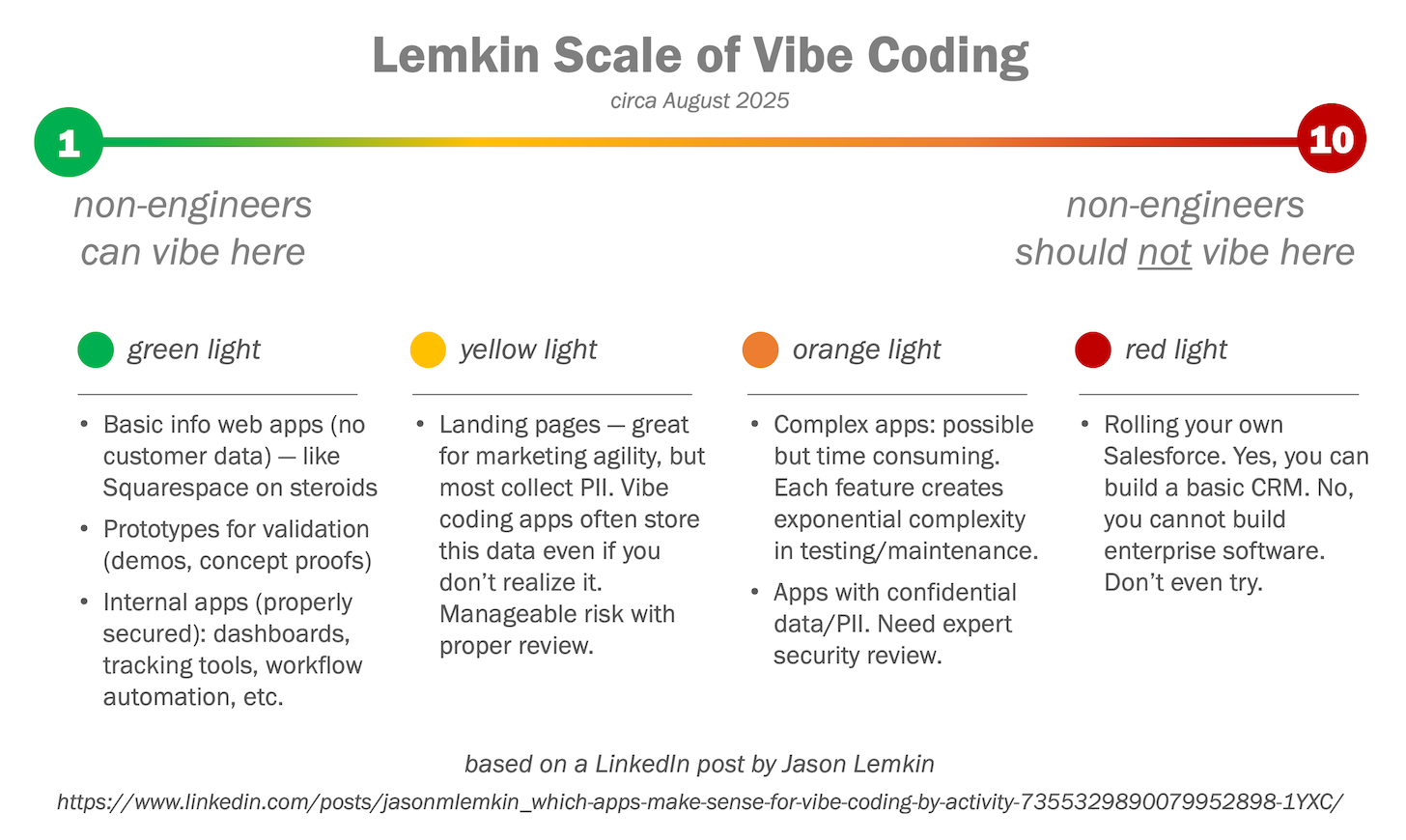
Do not read too much precision into this scale. It is only a loose way to approximate the challenge a non-engineer would face when trying to vibe code a particular app. It is comparable to a doctor asking how much pain you are feeling on a 1-10 scale. Depends, doc. Ask me again after I see how much my insurance actually covers.
Of course, the examples along this spectrum are only a snapshot of what is easy or hard today. As these AI tools continue improving at an impressive clip, more advanced app building can be expected to shift left toward the green side over time. A 7 today might be a 3 in a year from now.
| Business use case | Why it can work as a Vibe application | Main failure mode | Recommended route |
|---|---|---|---|
| Internal dashboard or personal workflow | Low blast radius; users can test, correct, and reuse quickly. | People treat a rough prototype as an official system of record. | Start with vibe coding, then add permissions and logging before rollout. |
| Landing page or campaign experiment | Fast creative iteration with small, reversible risk. | Volume replaces relevance; the team ships everything it can generate. | Use micro-campaign tests and compare against one hypothesis. |
| Customer-facing app | Can save design and development time when scope is narrow. | Broken states, privacy gaps, and inconsistent UX become public. | Keep AI in the prototype lane; bring engineering review before production. |
| Regulated or revenue-critical process | AI can help document, test, and simulate parts of the work. | Compliance and auditability are treated as optional. | Human approval, evidence trails, and controlled change management. |
Vibe Marketing: why did a developer phrase become a business workflow?
With vibe coding sweeping social media and attracting so much attention and affection — the startup that achieved the fastest growth to $100 million ARR, in just 8 months since November 2024, is a vibe coding platform literally called Lovable — marketers quickly jumped onto vibe marketing.
Greg Isenberg seems to have coined the phrase first.
What does it actually mean, and what should it mean?
Greg framed Vibe Marketing as a combination of vibe coding with AI agents and workflows that lets individual marketers accomplish things that once required a whole team of specialists. They can move faster, ship more ideas at a fraction of the cost, and easily build or customize tools and systems tailored to their specific needs. They become übermarketers — not because they work at Uber.
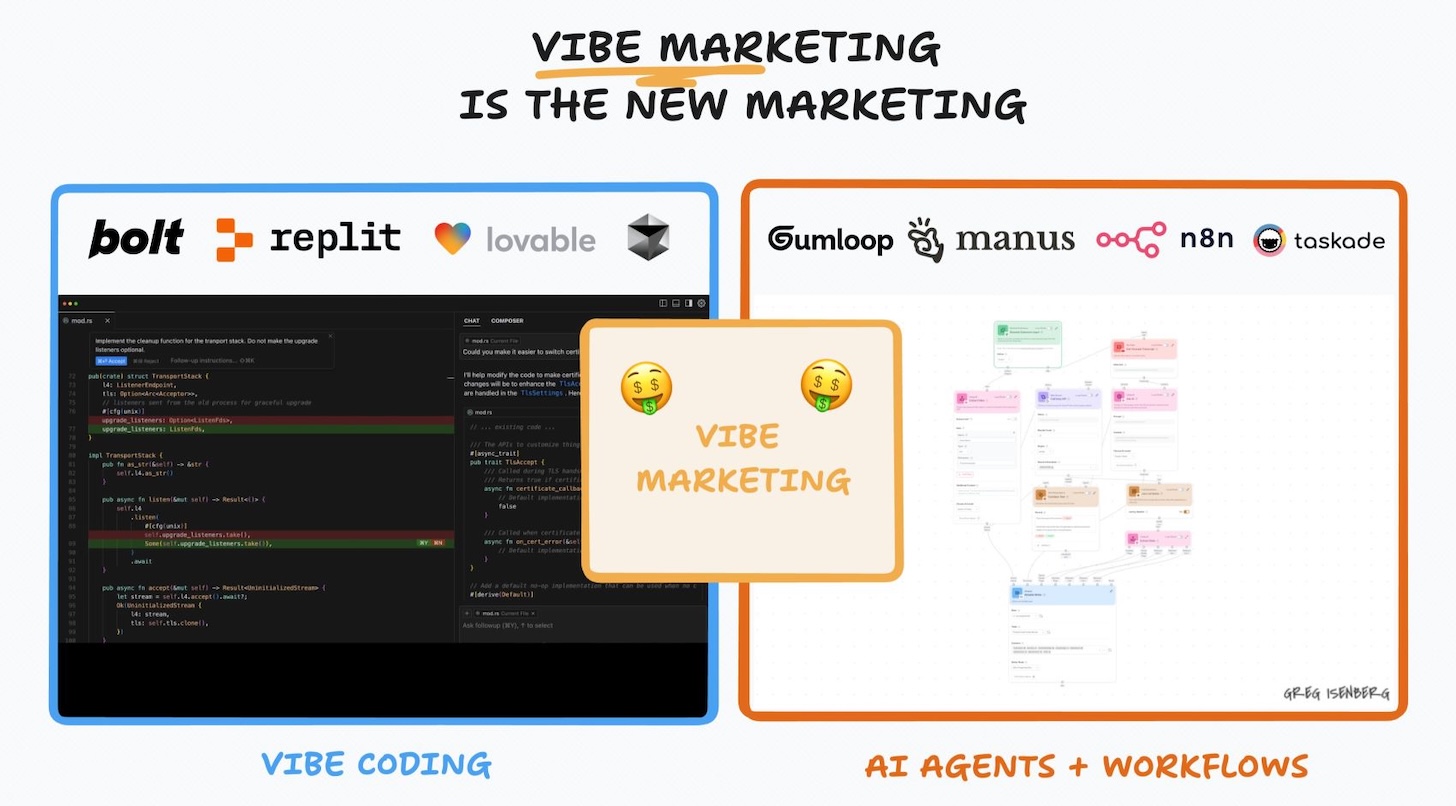
As an aside, this is a cliché marketing move: if vibe is cool, and agentic is cool, then something that is both vibe and agentic has to be even more cool, right? If vibe coding is the next generation of no-code/low-code, this definition of Vibe Marketing seems like the next generation of growth hacking. Some people call this the work of GTM engineers. But the more useful application is not simply more automation; it is experimentation-first vibe marketing.
Production agents, apps, and automations do not seem vibe-y to me. They seem more like your marketing operating system. You want it to be fluid and adaptable, but also structured, reliable, and well-governed.
What is the real value of a Vibe workflow?
My interpretation is that Andrej’s good vibrations with vibe coding came from the freedom to think less about code and more about indulging one’s imagination to bring new ideas to life, even as imperfect prototypes. The vibe is human creativity unleashed.
That is the attitude marketers should embrace. Better yet, marketers should become the market whisperers and customer whisperers who try to tune into the vibes of their audience. If vibe coding delights developers — they are the ones feeling the vibes — vibe marketing should focus on delighting customers.
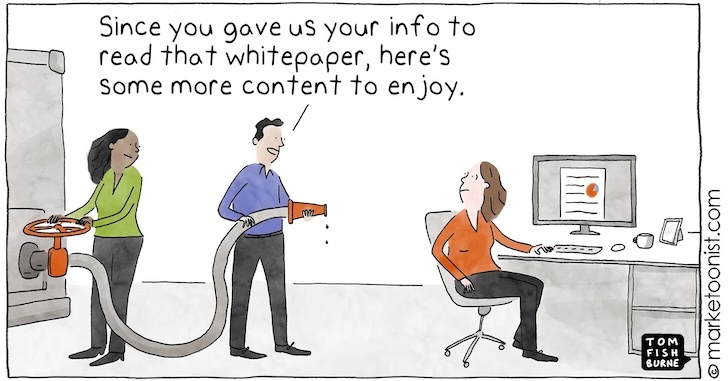
Automated content generation. Automated outbound emails. Automated data scraping. These are useful AI-powered capabilities that marketers can and probably should implement in their operating system. But the mechanics are not the vibe. The real question is how prospects on the receiving end of that machinery feel about it. Are they humming The Beach Boys’ Good Vibrations or Monty Python’s Spam, Spam, Spam?
How to run a Vibe workflow step by step
Curious about a customer pattern? Use AI to mine your data lakes and warehouses for answers that previously would have required an analyst or data scientist — a barrier high enough that most questions popping into your head were not worth pursuing. But now? Let those I wonder… curiosity vibes flow.
- Ask a narrow question: which segment, message, offer, or workflow is worth testing this week?
- Use AI to mine the data, summarize patterns, and surface a hypothesis without waiting for a specialist.
- Compose a micro-campaign with AI-generated creative, including app-like, multimodal, and dynamic concepts.
- Segment a test population small enough to stay safe and large enough to produce a signal.
- Deploy, monitor, and measure against the hypothesis; treat early negative feedback as information, not failure.
- Iterate the promising ideas, scale the proven ones, jettison the duds, and move winners from vibe-land to a polished production plateau.
If Big Data was about harnessing the volume, velocity, and variety of data, Vibe Marketing is about Big Experimentation — harnessing the volume, velocity, and variety of marketing experiments to out-innovate your competition.
Common mistakes and guardrails for AI application teams
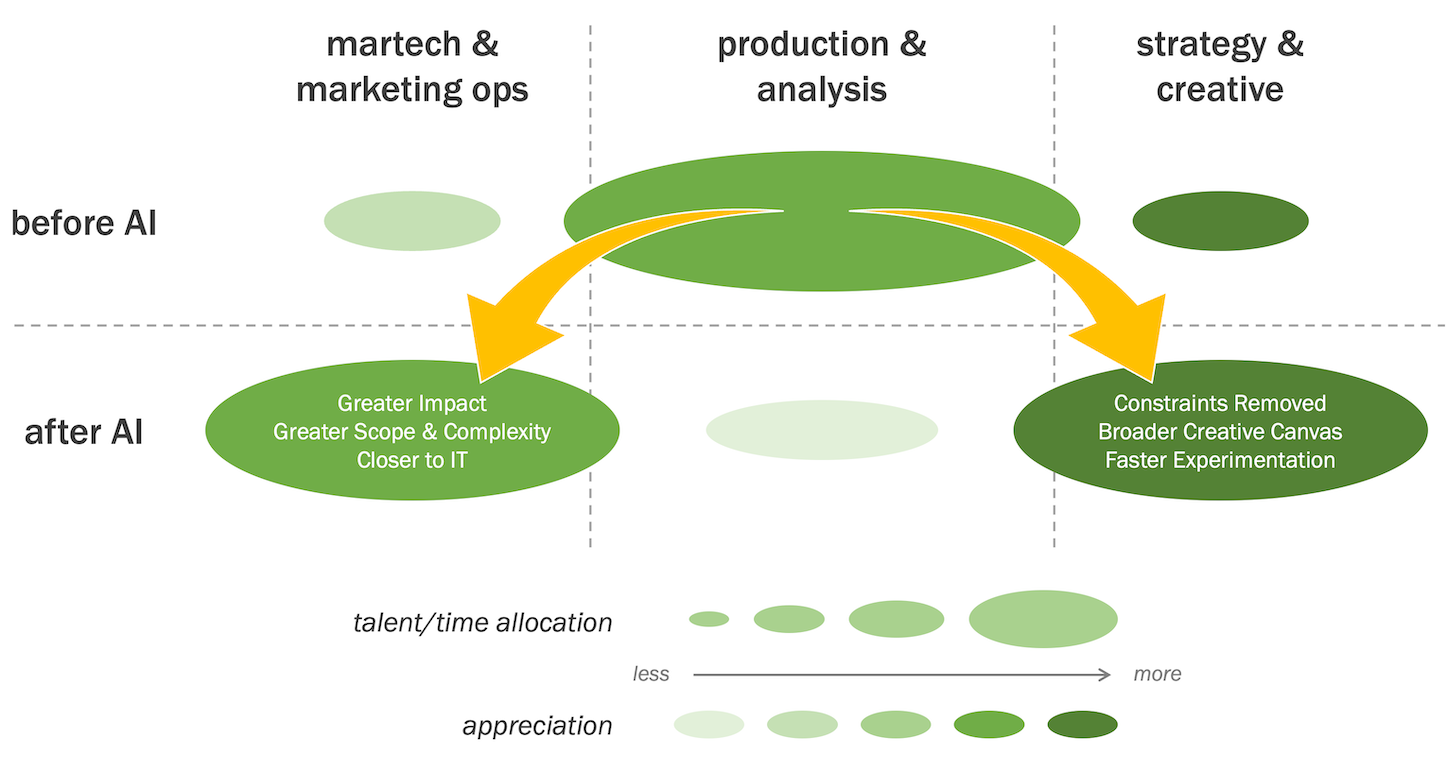
Yes, guardrails are needed: proper permission management for data, compliant respect for customer privacy and preferences, and adherence to brand standards. But this is increasingly manageable with professional AI martech tools. One of the greatest contributions marketing operations teams can make in this environment is setting up the scaffolding and safety nets for the rest of the marketing team to vibe more ideas to life.
- Mistaking a demo for a deployment: a tool that produces a usable artifact is not automatically ready for operational trust.
- Vibing a red light app: broad, high-stakes, revenue-critical, or compliance-heavy systems need formal review.
- Optimizing for output count instead of learning rate: the point is not to create more assets; it is to find more audience-fit.
- Forgetting the recipient: if the audience feels overwhelmed, the workflow is technically impressive but commercially wrong.
FAQ: practical questions about Vibe applications
Is Vibe only for developers?
No. The practical value is that non-engineers can create prototypes, internal tools, and test assets. The limitation is responsibility: anyone who ships an artifact still owes quality, privacy, and operational review.
What should a beginner vibe code first?
Start with a narrow green light app: a personal dashboard, a report formatter, a survey workflow, or a small internal utility. Keep the user circle small and the failure cost low.
What is the difference between vibe coding and Vibe Marketing?
Vibe coding describes building software through conversational AI iteration. Vibe Marketing, in the more useful sense, describes building customer understanding through rapid experiments and audience feedback.
How do teams decide what is production-ready?
Production-ready means stable data permissions, tested failure paths, documented brand and privacy constraints, and evidence that users or customers respond positively without coercion or confusion.
Will the vibe language endure past this 2025 Summer of Vibes? Probably not. It is a little hokey. But the creative power of Big Experimentation unleashed by a new generation of AI-empowered marketers is only going to grow — whatever label we stick on it.
For now, enjoy the Good Vibrations of summer, and bring the useful parts into next quarter’s workflow plan.