
AIdataNewsGlobal General Brief: CoWoS Lead Times Extend to 6 to 8 Months as TSMC Wafer Price Reports Circulate
The advanced packaging route that supports many AI accelerators is under growing pressure as order backlogs build, equipment waiting periods lengthen, and supply-chain reporting adds another possible cost change to the picture: TSMC’s CoWoS process is now at the center of both capacity and pricing questions.
Why CoWoS Has Become a Choke Point
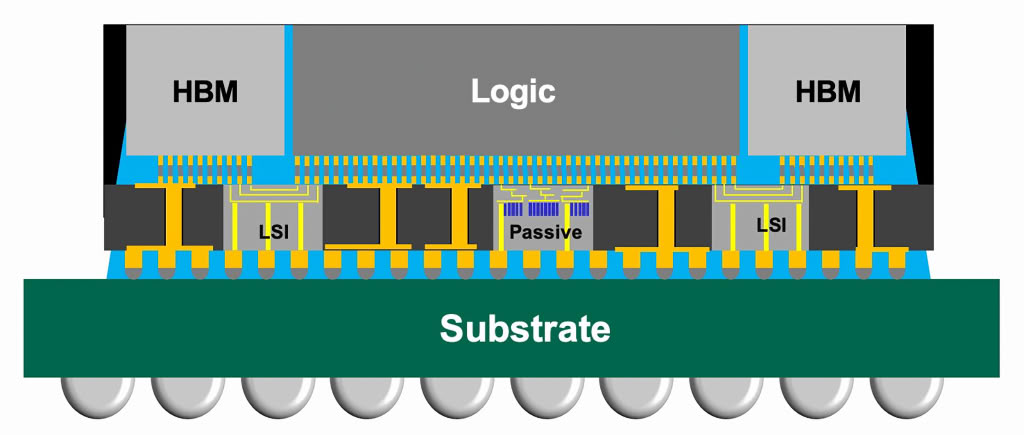
CoWoS is TSMC’s advanced packaging approach for chips that need compute die and high-bandwidth memory, or HBM, connected through a silicon interposer in a single package. The method matters because AI accelerators increasingly depend on tightly integrated chiplet, memory, and packaging solutions rather than on front-end wafer processing alone.
Demand has not stayed limited to AI GPUs. The pull-through now extends to server CPUs and custom ASICs, which broadens the base of customers competing for the same packaging, test, and equipment resources. That mix is what turns a technology node advantage into a capacity bottleneck.
Reported Metrics at a Glance
| Signal | Reported value | What it suggests |
|---|---|---|
| Equipment lead time | Moved from 3 to 6 months to 6 to 8 months | Capacity expansion is slower than before, and scheduling certainty has weakened. |
| Final testing workload | Nomura Securities estimates Blackwell may require about 4 times the time of Hopper, while Rubin may reach 7 times | Test capacity, not only packaging line capacity, may become tighter. |
| Wafer price reporting | Reports cite about 3% to 6% increase starting January 2027, with larger increases for 2-nanometer and 3-nanometer | Cost pressure may extend beyond CoWoS-specific quotes to broader manufacturing inputs. |
| Supply-chain diversification | GlobalFoundries has a multi-year agreement worth 20 billion dollars to make silicon interposers in New York for TSMC’s CoWoS supply chain, with ramp in the first half of 2028 | New capacity is underway, but near-term relief is limited. |
What the Lead-Time and Testing Estimates Mean
One of the clearest changes described in supply-chain reporting is the longer wait for equipment. The shift from 3 to 6 months to 6 to 8 months matters because packaging capacity is not only a function of factory space; it also depends on how quickly specialized tools can be installed, qualified, and scaled. Customers are reportedly prioritizing delivery certainty more than they did in earlier years, with less emphasis on asking for tool price concessions or extra features.
The testing estimate sharpens the constraint. If Nomura Securities’ calculations are correct, NVIDIA Blackwell’s final test step can take about 4 times as long as Hopper, and Rubin may take about 7 times as long. These are analyst estimates, not company-confirmed facts. Still, the implication is straightforward: more test time per unit can consume more tester time, more floor space, and more scheduling slack across the assembly and test network.
In practical terms, the bottleneck is no longer just “more wafers” or “more packaging starts.” It is a combination of interposer supply, packaging line availability, test capacity, equipment lead times, and customer prioritization.
Pricing Reports: What Is Confirmed and What Remains Unconfirmed
Alongside CoWoS packaging quotes, Taiwan-based media previously reported that TSMC plans to raise wafer foundry prices by about 3% to 6% beginning January 2027, with the largest increases concentrated in advanced nodes such as 2-nanometer and 3-nanometer. This remains a supply-chain report, and TSMC has not publicly confirmed the exact percentage range.
- Confirmed from company communications: AI-related demand is strong, capacity is being expanded quickly, 5x reticle-area CoWoS packaging has entered mass production, and larger dimensions are under development.
- Confirmed from company communications: TSMC is also advancing CoPoS technology.
- Reported but not publicly confirmed: the exact wafer price increase range and the precise timing beyond the reported January 2027 start.
- Reported as market context: customers appear more focused on securing delivery than on obtaining concessions in procurement discussions.
That distinction matters for readers. The capacity direction is public; the pricing magnitude is not. The practical takeaway is to track announced capacity progress and reported cost changes separately.
Capacity Responses and the Time Gap
TSMC’s own earnings meeting messaging emphasized that AI demand remains strong and that expansion is accelerating. The company pointed to the move to 5x reticle-area CoWoS packaging, development of even larger formats, and progress on CoPoS.
The GlobalFoundries agreement adds another layer. It is a multi-year, 20 billion dollar manufacturing arrangement for silicon interposer production in New York to support the CoWoS supply chain. Production is expected to ramp in the first half of 2028. That is meaningful for medium-term supply, but it does not materially change the current bottleneck because new facilities need construction, qualification, tooling, and yield ramp time.
For now, the market is operating with a visible gap between rising AI demand and the time needed to translate announced capacity plans into qualified, usable supply.
Which Segments Would Feel This First?
The most direct exposure would fall on products that actually use CoWoS or comparable advanced packaging structures. AI accelerators and data-center chips are the clearest category because they sit at the center of current demand and rely on the packaging and test steps now described as tight.
- Most direct impact: AI accelerators and data-center processors using CoWoS-related packaging.
- Less direct impact: gaming graphics cards are typically not built around this same CoWoS packaging structure, so they would not be directly affected by a CoWoS quote increase.
- Broader transmission channel: if wafer foundry prices rise, the effect may gradually pass through to other chips and end products through manufacturing cost structures.
That layering is important: advanced packaging constraints and wafer price adjustments are related, but they do not hit every product category in the same way or on the same timeline.
FAQ: Common Questions From Industry Observers
What is CoWoS?
CoWoS is TSMC’s advanced packaging architecture that uses a silicon interposer to connect compute die and HBM within a single package. It is widely relevant to high-performance AI chips because it supports memory-proximate designs that improve system bandwidth.
Why did lead times lengthen?
Reporting points to sustained demand growth across AI GPUs, server CPUs, and custom ASICs. As more customers compete for packaging and test resources, equipment waits moved from 3 to 6 months to 6 to 8 months, reducing flexibility for rapid scaling.
Are the price increases confirmed?
No. The reported increase of about 3% to 6% beginning January 2027, with stronger hikes for 2-nanometer and 3-nanometer, comes from supply-chain reporting via Taiwan-based media. TSMC has not publicly confirmed that specific pricing range.
Why does testing matter as much as packaging?
Because AI chips often require longer validation steps. If Nomura Securities’ estimates hold, NVIDIA Blackwell’s final test can take about 4 times as long as Hopper, while Rubin may take about 7 times as long. That consumes tester capacity and can tighten overall throughput even when packaging lines are available.
Will new capacity fix the problem soon?
Not necessarily in the near term. The GlobalFoundries agreement for silicon interposer production in New York, worth 20 billion dollars, is scheduled to ramp in the first half of 2028. That supports medium-term supply, but the current constraint is still shaped by equipment lead times, test capacity, and the pace of qualification.
Key Takeaways
- CoWoS pressure is being framed less as a single supply failure and more as a multi-step constraint across packaging, test, and equipment availability.
- The reported extension of equipment lead times to 6 to 8 months is one of the clearest near-term indicators of a tighter supply base.
- Analyst testing estimates point to another hidden bottleneck: if later generations require disproportionately more test time, capacity becomes harder to expand quickly even with new lines.
- Wafer price reporting is still unconfirmed, but it broadens concern beyond CoWoS alone to the wider advanced-node manufacturing chain.
- Medium-term relief is visible, especially through the GlobalFoundries agreement, but current-quarter dynamics will likely remain shaped by backlog, scheduling priority, and qualification timelines.
What to Watch Next
- Whether TSMC or other suppliers provide firmer guidance on packaging, test, or wafer pricing after future earnings communications.
- Whether equipment lead times stay near 6 to 8 months or begin to shorten as capacity installations stabilize.
- How quickly customer demand continues to spread from AI GPUs into server CPUs and custom ASICs across the advanced packaging chain.
- How the New York interposer ramp scheduled for the first half of 2028 influences supply planning beyond the next two quarters.
The near-term story is not simply “packaging is tight.” It is a more layered one: order backlogs, equipment waits, test intensity, pricing expectations, and new capacity all point in different directions. Readers following AI infrastructure should weigh confirmed operational constraints separately from reported cost changes, because those two streams do not affect the market in identical ways or on identical timelines.