AI hurricane models jumped to the top of the rankings almost overnight: what the Google DeepMind story means for data-driven forecasting
For readers who follow how machine learning moves from research demo to production system, the weather desk has quietly become one of the clearest case studies on the market. National Public Radio (NPR) reported on 26 October that hurricane forecasters are increasingly using artificial intelligence to make predictions, and that the technology is changing the whole field fast. The proof point arrived this month: when the Atlantic hurricane season generated its first hurricane, an artificial-intelligence model's track forecast beat the traditional models.
Below is a structured read of that story for a global AI and data audience: what happened, which numbers changed, who is reacting, and what to watch next.
The headline event: one storm, two very different calls
In early October, Hurricane Isaias made landfall near Destin, Florida, at category two intensity. Conventional forecast models initially judged that it would continue west and hit southeastern Louisiana. The Google DeepMind artificial-intelligence model judged correctly from the very start: the storm would strike the western Florida panhandle.
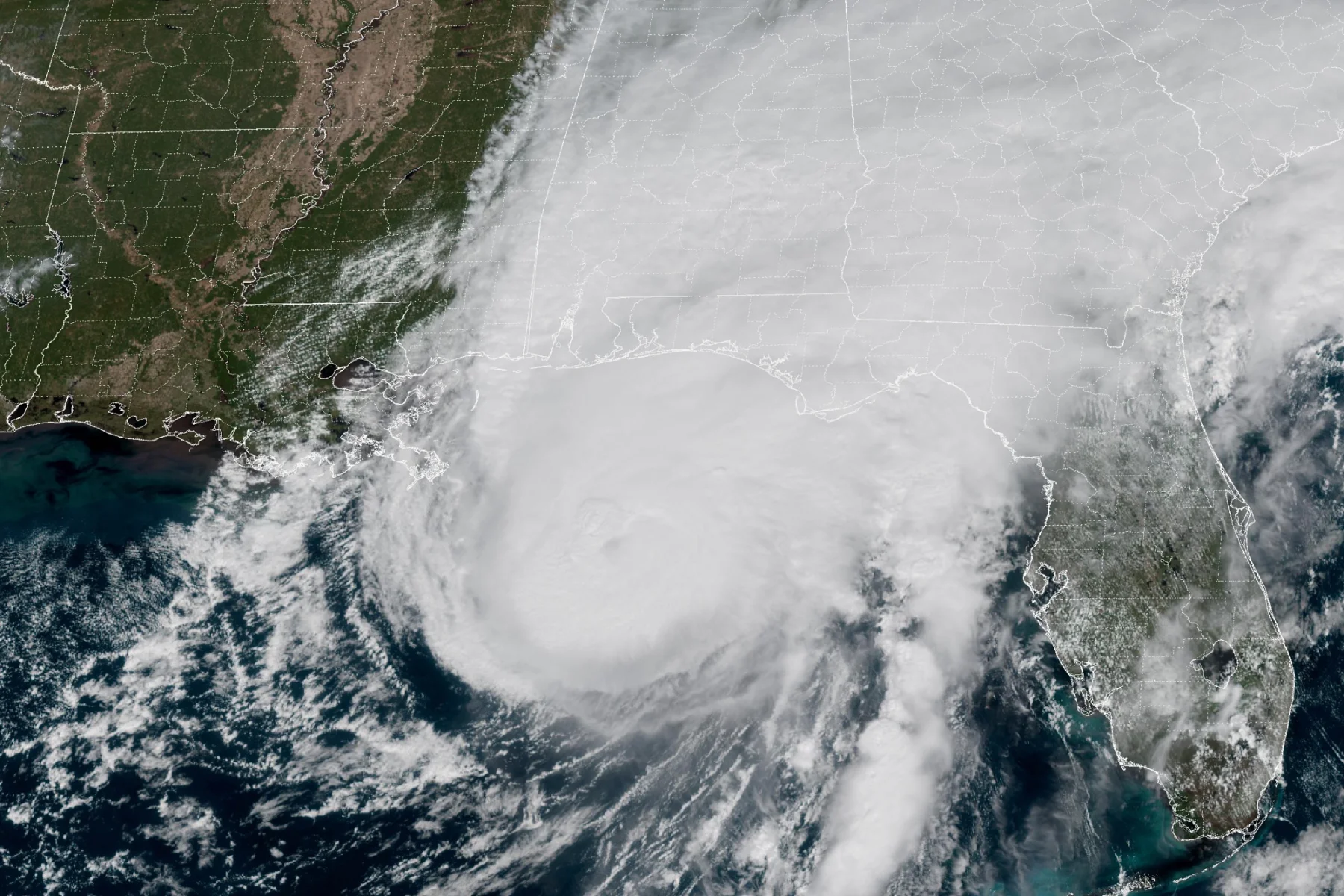
Michael Lowry, a veteran Miami meteorologist and hurricane specialist who has advised the Federal Emergency Management Agency and the National Hurricane Center, has been blunt about the gap he sees. "Especially Google DeepMind — over the past few years it has proven itself to be the gold-standard model," Lowry said. "That model is the best computer model we have ever seen in performance, far ahead of everything else. It is just like that."
Key figures from the season so far
- The US National Hurricane Center first incorporated the Google DeepMind model into official forecasting last year.
- By the close of the 2025 Atlantic hurricane season, the model was already one of the best at predicting storm track and intensity, according to Brian McNoldy, a hurricane researcher at the University of Miami.
- A new model normally needs several years of tuning after it is introduced into the operational mix.
- "This is a situation we are not used to — a brand-new model that soon became the best model," McNoldy said. "It ranked first almost as soon as it appeared, which is quite a remarkable achievement."
- Two AI weather models have been proven most accurate so far: Google DeepMind's and the model developed by the European Centre for Medium-Range Weather Forecasts, headquartered in the United Kingdom. Each still has flaws.
- During active hurricane periods, the National Hurricane Center issues an update every six hours.
- On intensity, forecast error is now roughly half the level of the Hurricane Katrina era.
Physics engine versus data engine: why the two models disagree
The divergence in the Isaias track was not a lucky guess. The two families of models are built on different information.
| Dimension | Traditional physics models | AI models |
|---|---|---|
| Core method | Complex equations derived from the laws governing atmospheric motion | Pattern recognition trained on historical records |
| Main inputs | Real-time measurements from satellites and aircraft: temperature, humidity, air pressure, wind shear | Thousands of past hurricanes and the atmospheric data that accompanied them, plus the current picture |
| Update cycle | At most once a year | Months, or even weeks |
| Interpretability | Traceable through the equations | Looks like a "black box" |
| Track record this season | Initially misplaced Isaias toward southeastern Louisiana | Google DeepMind called the western Florida panhandle from the start, but performed poorly on storm intensity |
"An AI model, apart from this current picture, actually knows nothing about the atmosphere," Lowry said. "Beyond that, it does not make predictions by relying on the governing equations of atmospheric motion — that is, the laws of physics." He also noted that most of the people designing and developing these models are not meteorologists at all: "They are software engineers, doing neural-network development." A neural network is a set of computer algorithms that imitate the human brain and, once trained, can find patterns in very large volumes of data.
The black-box problem that keeps forecasters uneasy
Because the internal reasoning is not fully legible, the models look like a "black box". "We do not know why they forecast correctly, and we do not know why they forecast incorrectly," Lowry said. For meteorologists, depending on a system they do not completely understand is uncomfortable, especially during a storm that possibly millions of people may be relying on the forecast for.
"It makes us a little uncomfortable, because we want to know why you can get the correct answer," McNoldy said. "And I think we do not know — at least I do not."
Not every entrant clears the bar. Lowry says the market contains a large number of untested artificial-intelligence weather-forecast models, which is why official use is limited to the handful that have been validated.
Where the machines still lose
In the Isaias track forecast, the Google DeepMind AI model defeated the traditional physics models, but it did not do well at predicting the storm's intensity. Michael Brennan, director of the National Hurricane Center, said the DeepMind model still needs improvement: it outperformed other models in tracking Isaias's path, yet was weaker than the center's own blended forecast on intensity. Brennan's team regularly supplies feedback to Google DeepMind to help refine the model. Google did not respond to NPR's inquiry about the matter.
An Associated Press photograph dated 10 October shows people retrieving belongings from a collapsed boathouse in Destin after Isaias passed through.
Humans are still the interface between models and the public
When National Hurricane Center forecasters produce the official forecast, they use multiple validated models at the same time, including both artificial-intelligence and traditional models. "Every storm presents a different forecasting problem," Brennan said. "That is why we take an ensemble approach and mix the best models."
The human step remains mandatory: forecasters interpret the model output and decide what to tell the public. Models themselves sometimes swing sharply between two updates, and forecasters must convert those wavering predictions into guidance people can act on.
"One of the big values human forecasters provide is continuity," Brennan said. "We use our professional knowledge and understanding to turn hurricane forecasts into hazard information, and that is the thing people actually need to pay attention to."
The speed of improvement is the real industry signal
Scientists expect the technology to advance quickly, and the update cadence is where the contrast with legacy systems is starkest.
"The progress in skill and in hurricane prediction that they achieve within one year is what we used to need 10 years, or even more than a decade, to accomplish," Lowry said. He added that what makes AI exciting is precisely that rate of improvement.
Brennan framed the longer arc differently: the future of forecasting "keeps changing", and "it has never been one single thing driving these advances". He recalled that not long ago forecasters could not predict, within two days, how strong a storm would become; that changed because forecast models improved and because satellites and aircraft began collecting better data. "On intensity forecasting, the error is about only half of what it was in the Hurricane Katrina period," Brennan said.
Lowry said that even with AI advancing so rapidly, he is not worried that artificial intelligence will replace people. "As far as I am concerned, I have not had some kind of survival crisis because of AI," he said. "If anything, I think it is a gospel for our industry."
FAQ: what a global AI and data audience should take away
Is an AI model now the official hurricane forecast?
No. The US National Hurricane Center first added the Google DeepMind model to official forecasting last year, and it builds its public forecast from an ensemble of validated models, both AI and physics-based, with human interpretation deciding what the public is told.
What did the AI model win, and what did it lose?
For Hurricane Isaias it won on track — calling the western Florida panhandle while conventional models pointed to southeastern Louisiana — and lost on intensity, where the center's blended forecast performed better.
Why do researchers call this unusual?
Because new models normally require several years of refinement. As McNoldy put it, a newcomer that ranked first almost as soon as it appeared is "quite a remarkable achievement", and the field has not seen that pattern before.
What does this mean beyond weather?
It is a concrete example of a data-trained neural network reaching production-grade performance quickly, and of the same constraints that apply to every deployed model: limited interpretability, uneven validation across the market, and a continuing need for human oversight in high-stakes decisions affecting millions of people.
What to watch next
The near-term signals are procedural rather than dramatic: how fast model updates continue to ship — months or even weeks rather than at most once a year; whether intensity skill closes the gap with track skill; how the feedback loop between the National Hurricane Center and Google DeepMind evolves; and how many of the untested AI weather models now circulating survive validation. For the global AI and data industry, the story is less about one storm and more about how quickly a data-first method can move to the top of a field built on physics for decades — and how much of the final judgement still rests with people.