
AIdataNewsGlobal General: Anthropic's IPO Test, Compute Commitments and the AI Cost Race
By David Nakamura | AI & Data News
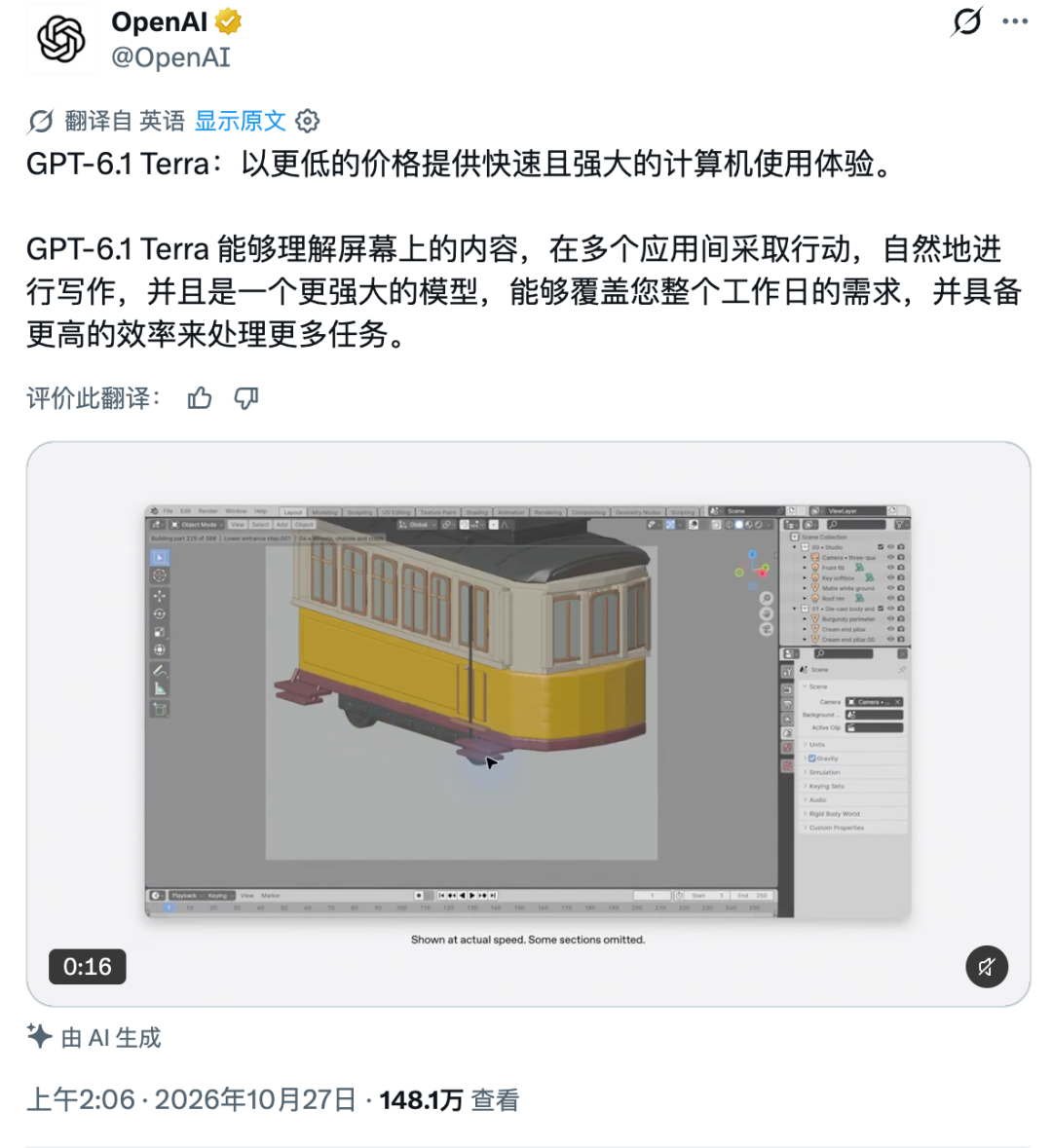
On October 26, a filing with U.S. securities regulators put Anthropic's Claude business and coding-tool growth in front of public-market investors. The reported figures show strong sales gains, but also large accounting losses and an unusually heavy set of future compute obligations. The timing is important because competitors are also changing posture: OpenAI has introduced GPT-6.1 Terra at lower prices, while DeepSeek is reported to have raised more than 100 billion yuan and is expanding its team.
Key facts in a checklist
- On October 26, Anthropic was reported to have filed IPO documents with U.S. securities regulators.
- Reuters data cited in the filing discussion show 2025 revenue of 4.59 billion U.S. dollars and first-half 2026 revenue of 16.29 billion U.S. dollars.
- First-half 2026 net loss reached 80.7 billion U.S. dollars, of which about 72.4 billion U.S. dollars came from convertible-note fair-value changes and did not reflect cash outflow; the real operating loss was about 693 million U.S. dollars.
- Reuters also linked a 2025 operating loss of about 8.06 billion U.S. dollars to the company's scale-up, while first-half 2026 compute and infrastructure spending was close to 9 billion U.S. dollars, up from about 2.3 billion U.S. dollars in the prior-year period.
- Anthropic plans to raise 100 billion U.S. dollars in this IPO, adding to 150 billion U.S. dollars raised since its founding.
- Over the next ten years, its compute purchase commitments are reported at at least 518 billion U.S. dollars, with roughly 80 percent not cancellable or payable regardless of usage.
- OpenAI's GPT-6.1 Terra cuts standard API pricing by 50 percent relative to GPT-5.6 Terra, while emphasizing computer-operation and office tasks.
- DeepSeek's latest round is reported at about 100 billion yuan, also described as more than 100 billion yuan, and it is following a June round of about 51 billion yuan.
From enterprise traction to investor scrutiny
Anthropic spent several years building a position in enterprise AI. Rather than relying mainly on consumer traffic, it used Claude and developer-facing coding tools to embed model capability inside workflows, then offered higher-value services to enterprise customers.
The commercial logic is straightforward: companies can see payback when models shorten development cycles, reduce repetitive work and move from simple question answering into code writing, debugging, testing and complex task execution.
A CEO in the AI sector told Phoenix Technology that Anthropic is an important business-model sample: "When people first realized AI coding had strong commercial conversion, that too began with Anthropic; now Anthropic has started doing AI drug discovery, and followers will certainly emerge."
The same filing, however, makes clear that revenue quality and profit quality are different. Reuters reported a 2025 operating loss of about 8.06 billion U.S. dollars, and a first-half 2026 operating loss of about 693 million U.S. dollars.
At the same time, compute and infrastructure costs increased sharply. For the first half of 2026, spending was close to 9 billion U.S. dollars, compared with about 2.3 billion U.S. dollars in the corresponding period a year earlier.

Every token sold by a model company has an infrastructure cost behind it: training requires compute, inference requires compute, and more users or more complex tasks can raise resource consumption. As AI moves toward coding agents and multi-step task execution, the cost structure of a single job may change, because a model may reason for more turns, call tools and validate results repeatedly.
That does not mean enterprise demand is weak. On the contrary, rising revenue and customer expansion suggest the market is willing to pay for capability. But investors are asking whether inference costs can fall as capabilities improve, and whether customer prices can cover the full cost of model development, compute and service delivery.
Reuters also noted that Anthropic has signed large cloud-service, compute-resource and infrastructure agreements, with related ten-year commitments exceeding 500 billion U.S. dollars. In the IPO materials, the figure is presented as at least 518 billion U.S. dollars. About 80 percent of these commitments are described as non-cancellable or required regardless of usage.
The U.S. equity market has already been uneasy about heavy AI infrastructure spending. Anthropic's listing heightens that sensitivity. One industry view is that the offering is consequential: if it struggles, the wider market may feel the drag.
"Chain Captains" and the Open-Source Counter-Route
If Anthropic represents a route from high-value coding and enterprise services toward commercial revenue, DeepSeek has drawn attention for another idea: cost itself can become a model advantage.
DeepSeek's early impact came partly from forcing the industry to re-examine the cost of training and using large models. Performance and training-cost disclosures attracted focus, but for commercialization the key question is whether low cost can carry through deployment, inference and real usage.
OpenRouter data illustrate that route's market relevance: DeepSeek's models have led the weekly call-volume chart for three consecutive weeks, while minimax, Zhipu and Tencent models have also stayed in the top five for an extended period.
The lesson is not that capability is only a matter of adding parameters and stacking compute. Architecture design, training method, inference efficiency and resource scheduling can all affect unit cost.
More importantly, low cost can change how a model enters the market. In effect, it creates two different development ideas.
That contrast has become more visible recently. The U.S. Department of Homeland Security ordered federal agencies to remove DeepSeek products and third-party services built on its models. At almost the same time, DeepSeek announced that its internal inference framework DeepInfer would be fully open-sourced, compatible with the two major compute platforms of Nvidia and Huawei Ascend.
Behind the open-source push is a rapidly growing capital base. Multiple reports said DeepSeek is about to finish a round of approximately 100 billion yuan, also described as more than 100 billion yuan.
The scale of that round has been repeatedly chased higher: an initial plan of 50 billion yuan was followed by 80 billion yuan, then a final figure around 100 billion yuan. Counting a June round of about 51 billion yuan, DeepSeek is reported to have gathered around 150 billion yuan within half a year, while its pre-money valuation stayed at 500 billion yuan.
The investor list is unusually broad. According to the self-media outlet "Tides of Money", more than 20 institutions joined the new round. Earlier investors including IDG Capital, Shixiang Technology, Zhengxingu Capital, Monolith, CATL, Tencent and Guozhi Investment continued to participate. New participants include China Mobile, China Telecom, China Life Investment, Shixi Capital under GigaDevice, SMIC Juyuan, Boyu Capital, CPE Yuanfeng, Gaorong Capital, Legend Capital, CITIC Investment, Meituan Longzhu, Hengdian Capital and Geely Capital.
Several listed companies and industrial-capital players were also reported as indirect participants, including Muyuan Foods, Zhihu, Century Huatong, Perfect World, Giant Network and Dahua Technology.
From these selections, founder Liang Wenfeng appears to care about industrial value. For example, backers connected to the CATL camp have solid energy positioning, while the GigaDevice camp is closely tied to domestic storage-chip supply.
Yet a large fundraise creates a "spending" problem. Multiple people familiar with the matter told Phoenix Technology that DeepSeek is preparing a new growth path for investors, one that includes major team expansion. They also said: "the money raised has to be spent on reasonable uses." More money means DeepSeek has to do more things.
The expansion has been concrete. After the June round of about 51 billion yuan was settled, DeepSeek published a recruitment notice on June 25 saying it would "expand all departments by at least double" and opened 33 roles across seven sections, covering technology research and development, compute infrastructure, product deployment, frontier algorithm research and general functions. The notice even included data-center infrastructure positions in Ulanqab.
By September, Cui Tianyi, who leads the DeepSeek Harness team, posted about 150 hiring openings at once. He described the need as "unprecedented". DeepSeek has also set high compensation markers: reports said a Tsinghua University Yao Class intern received a pre-tax daily rate of 5,500 yuan, with monthly pay above 120,000 yuan; a campus-hired core-system R&D engineer role carried a monthly range of 60,000 to 90,000 yuan.
Despite the scale, the company's public image remains restrained. A person close to DeepSeek told Phoenix Technology that its main working locations are Beijing and Hangzhou, and that Liang Wenfeng has rented a residence in Beijing for a long time in a very simply furnished room.
OpenAI pivots toward cheaper models
Among large AI players, OpenAI's trajectory has repeatedly swung. It once pursued the intelligence ceiling, aimed at consumer reach and imagined building a "WeChat of the AI era" that would connect everything. Faced with huge losses and competitors closing in on revenue, it also moved toward Anthropic's AI coding ground to win better commercial conversion. Its recent moves now look closer to DeepSeek's cost logic.
On September 23 this year, GPT-6 Sol and Luna were released together. Luna's API input price fell to 0.1 U.S. dollars per million tokens, a floor-level price.
Half a month later, on October 7, OpenAI put Luna in front of free users across the full ChatGPT base, while paid users received Sol.
On October 26, OpenAI introduced GPT-6.1 Terra, positioned in the mid-tier model line and focused on computer operation and everyday office tasks. Its standard API price is 50 percent lower than the previous GPT-5.6 Terra, and OpenAI says Terra can complete some task tests at costs well below flagship models.
Still, the direction is debated. One industry person said: "OpenAI is still in a wavering phase. Even its work on embodied-intelligence models shows that. Compared with Anthropic, OpenAI often looks indecisive, but it will soon be educated by the market and shift toward business that makes money."
Competition is visibly intense. If a large-model company cannot sustain advantages and do well in its core business, it can become a short-lived flash.
Comparison at a glance
| Company | Reported move | Cost signal | Market question |
|---|---|---|---|
| Anthropic | IPO filing with U.S. securities regulators on October 26; 2025 revenue 4.59 billion USD and H1 2026 revenue 16.29 billion USD. | Net loss 80.7 billion USD in H1 2026, about 72.4 billion USD from non-cash fair-value changes; real operating loss about 693 million USD. | Can enterprise pricing cover compute and delivery costs under at least 518 billion USD ten-year commitments? |
| OpenAI | Released GPT-6.1 Terra on October 26; standard API price 50 percent below GPT-5.6 Terra. | Luna API input price 0.1 USD per million tokens; Luna used for ChatGPT free users, Sol for paid users. | Will a price-led pivot stabilize a business that has appeared wavering? |
| DeepSeek | Reported new financing about 100 billion yuan, or more than 100 billion yuan; team expansion and open-source DeepInfer. | OpenRouter showed models ranked first for three consecutive weeks; cost focus affects deployment and inference. | Can low-cost scale turn capital raised into reasonable spending? |
FAQ
What is the main event?
The central event is Anthropic's reported October 26 filing with U.S. securities regulators. It connects Claude's enterprise coding success to public-market disclosure, including the revenue and loss figures cited by Reuters.
Why is the net loss figure so large?
The first-half 2026 net loss of 80.7 billion U.S. dollars includes about 72.4 billion U.S. dollars of convertible-note fair-value changes. The article distinguishes that from a real operating loss of about 693 million U.S. dollars.
What makes the compute commitments difficult for investors to overlook?
Reports say commitments over the next ten years are at least 518 billion U.S. dollars, and roughly 80 percent are non-cancellable or payable regardless of usage. That ties current growth to long-term infrastructure obligations.
How do OpenAI and DeepSeek change the context?
OpenAI's GPT-6.1 Terra, Sol and Luna moves show a sharper focus on lower API prices. DeepSeek's reported financing of more than 100 billion yuan, team expansion, open-source DeepInfer and U.S. government removal order show a different contest: cost, capital and accessibility.
What should readers watch next?
The next watch items are how Anthropic prices enterprise usage, whether inference costs decline with capability, how the IPO proceeds are deployed, and whether competitors can sustain cheaper models without losing commercial stability.
For a global AI and data industry, the Anthropic story is a data point with several forces attached: enterprise demand, public-market scrutiny, long-term compute contracts and a widening price war. The filing does not resolve whether cost or capability wins; it makes the question harder to ignore.