
AIdataNewsGlobal General: Religion, AI and Ethics: What the Vatican, Anthropic and OpenAI Debate Means for Model Builders
As large AI labs try to define how their systems should behave, they are not only asking engineers and policy teams for answers. They are also turning to religious institutions, philosophers and cultural authorities. The result is a conversation that sits at the intersection of model training, global AI governance and the limits of translating belief into machine-readable guidance. For AIdataNewsGlobal readers following the General column's coverage of AI infrastructure, data governance and corporate strategy, the exchanges involving Anthropic, OpenAI, the Vatican and other major firms show a recurring problem: companies want many moral traditions to inform their models, but scholars question whether religion can be separated, compared or averaged without distortion.
Earlier this year, during a Vatican event on AI, Anthropic co-founder Christopher Olah, known as Chris Olah, said laboratories are not well placed to answer these moral questions on their own. He pointed to religious traditions, saying they have considered such matters for thousands of years. At the same event, Cardinal Victor Manuel Fernandez of the Dicastery for the Doctrine of the Faith, theologian Anna Rowlands and Olah were seen speaking together.
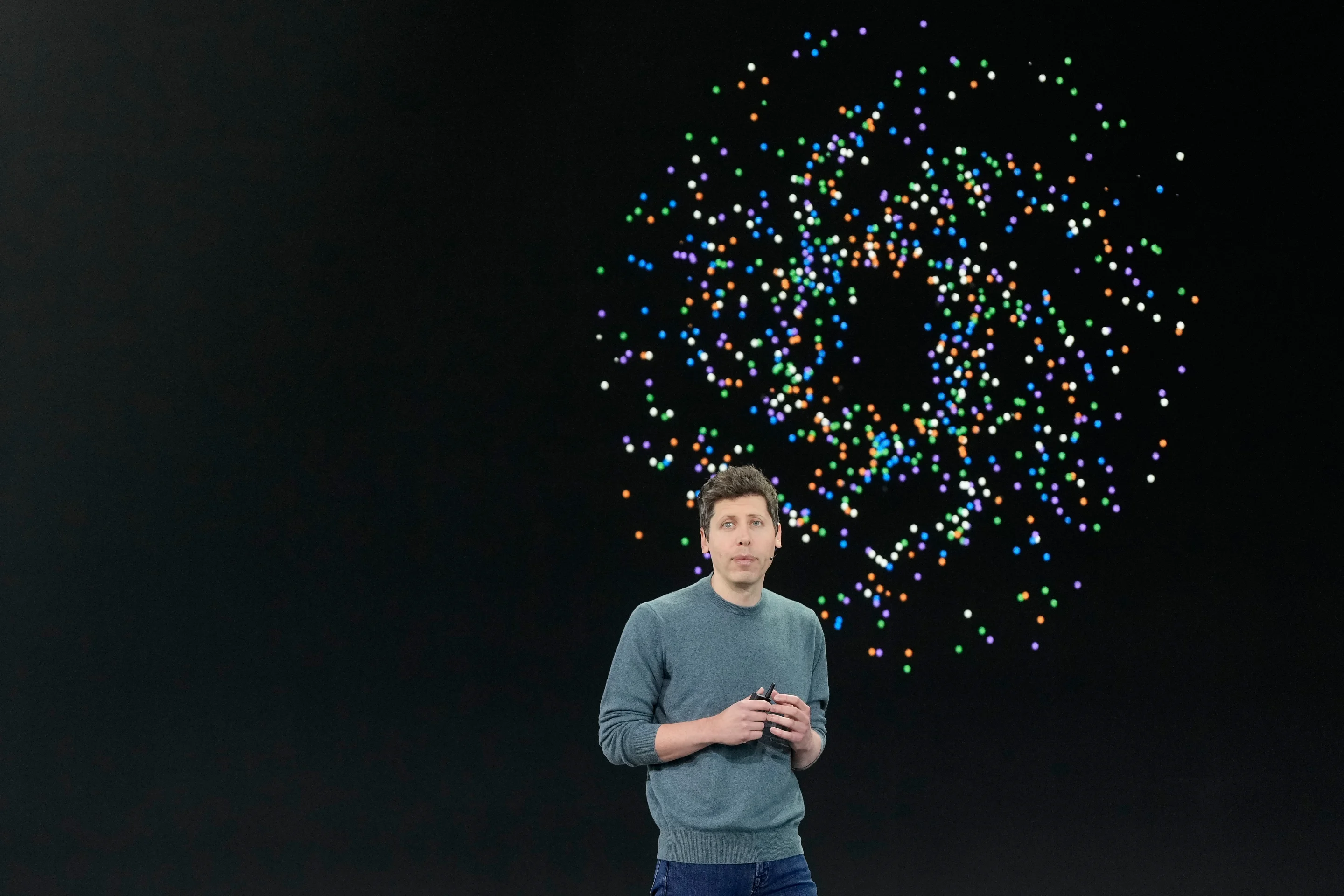
The image shows 0penAI Chief Executive Sam Altman. The remarks attributed to him, along with Anthropic's meetings with faith communities, have intensified a wider argument about whether moral guidance for AI can be assembled from many traditions.
Facts and statements being debated
- OpenAI CEO Sam Altman said last year that ChatGPT should express a weighted average of human moral views.
- Anthropic said in a blog published in May this year that it had met scholars, clergy, philosophers and ethicists from more than 15 religious and cross-cultural groups, and plans to widen participation.
- The company did not list every tradition involved in the sessions.
- Meghan Sullivan, a philosopher of religion at the University of Notre Dame, said Anthropic's seriousness about religious questions impressed her when compared with conversations she had had with other technology companies.
- Associated Press reported that Meta, Google and Amazon representatives had also met the Vatican, and that Microsoft has been active in exchanges with religious communities.
The weighted-average idea
Altman's proposal is straightforward at first glance: if no AI company belongs to a single faith, a model might draw from many moral traditions and combine them into a broad ethical baseline. But the wording matters. A weighted average implies that values can be ranked, balanced and inserted into model behavior. Critics argue that this treats religion less as a lived practice and more as a source of extractable moral statements.
Webb Keane, an anthropologist at the University of Michigan, has raised that concern directly. Keane's critique is that if technology firms assume each religion can provide a set of principles that can be separated out and used for training, they may ignore what believers actually do in daily life. He argues that this approach can downplay doctrine, ritual and relationships, and can privilege traditions that are already understood mainly as systems of rules.
Keane also notes that reading religion as a rulebook is especially close to traditions shaped around scripture, particularly Abrahamic religions. From this perspective, some traditions may be presented more clearly than others, while traditions that do not define themselves first as ethical systems may be distorted or left in the background.
Anthropic's outreach and Claude's intended posture
Anthropic's own account suggests it is trying to avoid a single-source moral framework. In the blog released in May this year, the company said it does not want its model, Claude, to follow only one worldview. Instead, it said Claude should understand religious, secular and political perspectives with equal depth and rigor. Anthropic also said it wanted to learn from long-standing reflections on how good character is formed.
Sullivan, who took part in an Anthropic meeting this year attended by Christians from different denominations, described a process that started with the company explaining its models in plain language. Religious participants then offered feedback and discussed the issues. The agenda was not limited to abstract questions such as whether humans have souls; it also included practical ones such as whether third-grade students should use chatbots to learn reading and writing.
That mix of metaphysical and classroom-level concerns shows why the dialogue is not merely ceremonial. For companies, religious communities can be early-warning partners about how AI systems may shape family life, education, moral authority and human dignity. For scholars, the same meetings raise a harder question: who decides how traditions are represented when the output is used to guide AI behavior?
Classification, Western categories and the risk of blending
A second controversy concerns how technology companies define religion itself. Tomoko Masuzawa, a scholar of religion and author of The Invention of World Religions, argues that sorting traditions into clearly bounded, comparable systems is a modern idea. She uses Buddhism and Hinduism as examples, noting that before European scholars imposed classificatory frameworks, local practitioners did not necessarily understand their own traditions through the categories that later came to dominate global comparison.
For some critics, that history creates a practical danger. Even if a company invites representatives from many faiths, it may still use inherited Western categories to organize the input. In that case, the exercise can look inclusive while still narrowing what religion is expected to mean.
Paolo Carozza, a legal expert on Catholic social thought and technology who serves on the Meta Independent Oversight Board, has expressed a different concern: that bringing many traditions together into one system may flatten what makes them distinctive. Carozza says mature traditions can absorb new knowledge through encounter and develop over time. AI, by contrast, may blend ideas directly and end up understanding none of them fully. His fear is not simply bias in one direction, but a final output that becomes syncretic, Western-leaning or ethically bland.
Stakeholder positions
| Actor | Position | Why it matters for AI governance |
|---|---|---|
| Anthropic | Seeks input from more than 15 religious and cross-cultural groups; wants Claude to understand religious, secular and political views with equal rigor. | Shows a model-development firm treating moral formation as an external consultation problem, not only an internal safety task. |
| OpenAI | Altman last year described ChatGPT as reflecting a weighted average of human moral views. | Raises whether ethical plurality can be operationalized through training objectives. |
| Webb Keane | Warns that extracting rules from religions can miss lived practice and privilege scripture-centered traditions. | Connects AI ethics to anthropological debates about what religion actually does in communities. |
| Meghan Sullivan | Found Anthropic's engagement unusually serious; discussions included souls and third-grade chatbot use. | Indicates that faith communities are asking both philosophical and policy-level questions. |
| Tomoko Masuzawa | Says the idea of discrete world religions is a modern classification, not a neutral fact. | Challenges the categories companies may use when collecting moral input. |
| Paolo Carozza | Fears blending traditions can erase distinctiveness and produce a Western-leaning compromise. | Highlights risk of superficial inclusiveness in global AI values work. |
What to watch next
- Whether Anthropic publishes more detail about which traditions participated, given that it said it plans to expand engagement without naming every group.
- Whether religious scholars shift from general commentary to specific red-team questions about model behavior, education, family life and moral authority.
- Whether other companies disclose how they compare inputs from religious, secular and political sources in model evaluation.
- Whether the weighted-average framing moves from executive remarks to auditable training or evaluation practice.
FAQ
- Why are AI companies talking to religious institutions? Because moral guidance for large models cannot be produced only by engineering teams. Anthropic's Chris Olah said earlier this year that labs cannot answer these questions alone and pointed to religious traditions that have thought about them for thousands of years.
- What did OpenAI's Sam Altman propose? He said last year that ChatGPT should reflect a weighted average of human moral views, an idea critics worry treats religion as a source of separable rules.
- What is the concern about classification? Tomoko Masuzawa says dividing traditions into comparable world religions is a modern concept, especially visible when comparing Buddhism and Hinduism before European scholarly categories spread.
- What did scholars ask AI companies to think about? The discussions ranged from whether humans have souls to whether third-grade students should use chatbots to learn reading and writing.
The broader lesson for global AI and data leaders is not that religious consultation is either helpful or dangerous. The harder point is that consultation alone does not solve representation. If companies do not examine how their categories, training metaphors and averaging assumptions shape the final model, they may be doing something closer to selecting a moral playlist than translating the world's ethical traditions into responsible AI practice.