
AIdataNewsGlobal General: Anthropic PBC’s Mega IPO Tests the AI Funding Shift
By David Nakamura | AI & Data News
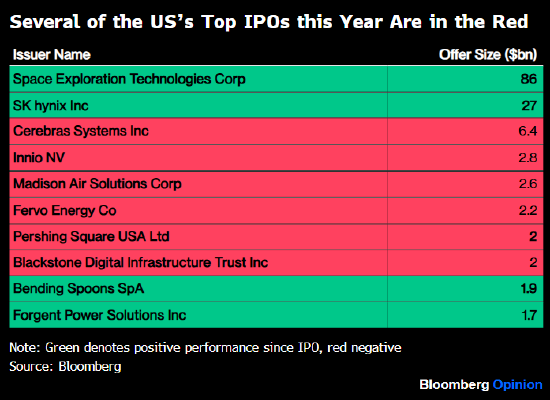
The capital-market signal from the AI sector has shifted: Meta’s US$95 billion share sale has moved the debate from private funding to public-market absorption, and the next test is whether Anthropic PBC’s planned listing can clear the same hurdle. The Claude maker, founded by Dario Amodei, is reported by Reuters to be aiming for a fundraising cap of at least US$100 billion, a scale above SpaceX’s US$86 billion June benchmark. The backdrop has improved since October, when technology shares touched a local low, but IPO conditions remain tight because supply, risk appetite and valuation complexity are all converging.
Meta’s own program reinforces the idea that investors are willing to write large cheques for the AI theme. Facebook’s parent is selling US$38 billion in common and preferred shares, above its initial target; from next year, it plans a further US$60 billion through targeted share issuance. Nvidia, AMD and Broadcom are expected to take a small part, but the bulk of demand still rests with the market. On Monday, after the news landed, Meta’s shares slipped by less than 2%.
The financing channel has also turned. Yorkville Ives, a consultancy covering corporate financing, described Meta’s situation with the phrase “the debt-financing phase is already over.” In the third quarter, Meta’s long-term borrowing rose to US$81 billion, compared with US$29 billion a year earlier. AI infrastructure demand was first taken up by credit markets; now stock investors are being asked to carry the next leg.
Schneider Electric shows the same equity rotation beyond AI. This month, the French company agreed to buy United States software firm PTC for US$23 billion and raised €6 billion, or US$6.7 billion, to finance the deal. For France and Europe, the transaction is very large, and it landed while financing costs in France were rising sharply.
Key numbers behind the Anthropic IPO test
- Anthropic PBC: A prospective IPO at a fundraising cap of at least US$100 billion, above SpaceX’s June record of US$86 billion, according to Reuters.
- Meta: A US$95 billion share-sale program, including US$38 billion in common and preferred shares, plus a planned US$60 billion from next year.
- Credit-to-equity shift: Yorkville Ives says “the debt-financing phase is already over”; Meta’s long-term debt was US$81 billion in the third quarter versus US$29 billion a year earlier.
- Larger equity deals: Schneider Electric’s €6 billion funding supports a US$23 billion acquisition of PTC, equal to US$6.7 billion.
- Market backdrop: United States 10-year yields have moved from 4.5% to 5%; this year’s average United States IPO gain is only 2%.
Why a mega listing is harder than a blue-chip sale
| Comparison point | Familiar corporate share sale | New IPO |
|---|---|---|
| Investor familiarity | Meta and Schneider are already priced, discussed and widely held. | Anthropic needs investors to discover a new valuation framework. |
| Decision pressure | Existing shareholders can add when a known company offers shares. | Buyers must decide whether to reallocate portfolios, even for a “must-own asset.” |
| Current condition | Large secondary offerings can succeed when demand is visible. | The IPO window remains narrow because the United States 10-year yield has risen from 4.5% to 5%. |
The logic is not symmetrical. Anthropic is treated by many market participants as a must-own asset, but its valuation story is harder to assess than SpaceX’s. SpaceX has a mature launch business and Starlink, a profitable communications arm that can feed Elon Musk’s wider AI ambitions. Both stories may attract retail money, yet public-listing demand still depends on whether investors are willing to shift cash out of existing positions.
United States capital-market depth is first in the world, but liquidity is not unlimited. Asset managers buying a large IPO either need fresh client money or must sell holdings. Before SpaceX’s June offering, the top 10 largest components of the S&P 500 were almost uniformly slightly weaker, which some investors interpret as cash being freed for new demand.
What strategists expect from market capacity
Some strategists remain cautious but not bearish. They note that Meta and Alphabet have moved from returning cash to raising cash by issuing shares, while other sectors continue to buy back stock, partly offsetting the flow. Nvidia and Micron are direct beneficiaries of AI capital expenditure, but the issuer group is broader than that AI cycle alone.
Deutsche Bank strategists read the wave of equity issuance as evidence of strong demand rather than excess. Goldman Sachs research says large IPOs have historically created only short-term pressure. In the past 30 years, the S&P 500 typically moved sideways in the several weeks before and after mega listings, then resumed gains. Goldman analysts wrote: “we expect that incremental share supply will not end the bull market in the short term,” and pointed out that this year’s corporate equity fundraising equals only 1% of the total value of United States equities.
Still, an IPO is an event for sentiment, not only for arithmetic. If Anthropic’s offering clears comfortably, it may confirm that stock investors can still underwrite the next phase of AI buildout. If demand weakens, investors may look more closely at the IPO pipeline and the funding cycle for AI infrastructure.
FAQ
- What is the central event being watched? The planned listing of Anthropic PBC, whose fundraising target is reported at no less than US$100 billion, above SpaceX’s US$86 billion June benchmark.
- Why does Meta’s share sale matter? Because it signals that large public-market money remains available for AI-related issuance, but it also adds equity supply and shows how the financing burden has shifted from credit to shares.
- What are the main risks? Higher borrowing costs, limited investor capacity, and the difficulty of pricing a company whose growth story is less visible than SpaceX’s launch and Starlink businesses.
- What would show that the market is ready? Evidence that fresh cash is being raised or that the top 10 S&P 500 holdings can be traded without a sharp break, together with stable demand for new listings.
- What should General-column readers watch next? Whether this year’s IPO average gain of 2% improves, whether Schneider-style large financing remains acceptable, and whether Goldman Sachs’s view that incremental supply will not break the bull market holds after Anthropic prices.