
AI Rollout Case Review: Apple Intelligence Enters China through iOS 27.3 Developer Beta
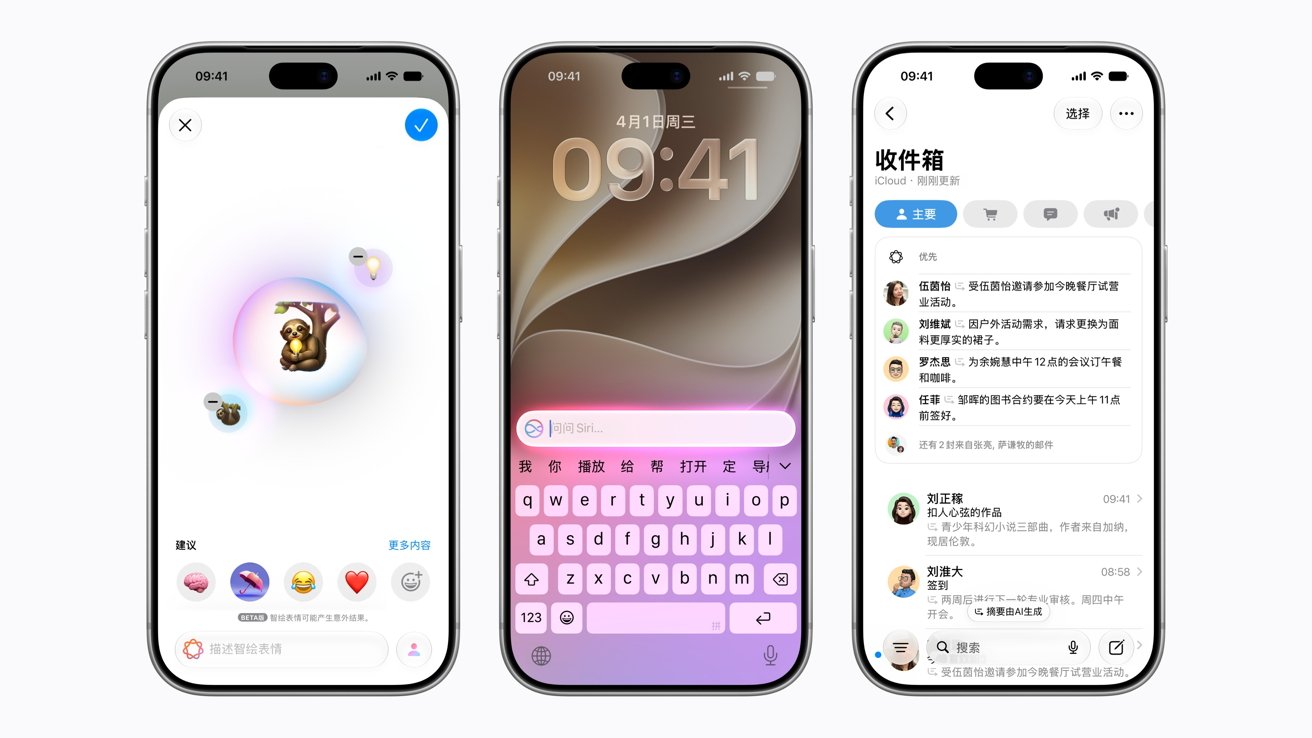
When a global software platform is blocked for years by regulation, the launch question is not only “which features can be shipped?” but also “which layers can legally be activated first?” Apple’s latest move in the China region offers a compact answer. The iOS 27.3 developer beta gives official support to Apple Intelligence in China, while reserving the most exposed assistant-layer capability, AI Siri, for a later stage.
Case summary: a staged market entry rather than a full product drop
Apple Intelligence first appeared in the United States in 2024. In the China region, however, the rollout was delayed as Apple needed to satisfy local rules for generative AI services. The current step is therefore closer to a controlled compliance launch than a feature-complete debut. Apple describes the first release as a package of everyday tools that fit existing workflows: photo editing, writing support, messaging suggestions, transcription and visual recognition.
This makes the case useful for product and policy analysts. It shows how a consumer AI stack can be divided into lower-risk functions that run close to the device and higher-risk assistant functions that require model sourcing, data routing and regulatory clarity.
Timeline: what happened, when
- 2024: Apple Intelligence was introduced for users in the United States, creating a long gap with the China region.
- Late October: Apple confirmed that the iOS 27.3 developer beta would enable a first group of Apple Intelligence capabilities in China. Independent tech media, including The Verge and 9to5Mac, reported the beta release date as November 4.
- November 4: developers and test users can evaluate features before public distribution.
- December this year: the iOS 27.3 official release is scheduled to bring Apple Intelligence to users in China.
- 2026: the broader AI Siri rollout continues to appear gradually in markets outside China, explaining its absence from the first China beta.
Feature inventory: what users can test first
The first batch centers on high-frequency iPhone tasks where value is visible but regulatory exposure is comparatively limited.
| Capability | What it does | Why it fits the staged launch |
|---|---|---|
| Clean Up | Removes unwanted objects from photos while preserving the original scene. | A local editing function with clear consumer value and limited external service dependency. |
| Visual Intelligence | Uses the iPhone camera to identify and analyze what is in view. | Builds the Apple Intelligence habit without waiting for a full assistant interface. |
| Writing Tools | Proofreads, rewrites and summarizes text. | Supports productivity use cases that users can evaluate quickly. |
| Smart Reply | Suggests contextual responses inside Messages. | Tests AI assistance inside a familiar app instead of replacing the user’s primary AI entry point. |
| Summaries and transcription | Generates notification summaries, email summaries, audio transcriptions in Memos, and call transcription with summaries. | Reduces information overload while mapping user demand for personal-context AI. |
| Smart emoji generation | Creates personalized emoji-style images. | A lower-friction creative function that helps normalize AI generation. |
| Live Translation | Helps users communicate across languages in supported contexts. | Reported by Apple materials as a leading feature, useful for messaging, calls and AirPods workflows. |
The Photos experience is not limited to Clean Up. The wider first wave also points to automatic Memories videos, natural-language search and Genmoji-style expressive generation, which together make the system feel integrated rather than isolated inside one menu.
What was deliberately not included
The missing piece is as important as the delivered features. The beta does not include the AI version of Siri, often referred to as AI Siri. That capability is not available elsewhere in full form until 2026 and is still moving through staged availability in other markets. In China, the assistant layer also carries different regulatory implications because it can connect model responses, app intents, user context and partner services.
The case suggests Apple chose to prove the Apple Intelligence interface, user habits and model pipeline before activating the more context-dependent assistant experience.
Partnership and data governance: how Apple and Alibaba fit together
Apple says the current system is powered by generative AI models built by Apple. At the same time, Apple is working with Alibaba to integrate Tongyi Qianwen, or Qianwen, capabilities into Siri. For analysts, this is not a simple sourcing decision; it is a governance pattern.
- Core local features remain Apple-first, reducing the number of user-facing changes needed at launch.
- Assistant-level functionality is treated as a later phase, where a Chinese partner model can be introduced under approved conditions.
- Scope control gives regulators and developers a smaller surface to observe before the service becomes broad.
Apple’s China newsroom also describes Qianwen support for text and image understanding across selected Apple Intelligence experiences, including Siri, Writing Tools and Visual Intelligence. Reuters reported earlier in July that Apple Intelligence had been registered with China’s cyberspace regulator, an important procedural signal that helped move the project from negotiation to productization.
Adoption constraints: the product is real, but not universal
A practical lesson for global AI products is that launch copy should be paired with a gate list. Apple’s China materials point to supported hardware such as iPhone 16 and later models, iPhone Duo, iPhone 15 Pro, iPhone 15 Pro Max and iPhone Air, with Siri and device language settings including English and Simplified Chinese. Visual Intelligence is described more broadly for enabled iPhone models, while some functions depend on specific AirPods hardware and firmware.
For enterprise observers, the device gate matters because it defines the addressable install base before feature-level metrics such as retention or satisfaction can be interpreted.
Reusable lessons for AI product teams
- Split the stack by risk: ship perception, editing and writing capabilities first; delay deep assistant integration.
- Use a developer beta as a compliance sandbox: it provides feedback without declaring a mass-market success.
- Make partner models narrow and visible: a local partner should explain a specific unresolved constraint, not become the entire brand promise.
- Publish the excluded features: the absence of AI Siri tells users how to calibrate expectations.
- Design measurement around gates: devices, languages, regions and app surfaces should be tracked as adoption variables.
FAQ: quick answers for global AI observers
Did Apple Intelligence launch fully in China?
No. The launch began with the iOS 27.3 developer beta and a subset of Apple Intelligence features. The iOS 27.3 official release in December this year is the next planned expansion.
Why is Clean Up emphasized?
Clean Up is one of the most tangible functions in the first group because it gives users an immediate, visible benefit inside Photos while keeping the service closer to on-device editing.
What is missing from the first China release?
AI Siri is missing. Its global availability is staged into 2026, and in the China region it is tied to a later partner-model integration with Qianwen.
Who is Alibaba in this case?
Alibaba is Apple’s stated partner for adding Qianwen capabilities into Siri, a move that connects the assistant layer with a locally sourced model family.
What should analysts watch next?
Watch four signals: beta stability, whether the iOS 27.3 official release adds more surfaces, how Siri and Qianwen are exposed, and whether other regions receive the same staged model-partner pattern.
Final takeaway
The China rollout of Apple Intelligence is best read as a case study in regulated AI productization. It is not a complete assistant launch; it is a staged entry that uses Apple’s own models for core functions, waits for the right regulatory path for AI Siri, and keeps Alibaba’s Qianwen close to the assistant layer. The result is a narrower Apple Intelligence story, but one that gives product teams a template for balancing speed, governance and user trust.