
Water, Wafers and Workloads: Arizona's Split Verdict on AI Infrastructure, Explained
Arizona is settling, project by project, which half of the AI economy it is willing to build on desert soil. The verdict so far tracks payrolls more closely than gallons. In Phoenix, a semiconductor campus that draws roughly 4.75 million gallons of municipal water every day pulled in suppliers, caterers and a housing market, and persuaded officials the resource trade was worth it. In Pima County, a 600-megawatt data center allowed to pump no more than 31 million gallons of groundwater a year — a volume its developer describes as construction-related — has drawn crowds of more than 1,000 objectors, a rejected citizen referendum and a 120-day county freeze on new projects. AIdataNewsGlobal unpacks the figures, the sequence of revised promises behind the resistance, and what residents and local officials say separates the two cases.
The underlying condition comes from reporting first published by The Verge: the state is in severe drought, and its share of Colorado River water is being cut by close to 30 percent.
Why a city that has already shaved its supply is unusually sensitive
One August evening this year, opponents gathered beside a graded construction site on the outskirts of Tucson, Arizona, where developer Beale Infrastructure is building a large data center. Organizers kept reminding the crowd to drink water, some brought shareable drinks, and the hand-painted signs warned that the facility would “suck our water dry.”
That reaction has a documented background. Roughly 70 percent of Tucson's water supply comes from the Colorado River, and through lean years the city relied on household conservation plus deliberate recharge of groundwater. The local group leading the opposition, the No Desert Data Center Coalition, has compressed its position into a single line: Not a drop of water for data. In the coalition's framing, every gallon a city has learned to save should be banked for local families and their successors, not pledged to a technology expansion.
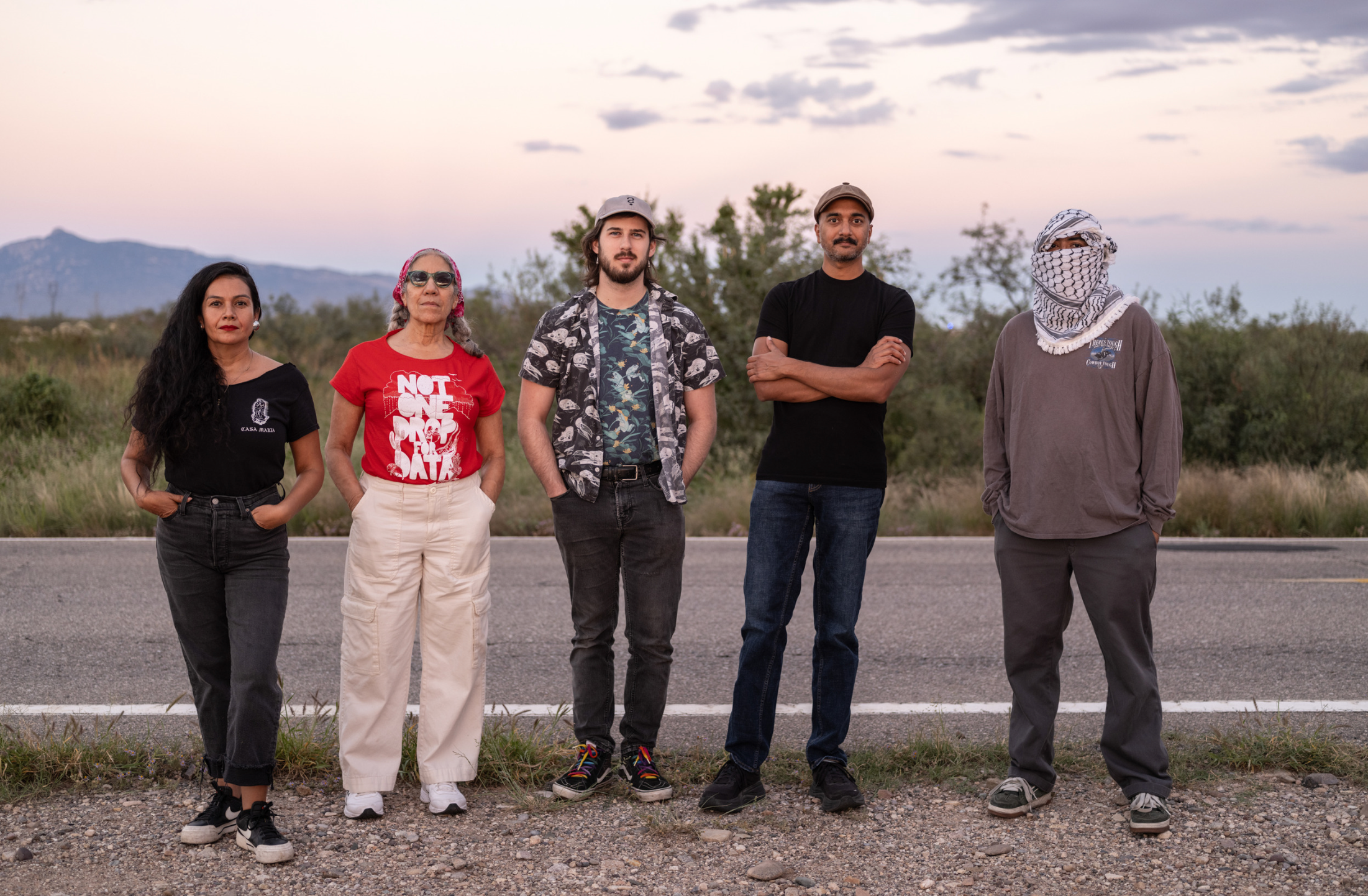
Coalition supporters at the Tucson site, where the slogan on display reads “Not a drop of water for data.”
Project Blue, in five revisions
The contested build is named Project Blue: a site of about 290 acres in Pima County, outside Tucson, planned at 600 megawatts. Opponents point less to any single decision than to a chain of changes — which is also why skepticism about a facility that consumes both water and power in the Tucson desert has proved durable.
- The opening pitch. Beale projected about 3,000 temporary jobs during construction, 200 high-paying permanent positions once finished, and roughly $152 million in tax revenue over the next decade. Early disclosure was limited: the developer and local government signed a confidentiality agreement, so residents could not readily identify the company behind the project or its water arrangements.
- The first water plan. Addressing concerns, Beale offered to pay for a pipeline of roughly 18 miles to bring reclaimed water into the supply system. Under that scheme the center would run on drinking water before the line was complete, switch to reclaimed water afterwards, and send surplus toward aquifer recharge. The plan depended on Tucson approving land and water service; with opposition rising, the city did not approve it.
- The second water plan. Beale moved the project's path to the county and dropped the pipeline. Regulators then authorized wells at the site, permitting extraction of up to 31 million gallons of groundwater per year — about 117,000 cubic meters. A Beale spokesperson said that volume is used only during construction, and that operational demand would be limited to restrooms, employee kitchens and health and safety needs.
- The cooling switch. The developer abandoned water cooling for closed-loop air cooling. According to reports, that change caused Amazon's cloud division AWS to leave the project, because air-cooled facilities could not meet its requirements; Beale declined to say whether a replacement customer has been signed.
- The hydrant episode. Construction began, but friction continued. Contractors drew on municipal fire hydrants for dust control, which drew residents' attention; local officials then required Beale to provide water credits offsetting the roughly 650,000 gallons of drinking water used on site. Beale said the contractor had obtained temporary permits through the normal process.
Opponents are not reassured by the cooling change either: air cooling, they argue, can raise electricity demand, and generating that power may itself consume water. Beale denies that the air-cooling design increases the project's overall energy use. In September this year, the Pima County board of supervisors imposed a 120-day pause on approvals for new data center projects — a decision that did not stop Project Blue.
Marana: the dispute that won a council seat
About 20 miles northwest of Tucson, in the town of Marana, the same argument is running through local politics.
Beale plans a data center campus of roughly 600 acres there, on land some of which was previously farmed. The developer's projection is as much as $407 million in tax revenue over the next decade, with more than a third of it going directly to the town. Marana had already tightened the rules: a data center may not use the town's water supply for cooling, and must meet design, noise and power requirements. Beale says the completed Marana facility would use about 6.6 million gallons of water a year.
Supporters want the tax base and the jobs, and some union members spoke for the project at town council meetings. Opponents fear a change in the town's character, a drain on resources and limited long-term employment.

Jackie Maguire, whom some neighbors call a pink-haired liberal, won a Marana town council seat on an anti-data-center platform.
Jackie Maguire, a cybersecurity analyst, became one of the most visible opponents. She moved from California to Marana 15 years ago and raised her children there; she told The Verge she feared the facilities would dismantle the setting that made her stay. Her concern extends to the durability of the AI investment boom: her own work depends on cloud computing, and she did not want the whole town betting its future on an industry that can swing.
Residents collected about 2,800 signatures seeking a referendum on data centers; the town turned the petition away on procedural grounds. Opponents then ran for council seats, and Maguire was elected. She recounted hearing residents who normally vote conservative say they would back a pink-haired liberal if it meant blocking a data center.
Why the chip fab is treated as a different species
While the data centers are picketed, a thirstier technology operation has been received far more warmly in Arizona.
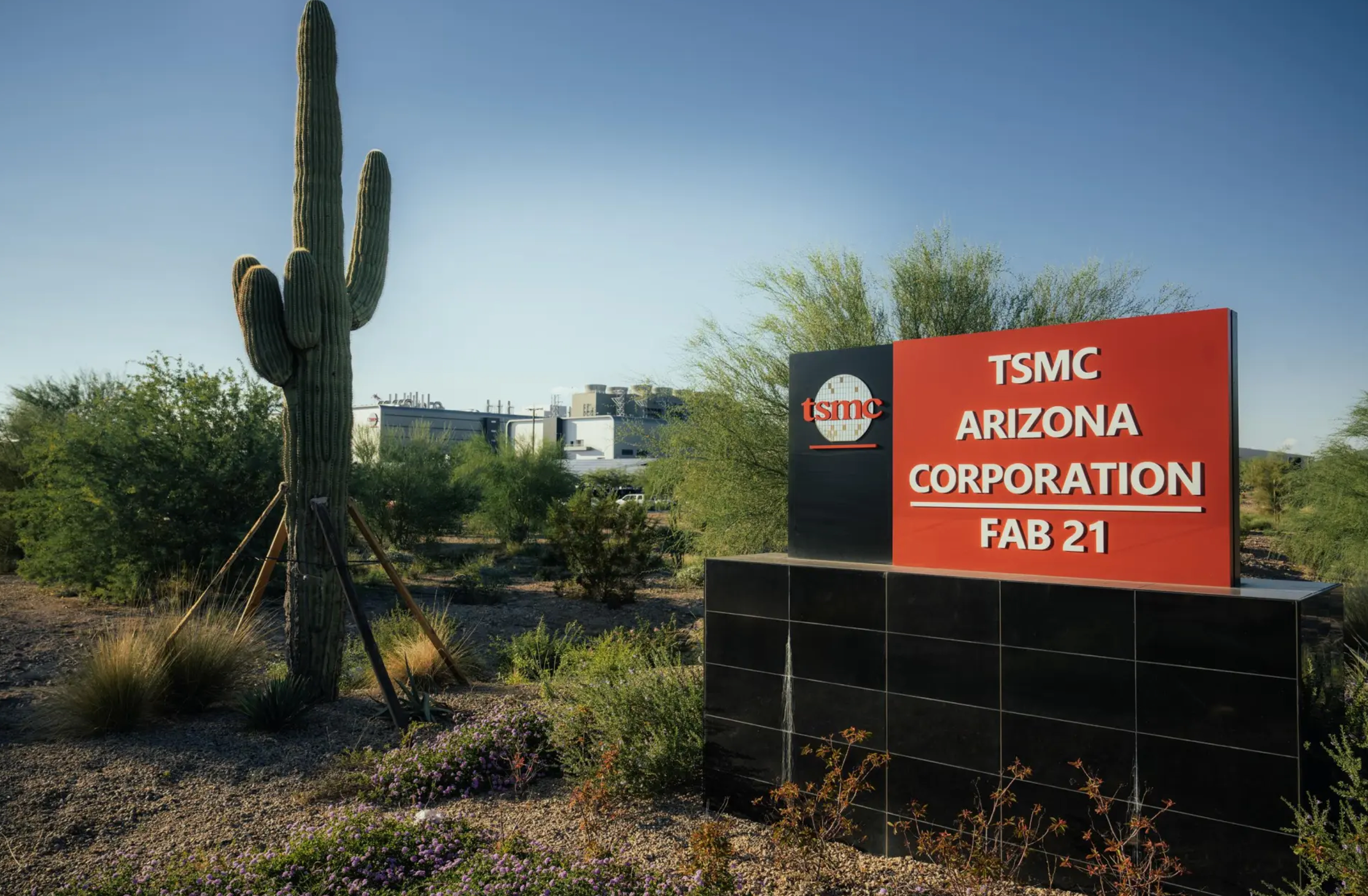
At the TSMC Arizona headquarters in Phoenix, the semiconductor plant employs more than 3,500 people.
TSMC's chip manufacturing campus in Phoenix uses about 4.75 million gallons of water a day through the municipal system — close to five million gallons daily, or roughly 18,000 cubic meters — because fabrication requires large volumes of ultrapure water and wafers are washed repeatedly.
Paul Westhoff, who leads the global water technology center at Arizona State University, told The Verge that each chip passes through 50 to 250 cleaning cycles, and that even tiny particles or impurities can affect performance. Withdrawal and consumption are not the same thing, however. Sara Potter, a water policy researcher at Arizona State University, notes that about 60 percent to 65 percent of the water used at TSMC's first Arizona fab is recovered and reused, and the company plans to raise that reuse rate to 90 percent by 2028.
The economic footprint explains much of the welcome. TSMC Arizona has more than 3,500 employees; as the plant was built, suppliers, catering businesses and other support services followed. Real estate agent Rebecca Chen says she has fielded more clients from TSMC and its supply chain. Christine McKee, a Phoenix economic development official who helped recruit the company, summarizes the trade-off as the economic value of each gallon: the jobs and industrial activity, in her account, justify the resource commitment.
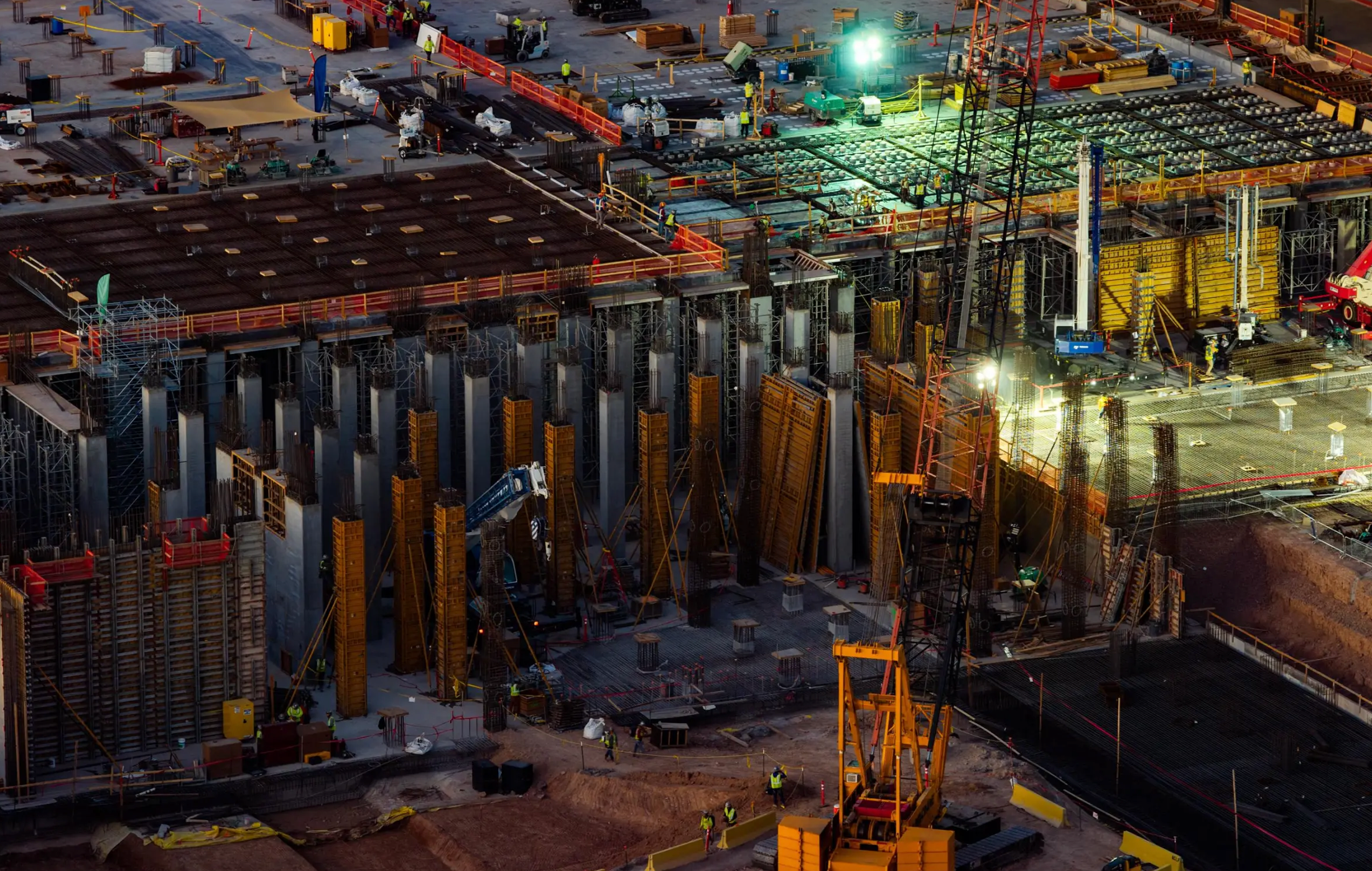
Construction at TSMC Arizona's Phoenix campus is still advancing.
Data center developers make the same tax and investment argument. It lands differently with residents worried about AI's effect on employment: a facility with a sprawling footprint and comparatively few operating staff is hard to greet the way a fabrication plant is greeted.
| Dimension | Project Blue data center (Pima County) | TSMC Arizona fab (Phoenix) |
|---|---|---|
| Scale | About 290 acres; 600 megawatts planned | Campus employing more than 3,500 people |
| Water source | Site wells; up to 31 million gallons of groundwater per year (about 117,000 cubic meters), described by the developer as construction use | Municipal supply; about 4.75 million gallons per day (roughly 18,000 cubic meters) |
| Process demand | Closed-loop air cooling, adopted after water cooling was dropped | Ultrapure water; 50 to 250 wash cycles per chip |
| Reuse position | Reclaimed-water pipeline proposed, then abandoned | About 60% to 65% reuse at the first fab; 90% targeted by 2028 |
| Employment claim | About 3,000 temporary construction jobs; 200 high-paying permanent roles | More than 3,500 employees, plus suppliers and support businesses |
| Public position | 120-day county pause on new projects; protests and a rejected referendum petition | Recruited by city officials; supported by union members and nearby businesses |
The desert's largest user is irrigation
Narrowing Arizona's shortage to data centers misses an older, far bigger sector, The Verge reports.
Irrigated agriculture is estimated at roughly 70 percent of the state's water use, with cotton, citrus and alfalfa for livestock among the long-standing crops dependent on it.
The Saudi agricultural company Fondomonte, for example, grew alfalfa in Arizona to ship feed overseas, using about 11 billion gallons in 2023 — a volume far above the 31 million gallons a year of groundwater Project Blue was authorized to extract during construction.
Those numbers come from different places, different sources, different purposes and different time frames. They cannot simply be added together, and they do not by themselves establish what a given data center will do to a specific community's supply.
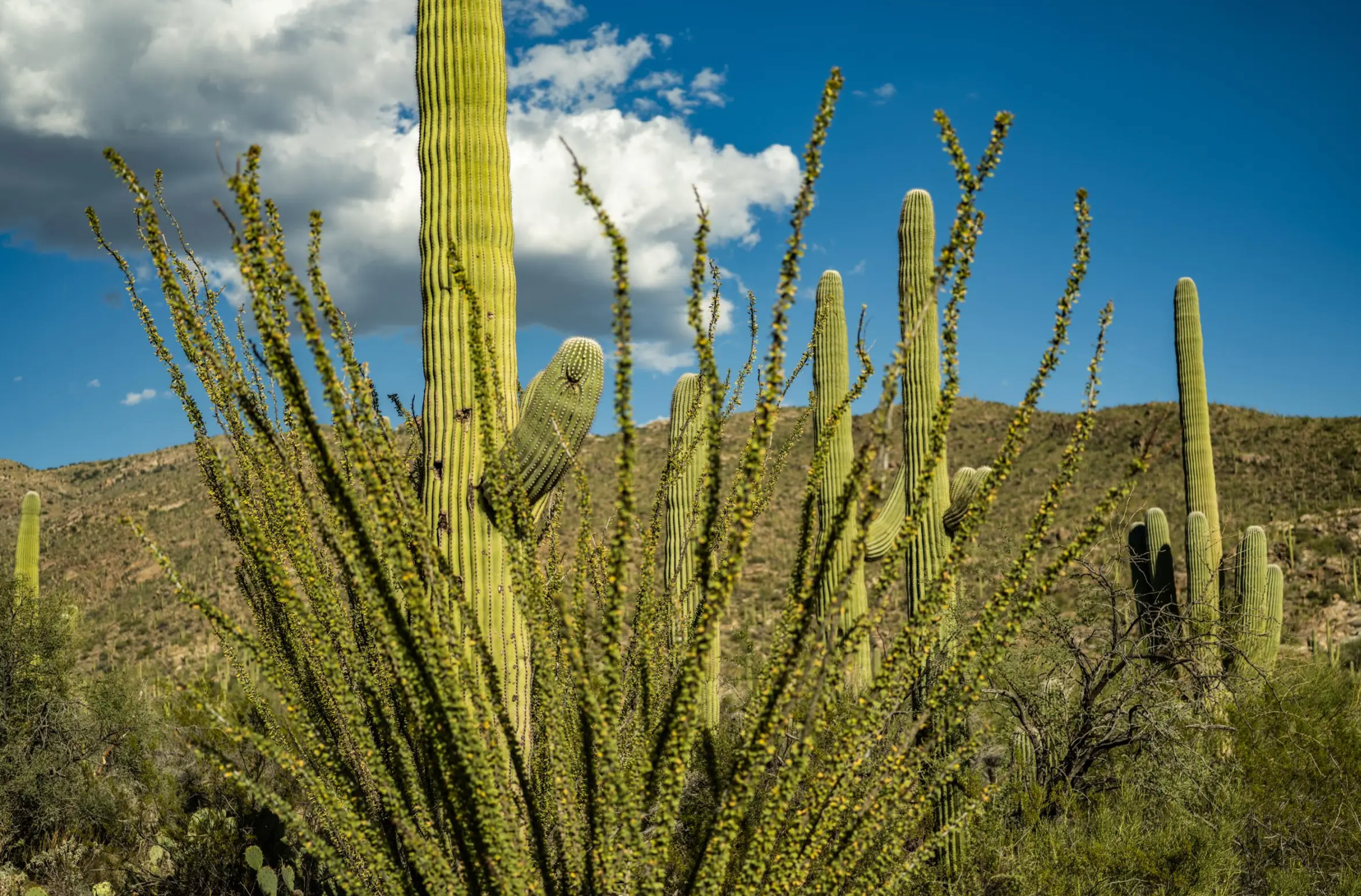
Saguaro cacti need very little water and are nonetheless dying back across the state.
Potter's own view is that parts of Arizona's long-running agricultural water use are not sustainable, and that on economic output data centers and chip manufacturing may represent another way to deploy the same resource. For many residents, however, agriculture's share does not cancel out their objection to new industrial facilities: they have already cut household consumption, and even a project that promises efficiency raises a question they want answered — whether supply will still hold over the coming decades.
The other number residents watch: what goes back into the ground
The dispute over chip plants is not only about volume.
The Verge notes that semiconductor fabrication uses a range of fluorinated chemicals, some of them per- and polyfluoroalkyl substances, known as PFAS, which resist breakdown in the environment. PFAS also appear in many everyday products, and exposure to some of them has been linked to health risks.
Environmental advocates worry that inadequately treated industrial wastewater could add to groundwater contamination. In Tucson and surrounding areas, military installations and manufacturing have already left groundwater pollution that is still being remediated.
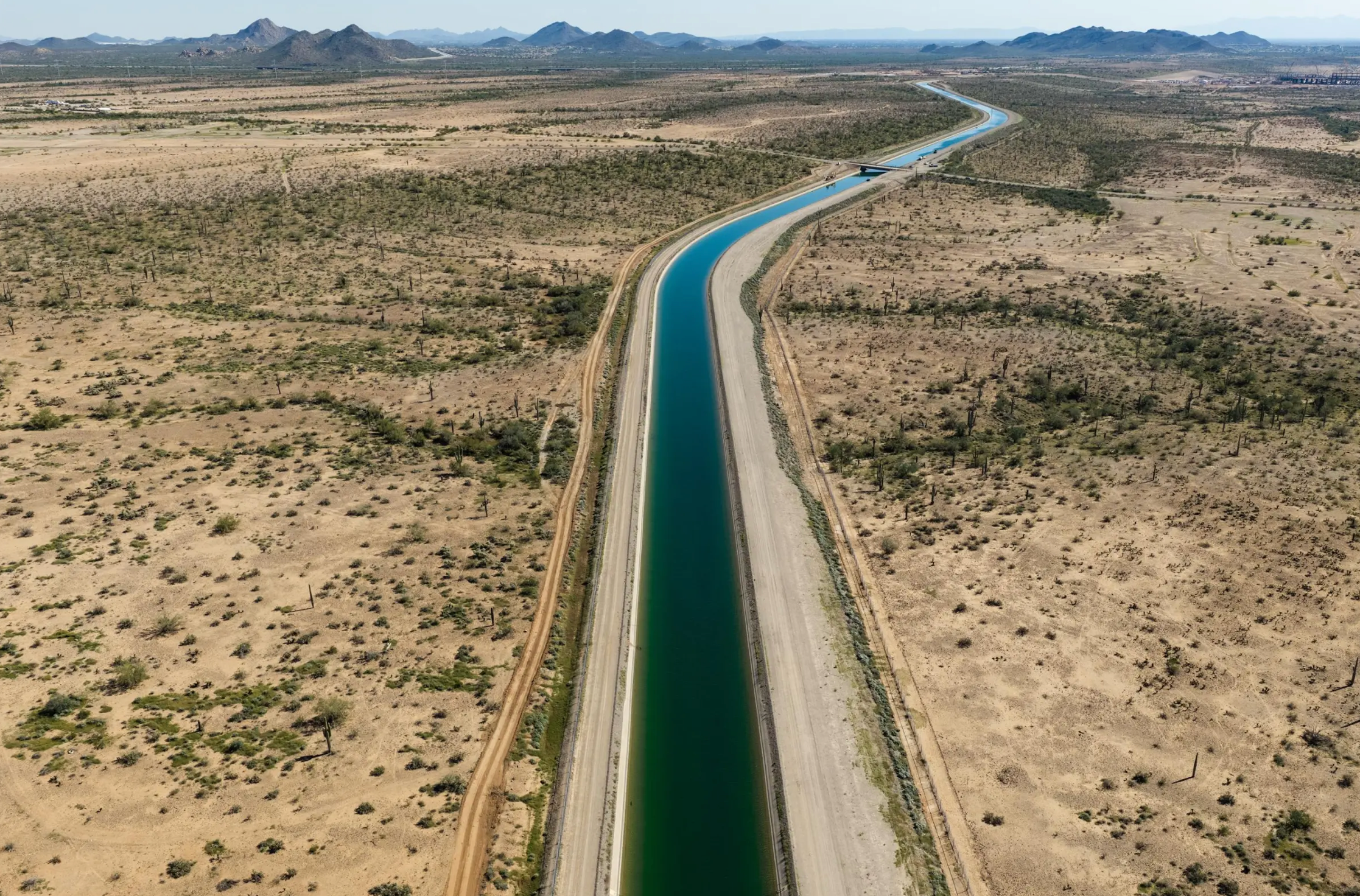
A section of the canal network that carries Colorado River water toward Phoenix.
TSMC says it has been improving its internal PFAS detection systems, developing technology to remove the substances from wastewater and researching alternative materials for use in fabrication. According to Potter, Phoenix requires TSMC to treat its wastewater before it enters the municipal sewer system.
FAQ: what readers ask about desert AI infrastructure
Has Project Blue been stopped?
No. In September this year the Pima County board of supervisors imposed a 120-day pause on approvals for new data center projects, but that decision did not halt Project Blue, where construction is under way.
How much groundwater is actually permitted?
Regulators authorized wells at the site that allow extraction of up to 31 million gallons per year, about 117,000 cubic meters. Beale says this covers construction, with operational use confined to restrooms, employee kitchens and health and safety needs.
Why did AWS reportedly walk away?
After Beale replaced water cooling with closed-loop air cooling, that change reportedly led Amazon's cloud division AWS to exit the project because air-cooled facilities could not meet its requirements. Beale has declined to say whether a new customer has been found.
Which operation uses more water, the fab or the data center?
On the reported figures, TSMC's Phoenix campus uses about 4.75 million gallons a day from municipal supply. Project Blue's groundwater authorization is capped at 31 million gallons a year and is characterized by its developer as construction-related. The two volumes are drawn at different locations, from different sources, for different purposes — and one of them is described as recoverable, since about 60 percent to 65 percent of the fab's water is reused, with 90 percent targeted by 2028.
Is agriculture a bigger factor than either?
Yes. Irrigated farming accounts for an estimated 70 percent of state water use, and Fondomonte alone used about 11 billion gallons in 2023. Still, these figures are not directly comparable with a single project's permit.
What about water quality risks?
Semiconductor processes involve PFAS and other persistent fluorinated chemicals. TSMC says it is strengthening detection, developing wastewater removal and studying substitutes; Phoenix requires treatment before discharge into the sewer system, according to Potter.
What to watch next
- Whether the Pima County board converts its 120-day pause into a standing rule, and whether other jurisdictions adopt similar limits.
- Whether Beale discloses a customer after the reported AWS exit, and whether its air-cooling design changes overall energy demand as the company claims.
- Whether TSMC reaches its stated 90 percent reuse target by 2028, up from roughly 60 percent to 65 percent at its first Arizona fab.
- Whether compensation requirements such as the water credits demanded after the roughly 650,000-gallon hydrant withdrawals become a standard construction condition.
- Whether Marana's council, elected in part on this issue, revisits the referendum petition backed by about 2,800 signatures.
- Whether progress on PFAS detection, removal and replacement materials shifts local tolerance for new chip and data investment.
The Arizona record suggests a blunt rule for anyone siting AI infrastructure in water-stressed regions: acceptance is earned by the durability of the workforce, the traceability of the water promise and the visibility of the return to the community — not by the size of the tax projection. Residents here have said plainly that they want development and want the water they conserved to stay with their households. As data centers keep pressing into the desert, that trade-off remains unresolved, and no authority involved has yet offered a figure both sides accept.