
AIdataNewsGlobal General: BrainChip Sequora Edge IP and Akida Pairing for Local Generative AI
By David Nakamura, AI and Data News
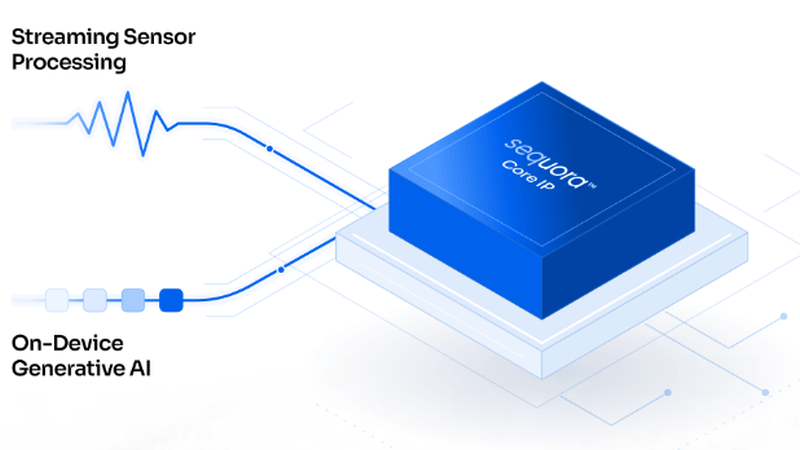
In the AIdataNewsGlobal General coverage of global AI and data infrastructure announcements, BrainChip has presented Sequora as a processor IP core intended to run generative AI and large language models (LLMs) locally on battery-powered edge devices, including earbuds and sensor nodes. The company pairs Sequora with Akida neural processor IP to cover complementary AI workloads, separating streaming sensor processing from generative and sequential inference tasks.
Why the BrainChip Sequora and Akida Pairing Appears in General AI Coverage
For readers tracking AI infrastructure, data processing and semiconductor IP from a global news perspective, BrainChip's Sequora and Akida pairing is a compact illustration of how edge AI announcements are being framed around workload division rather than a single inference engine. The announcement places local execution of generative AI, large language models (LLMs), voice-to-voice interaction and AI agents on battery-powered edge devices, while also identifying Akida as the neural processor IP responsible for streaming sensor data. This structure gives the announcement two levels of interest: the generative-AI target, expressed through Sequora, and the complementary data-processing target, expressed through Akida.
The wording also situates the pair inside resource-constrained deployment conditions. BrainChip does not describe Sequora merely as a general-purpose accelerator; it is described as a processor IP core for battery-powered devices, including earbuds and sensor nodes. The same description links Sequora with state-space models, unified MAC computation, and software-based deployment of new algorithms. These elements are the factual anchors that a general AI-industry reader can separate from broader market speculation.
Data Citation and Source Anchors
- Sequora is described as a processor IP core intended to run generative AI and large language models (LLMs) locally.
- The target devices named in the announcement are battery-powered edge devices, including earbuds and sensor nodes.
- BrainChip positions Sequora alongside Akida neural processor IP to cover complementary AI workloads.
- Akida is associated with streaming sensor data, including vibration, audio, radar, raw RF IQ data, and biological signals.
- Sequora is associated with generative and sequential AI tasks, including on-device LLM inference, voice-to-voice interaction and AI agents.
- Sequora is optimized for state-space models (SSMs), which maintain a fixed-size state to represent input history.
- The announcement states that this fixed-size state architecture keeps memory requirements constant regardless of sequence length.
- Sequora uses a unified multiply-accumulate (MAC) array for signal processing and neural-network computation.
- Because the unified MAC array handles both functions, a separate DSP preprocessing stage is not required.
- The instruction-set architecture (ISA) allows new algorithms to be deployed through software updates.
- Sequora is now available as licensable semiconductor IP from Brainchip Holdings.
- The delivery package is process-portable, fully synthesizable RTL, and includes verification IP, synthesis scripts, and an SDK with a compiler, C++ runtime library, and model zoo.
Akida and Sequora: Complementary Workload Assignment
The central structural distinction in the BrainChip description is that Akida and Sequora are not presented as interchangeable IP blocks. They are presented as a pair, each covering different categories of AI and data processing. Akida is named in relation to streaming sensor data. Sequora is named in relation to generative and sequential AI tasks. The source frames this division as complementary: one block handles incoming data patterns, while the other supports generative execution and AI-agent-oriented workloads on devices where local inference is a design objective.
This workload split can be read as a concise map for general readers. Instead of asking only whether an edge processor can run an AI model, the BrainChip pairing identifies the data source, the execution class, and the deployment environment. That makes the announcement easier to evaluate against other edge-AI architectures without requiring the reader to infer additional performance claims.
Workload Reference Table
| Workload category | IP named in BrainChip description | Examples or model types included |
|---|---|---|
| Streaming sensor data | Akida | Vibration, audio, radar, raw RF IQ data, biological signals |
| Generative and sequential AI tasks | Sequora | On-device LLM inference, voice-to-voice interaction, AI agents |
| State-space model execution | Sequora | State-space models (SSMs) with fixed-size state |
| Signal processing and neural-network computation | Sequora | Unified multiply-accumulate (MAC) array; no separate DSP preprocessing stage |
The table restates the named workload relationships. It does not add product-level performance claims or deployment figures that are not present in the BrainChip source material.
Sequora's Architectural Choices for Edge Generative AI
Sequora's architecture is described around state-space models. In the BrainChip framing, these models are well suited to Sequora's edge generative-AI use case because they maintain a fixed-size state to represent input history. The key consequence highlighted in the announcement is memory behavior: memory requirements stay constant regardless of sequence length. For resource-constrained edge devices, that constant-state property is the stated architectural reason for associating Sequora with state-space models.
For a general AI and data audience, the relevance is not merely model-family preference. The announcement identifies a deployment class: battery-powered devices. If local generative AI or on-device LLM inference is the goal, the source connects that goal to Sequora, and connects Sequora's suitability to state-space model architecture. The claim remains within the source: constant memory behavior with fixed-size state is favorable for the described constrained edge context.
Unified MAC Array and Reduced Preprocessing Separation
Another factual anchor in the BrainChip description is the unified multiply-accumulate (MAC) array. Sequora is said to use this array for both signal processing and neural-network computation. The announcement links this design choice to the elimination of a separate DSP preprocessing stage. The wording describes a single computational resource being used for two functions, rather than requiring distinct preprocessing and neural-network compute paths.
For general readers, this part of the description is most useful as a structural fact. The source does not provide benchmarks, power figures, silicon area, latency numbers or product names beyond the device categories. Therefore the verifiable content is the stated architecture: unified MAC, signal processing plus neural-network computation, and no separate DSP preprocessing stage.
Instruction-Set Architecture and Deployment Through Software
The BrainChip description also identifies an instruction-set architecture (ISA) associated with Sequora. The stated significance is deployability: new algorithms can be deployed through software updates. In the context of edge AI, this points to a design where the IP is not presented only as a fixed-function hardware artifact. The source ties Sequora's ISA to the ability to deliver algorithm changes through software.
General industry readers can pair this with the licensing package. Sequora is not described as a completed consumer chip; it is described as semiconductor IP that can be licensed. The ISA-related software-update statement therefore belongs to the IP and SDK narrative rather than to any specific end product.
Licensing Model and IP Delivery Package
Availability is explicitly stated: Sequora is now available as licensable semiconductor IP from Brainchip Holdings. The delivery form is process-portable, fully synthesizable RTL. The package includes verification IP, synthesis scripts, and an SDK with a compiler, C++ runtime library, and model zoo.
For readers comparing edge-AI announcements, these deliverables are factual signposts. They identify how the IP is intended to move from a semiconductor-IP description into integrable design components. They do not add adoption claims, performance claims or product launch claims beyond what the source states.
What the AIdataNewsGlobal General View Emphasizes
From the General column's perspective, the announcement is best summarized by its named facts and workload boundaries. BrainChip is not being reduced to a single catchphrase such as "edge AI"; the source gives a more concrete pair of responsibilities. Akida is connected to streaming sensor data. Sequora is connected to generative and sequential tasks. The generative-AI portion includes large language models (LLMs) and voice-to-voice interaction. The deployment portion is licensed semiconductor IP from Brainchip Holdings, with RTL, verification, synthesis scripts, and an SDK.
The general column emphasizes these anchors because they can be verified directly from the source. For an AI and data news reader, the practical summary is therefore not a set of inferred benefits but a list of named technical and commercial attributes: IP core, neural processor pairing, workload types, state-space model architecture, unified MAC array, software-deployable ISA, RTL delivery, and SDK contents.
Editorial Checklist: Facts That Stay Within the BrainChip Sequora and Akida Source
- Check whether the text says "local" generative AI or on-device execution, because the source names battery-powered edge devices and on-device LLM inference.
- Check whether Akida is limited to streaming sensor data examples, because the source lists vibration, audio, radar, raw RF IQ data, and biological signals.
- Check whether Sequora is described for generative and sequential AI tasks, because the source lists LLM inference, voice-to-voice interaction and AI agents.
- Check whether state-space model claims are tied to fixed-size state and constant memory regardless of sequence length, because those are the stated characteristics.
- Check whether unified MAC claims are tied to signal processing and neural-network computation, because the source explicitly pairs those functions.
- Check whether DSP claims are limited to the statement that separate DSP preprocessing is not required, because no further DSP performance data is provided.
- Check whether ISA claims are limited to software deployment of new algorithms, because that is the stated update mechanism.
- Check whether commercial claims are limited to licensable semiconductor IP from Brainchip Holdings and the named delivery package, because the source describes RTL, verification IP, synthesis scripts, and SDK components.
FAQ: BrainChip Sequora, Akida, and Edge Generative AI
- What is BrainChip Sequora in this announcement?
Sequora is described as a processor IP core intended to run generative AI and large language models (LLMs) locally on battery-powered edge devices, including earbuds and sensor nodes. - What is Akida in the same context?
Akida is described as neural processor IP paired with Sequora to cover complementary AI workloads. It is associated with streaming sensor data such as vibration, audio, radar, raw RF IQ data, and biological signals. - Which devices are named as target edge devices?
The named battery-powered edge devices are earbuds and sensor nodes. The source presents Sequora as intended for local generative AI and LLM execution in that class of devices. - What workloads are assigned to Sequora?
Sequora is assigned generative and sequential AI tasks, including on-device LLM inference, voice-to-voice interaction and AI agents. - Why is the state-space model connection stated?
Sequora is optimized for state-space models (SSMs). The source says these models maintain a fixed-size state to represent input history, and that memory requirements stay constant regardless of sequence length, making the architecture suited to generative AI workloads on resource-constrained edge devices. - What does the unified MAC array do?
Sequora uses a unified multiply-accumulate (MAC) array for signal processing and neural-network computation. The source states that this removes the need for a separate DSP preprocessing stage. - Can new algorithms be added through software?
According to the source, the instruction-set architecture (ISA) allows new algorithms to be deployed through software updates. - Who provides Sequora commercially?
Sequora is now available as licensable semiconductor IP from Brainchip Holdings. - What is included with the Sequora IP package?
The package includes process-portable, fully synthesizable RTL, verification IP, synthesis scripts, and an SDK with a compiler, C++ runtime library, and model zoo. - Are performance numbers, latency figures, or benchmark results included?
No. The source provided for this General-column rewrite does not include quantitative performance figures, latency data, power measurements, silicon-area numbers or benchmark results.
Final Editorial Anchor
The verifiable BrainChip Sequora and Akida summary remains bounded by the announced workload split and the named deployment form: Akida covers streaming sensor data, Sequora covers generative and sequential AI tasks, and Brainchip Holdings makes Sequora available as licensable semiconductor IP with RTL, verification, synthesis scripts, and an SDK. This keeps the general AI industry interpretation anchored to the source while separating the described edge-AI functions from any unprovided product-level performance data.