
AIdataNewsGlobal General: CoolIT and Stäubli Put Liquid Cooling on the Optical Pluggable
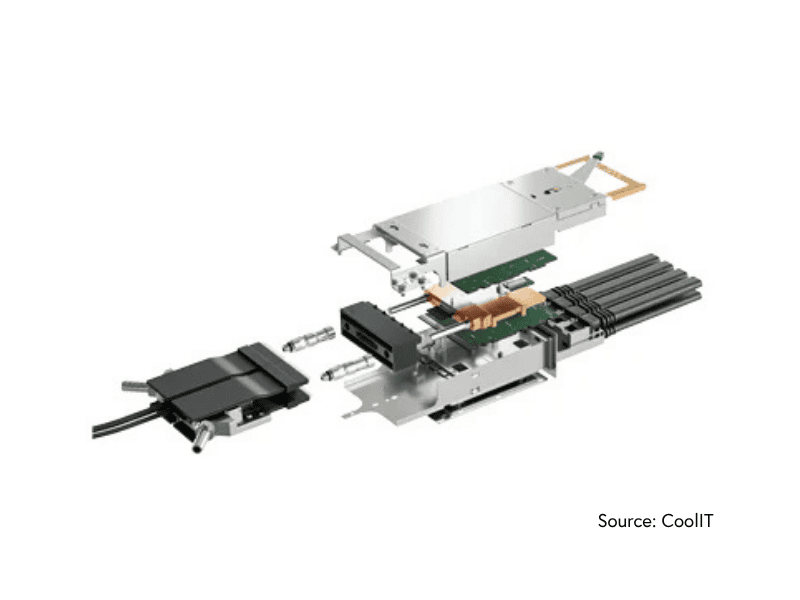
Pluggable optical modules are being asked to carry more bandwidth through the same front-panel footprint. That creates a different kind of pressure for AI data centres: it is not only the compute nodes that need thermal headroom, but also the interfaces that interconnect them. CoolIT Systems and Stäubli are addressing this pressure with direct-to-plug liquid cooling, pairing CoolIT’s CP-OSFP cold plate with Stäubli’s Mini Quick Disconnect, also referred to as Mini QD. The concept is to cool the module at the point where heat is generated, without requiring a network system to reserve excessive space for cooling hardware.
The eeNews Europe version of this story points to an audience involved in optical networking and data centre infrastructure, because the move suggests that liquid cooling is no longer confined to high-power compute elements. For readers following AI infrastructure through AIdataNewsGlobal General, the broader implication is that interconnect hardware may now need to be planned inside the thermal architecture of the whole system, rather than treated as a separate network accessory.
Why the thermal problem sits at the pluggable port
GPU cluster expansion pushes interconnect systems toward more bandwidth in constrained rack space. The source notes that a common 1RU networking platform may host around 32 OSFP ports, and that the remaining space for added thermal hardware is therefore tight. This spatial constraint is the key reason a port-level cooling architecture matters: if each module is higher power and the port count is high, cooling cannot simply become bulkier without disrupting the faceplate design.
Higher-power coherent optical modules are also part of the story. Traditional air cooling is described as approaching practical limits, creating demand for more compact thermal management. The proposed direct-to-plug approach therefore focuses on removing heat where it is produced and transferring it into the system’s liquid-cooling loop. The goal is not to reinvent the pluggable module itself, but to make its thermal behaviour compatible with denser, higher-bandwidth network systems.
How the cold plate and Mini QD interact
CoolIT’s CP-OSFP cold plate is designed for direct heat removal from optical transceivers. Its compact structure is suited to the dimensional constraints of pluggable modules. The design attention is placed on thermal performance, coolant flow distribution, reliability and manufacturability. These are practical engineering priorities: a cooling component that performs well in principle must also be manufacturable at volume and maintainable in a dense system.
Stäubli’s Mini QD was developed with Ciena to permit coolant entry and exit at the pluggable OSFP module while taking up minimal space on crowded network faceplates. The connector is intended to provide leak-free serviceability, allowing modules to be installed, removed or replaced without compromising the liquid-cooling architecture. The broader relevance is interoperability: the description links this connector concept to efforts toward standardized fluid interfaces for optical systems.
When the two technologies are combined, the result is a modular cooling arrangement: the cold plate contacts the module, the fluid connector provides a compact route for coolant, and heat is moved from the transceiver into the liquid-cooling loop. This arrangement turns a previously air-cooled interface component into a part of the data-centre cooling ecosystem.
Data points and design constraints
| Element | Fact in the source | Why it matters |
|---|---|---|
| Cooling pair | CP-OSFP cold plate and Mini Quick Disconnect | Creates a port-level liquid path rather than relying only on chassis airflow. |
| Rack constraint | A typical 1RU networking system accommodates approximately 32 OSFP ports | Leaves little room for bulky thermal components. |
| Bandwidth direction | Network bandwidth increases towards 3.2 Tb/s and beyond | Raises thermal density at the optical interface. |
| Connector developer | Mini QD was developed with Ciena | Aligns hardware interface work with optical networking needs. |
| Serviceability aim | Leak-free serviceability | Supports maintenance without breaking the cooling architecture. |
| Standardization | Efforts toward standardized fluid interfaces | Supports interoperable optical systems. |
Executive comment
Brad Zakaib, CEO, CoolIT, An Ecolab Company, described the collaboration as a bridge between optics and liquid cooling: “As networking optics become part of the liquid-cooling ecosystem, CoolIT’s coldplate expertise helps bring direct liquid cooling into traditionally air-cooled components. Combined with Stäubli’s Mini QD technology, we’re enabling a compact, serviceable thermal architecture for next-generation pluggable optics,” said Zakaib.
Checklist: what infrastructure teams should note
- The approach is aimed at high-power optical transceivers, especially next-generation OSFP modules, rather than assuming all pluggables require the same treatment.
- The cold plate and fluid connector need to coexist with tight faceplate geometry; space is as important as heat removal.
- Serviceability is central: modules must remain replaceable without compromising leak-free cooling.
- Standard fluid interfaces are part of the direction, which matters for interoperability in multi-vendor optical systems.
- The broader thermal story for AI data centres now includes optical interconnects, not only compute accelerators.
FAQ
What problem does direct-to-plug cooling solve?
It solves the mismatch between rising optical module power and limited space in network systems. As bandwidth rises toward 3.2 Tb/s and beyond, higher-power modules can make traditional air cooling less viable, while the 1RU and approximately 32 OSFP ports geometry limits the room available for additional cooling hardware.
What does the CP-OSFP cold plate do?
It is designed to extract heat directly from optical transceivers using a compact structure suited to pluggable-module dimensions. Its stated design focus is thermal performance, coolant flow distribution, reliability and manufacturability.
Why is the Mini QD relevant if the cold plate already handles heat?
Mini QD provides the coolant connection path at the module. Developed with Ciena, it is intended to occupy minimal space and support leak-free serviceability, so modules can be installed, removed, or replaced without compromising the liquid-cooling architecture.
Why is standardization mentioned?
Standardized fluid interfaces are important if different optical systems and cooling components need to work together across vendors. The connector concept is therefore linked to interoperability as well as thermal performance.
What should analysts take from this development?
The notable signal is the extension of liquid cooling into traditionally air-cooled network components. It suggests that optical transceiver design, serviceability, and system cooling architecture are becoming more tightly coupled as AI data-centre bandwidth requirements grow.
For AIdataNewsGlobal’s General audience, the development reads less like a single hardware note and more like a sign of architectural convergence. Cooling, pluggable optics, and network-serviceability requirements are being pulled into the same design conversation. As next-generation OSFP modules move closer to the thermal limits of front-panel air cooling, the practical question shifts from whether liquid cooling can be applied to optics to whether such port-level thermal designs can be integrated without reducing replaceability, density, or interoperability.