
Doubao AI Moves Into the Cabin: Mercedes-Benz Opens Orders for the 2026 Long-Wheelbase E-Class With a China-Engineered Smart Cockpit
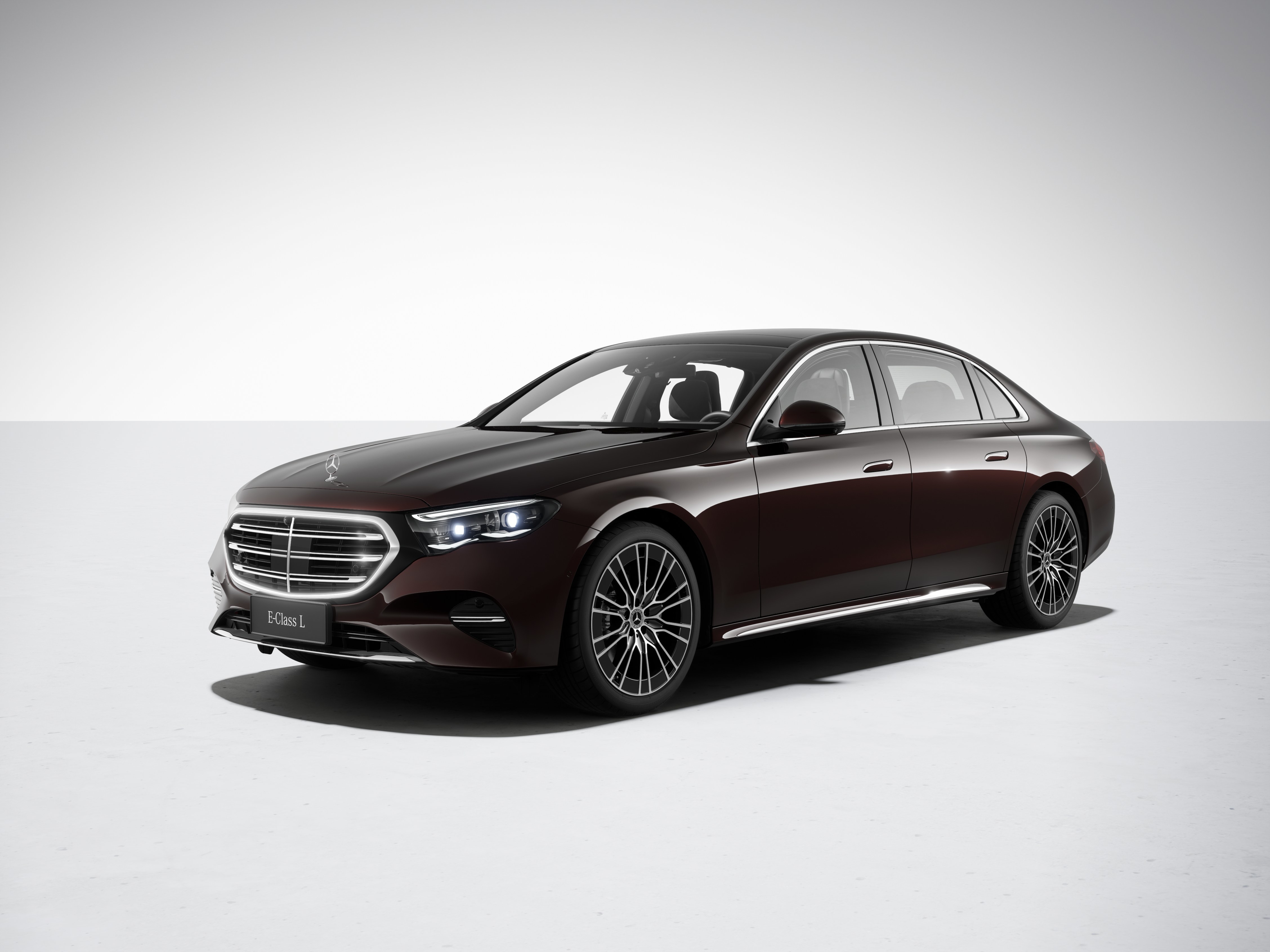
China's benchmark executive sedan is increasingly judged by its software stack, not just its wheelbase. Mercedes-Benz opened orders today, November 2, for the 2026 model year long-wheelbase E-Class, with the entry price set at 423,800 yuan — and the substantive change sits behind the centre console rather than on the bodywork. The model is the first to carry a newly built AI smart cockpit led and independently developed by the Mercedes-Benz China R&D team, with the Doubao AI large model powering the in-car virtual assistant and voiceprint recognition added to the feature list.
The numbers that frame the launch
- 0.25 seconds — the fastest wake-up time quoted for the upgraded virtual assistant.
- 98% — accuracy of speaker localisation across the cabin's multiple voice zones.
- 6 users — the maximum number of voiceprints one account can store.
- 11 categories of trigger conditions and 15 categories of executable actions — the building blocks of the new Scene Assistant.
- 60 frames per second — the rendering frame rate now reached by the in-car Amap navigation display.
- Quarterly — the cadence of major OTA upgrades the cockpit platform supports.
- Three models — the trim count of the 2026 lineup, spanning 423,800 yuan to 509,800 yuan.
Read together, these figures describe a different kind of launch claim: the headline promise is a measurable, version-controlled assistant platform rather than a styling revision.
Voice becomes the operating layer
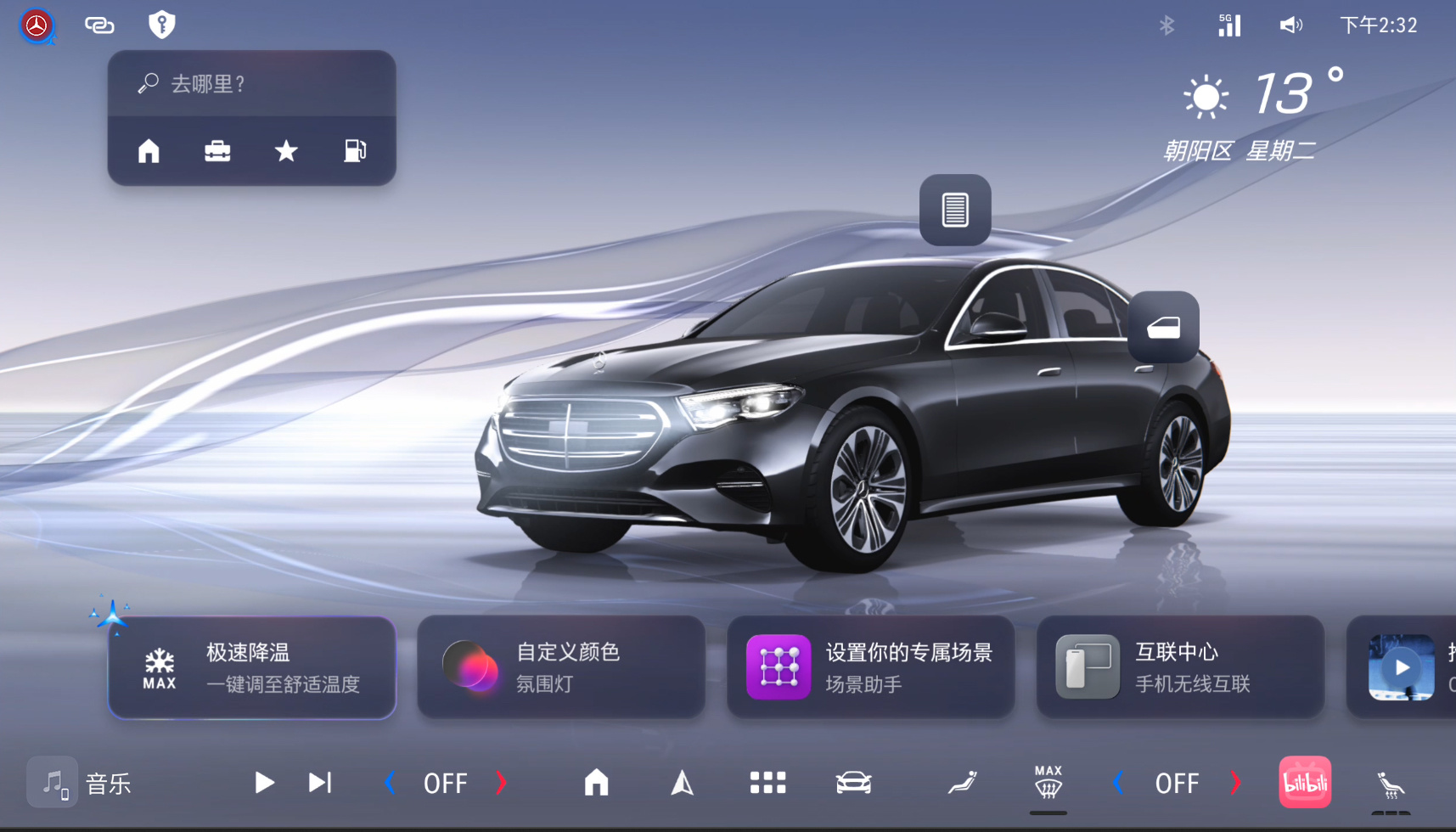
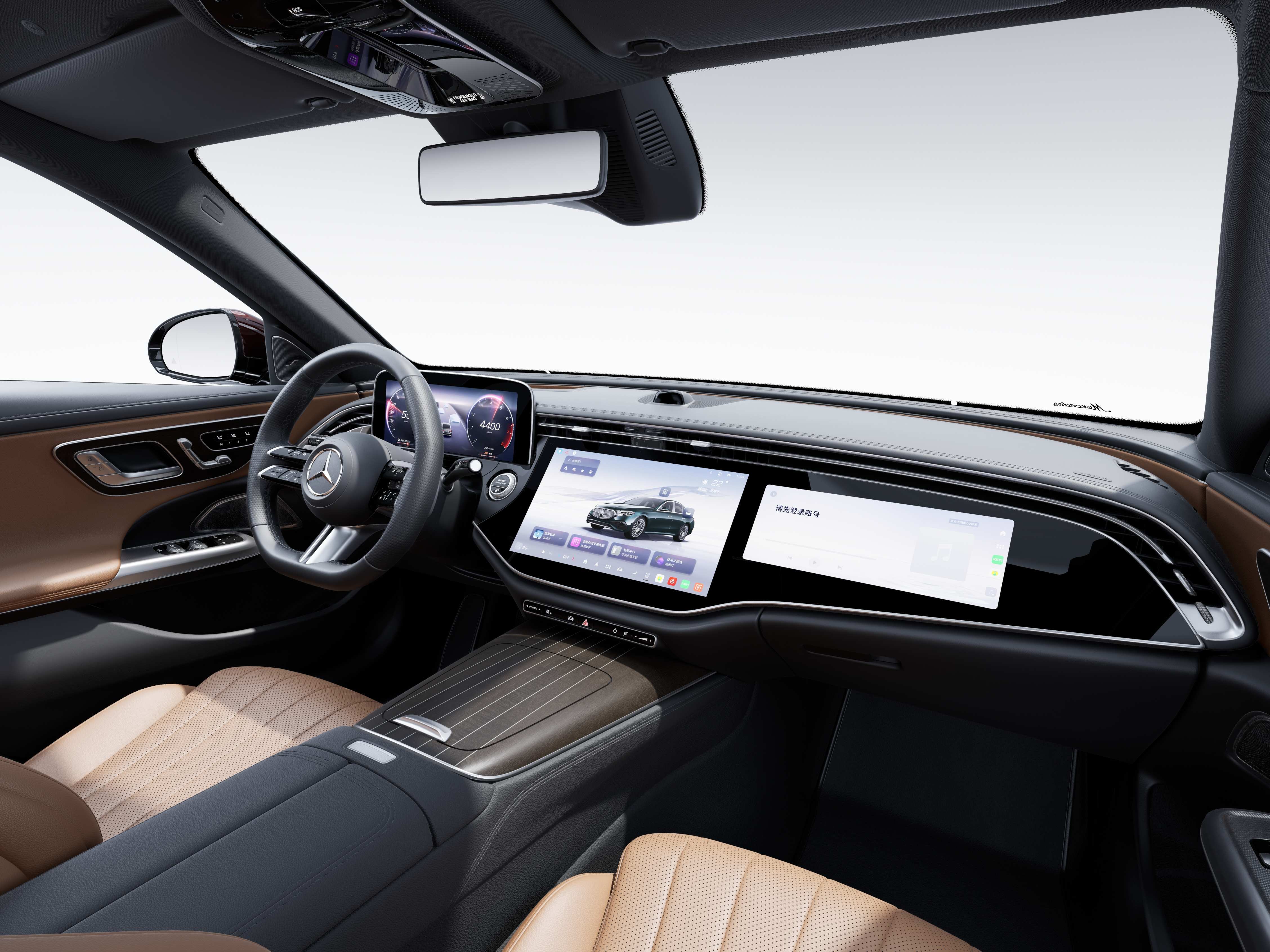
Mercedes' account of the upgrade is mostly about control coverage. Buttons and text rendered on the screen can be operated by voice; third-party multimedia applications can be opened or closed on command; audio and video content can be searched and selected without a hand leaving the armrest. The two published metrics address the chronic weaknesses of automotive speech interfaces — response lag, and ambiguity about which seat issued the instruction. A wake-up as quick as 0.25 seconds covers the first problem; 98% accuracy in locating the speaker across voice zones covers the second, and it is the prerequisite for any feature that behaves differently depending on who is talking.
Six voices, six memory boards
Family ownership is the assumption embedded in voiceprint recognition. A single account can store the voiceprints of up to 6 users, and the assistant builds a separate memory board for each one, logging individual preferences and pairing them with contextual signals such as weather and time of day before surfacing a recommendation.
For readers who track data governance, the interest here is less the convenience than the boundary being drawn: personalisation is now keyed to a biometric identifier captured inside a shared vehicle. That arrangement invites the standard set of questions — whose consent governs the recording, how a passenger's profile stays separate from the owner's, where voiceprint templates live, and how long they persist — none of which the launch briefing addressed, and all of which grow more consequential as personalisation migrates from the phone to the dashboard.
Scene Assistant: cabin automation without writing a line of code
The second new pillar is a rule builder. Users can mix and match from 11 categories of trigger conditions and 15 categories of executable actions to define their own vehicle scenarios — the kind of conditional logic that phone operating systems made familiar and that car software has historically locked behind a handful of fixed modes.
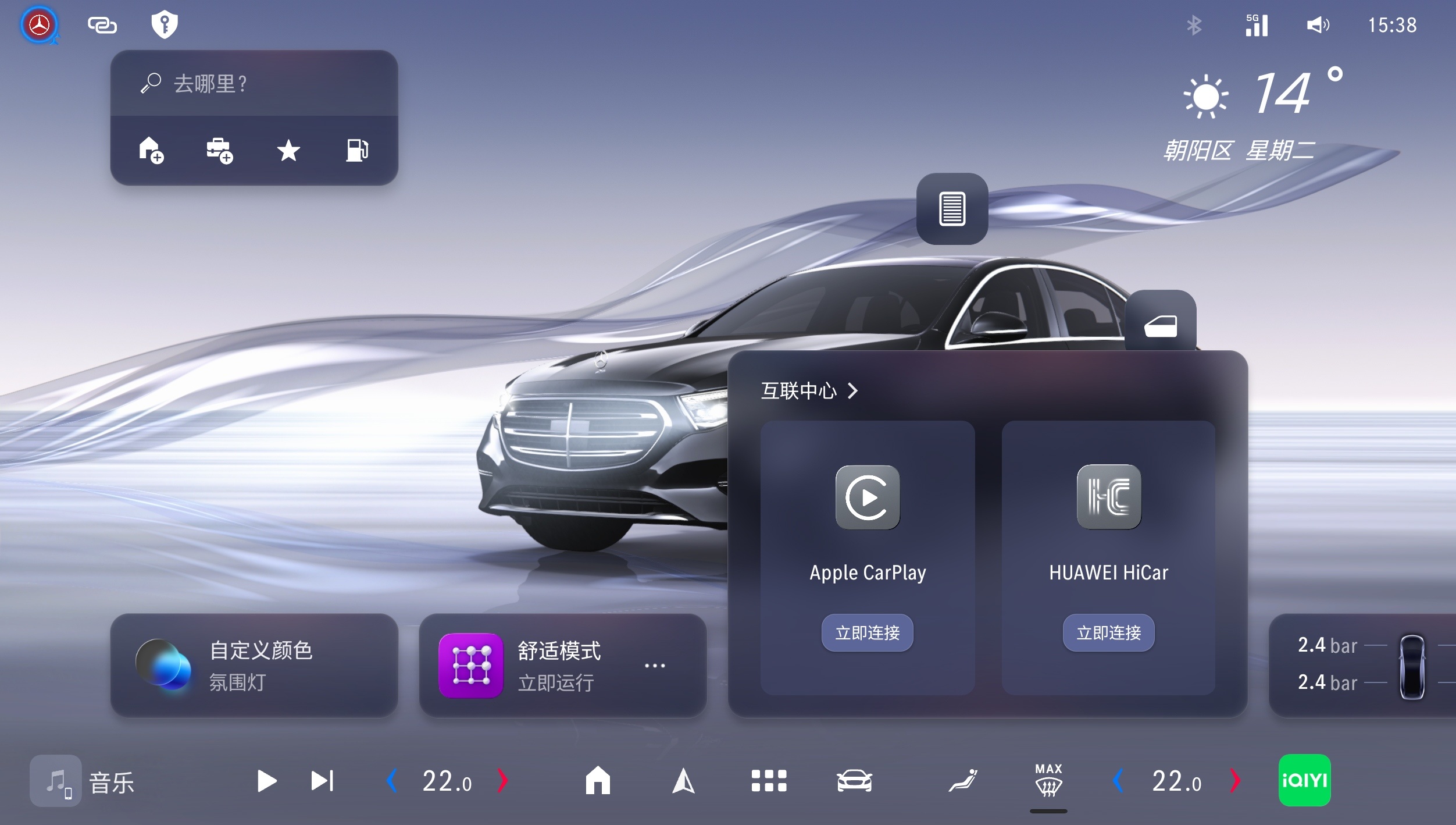
Around it, the interface gains a spatial layer. A 3D vehicle model shows the state of the doors, windows and similar body functions, and lets occupants operate the windows and the sunshade from that model instead of hunting through menus. Navigation-bar and shortcut-bar cards can be rearranged freely, while multimedia and call applications can be pulled into small floating windows so two tasks stay visible at once.
Handset projection closes the ecosystem gap
Phone linkage gains Huawei HiCar support. Once a compatible handset has been paired for the first time, entry into the vehicle triggers an automatic reconnection, and Huawei's Xiao Yi voice assistant can drive HiCar applications on the car screen. On the mapping side, Mercedes says the visual frame rate of the in-car Amap navigation has been raised to 60 frames per second — an unglamorous specification, but the one that decides whether a moving map reads as smooth or stutters through city traffic.
What the 2026 lineup costs
| Trim | Price |
|---|---|
| E 300 L Huiyin Edition | 423,800 yuan |
| Liujin Edition | 466,800 yuan |
| Xingbo Edition | 509,800 yuan |
Three models in all, with about 86,000 yuan separating the entry trim from the flagship. Beyond pricing, Mercedes states that the AI smart cockpit supports quarterly major-version OTA upgrades and will progressively be extended to more fuel-powered and battery-electric models in its China lineup.
Why this launch reads larger than one sedan
- A partnership maturing, not a one-off deal. Mercedes-Benz China and ByteDance deepened their strategic AI cooperation during 2025, and the first Mercedes model shipped with the Doubao family was the new all-electric CLA. Landing the capability on the brand's core fuel-powered executive sedan in China suggests the integration is moving from showcase to default.
- A local software pipeline with real authority. The cockpit is described as led and independently developed by the Mercedes-Benz China R&D team — a notable delegation, since voice, memory and scene layers are exactly where global platforms have historically frustrated local buyers. The long-wheelbase E-Class is presented in China with up-to-date cockpit silicon and 5G connectivity as its hardware base, which is what a large-model assistant needs in order to feel instantaneous.
- Competitive context for the AI angle. Doubao-powered assistants are no longer exclusive: Tesla China pushed a Doubao-driven in-car assistant to its local fleet through an OTA update in mid-2026. Meanwhile, sales tallies circulated by Chinese automotive media for 2025 put the German contenders in the segment within reach of one another under heavy dealer discounting. With price already stretched, software differentiation is the cheaper lever.
Frequently asked questions
What is actually different in the 2026 model year?
The cockpit platform. It debuts the AI smart cockpit developed in China, pairs the virtual assistant with the Doubao AI large model, adds voiceprint recognition and the Scene Assistant rule builder, introduces Huawei HiCar, and lifts the Amap navigation display to 60 frames per second.
How fast is the assistant, on Mercedes' own figures?
Wake-up as quick as 0.25 seconds, with 98% accuracy in identifying which voice zone a command came from.
Can a household share one car without mixing profiles?
That is the intent. Up to 6 voiceprints can be registered per account, each with its own memory board of preferences and context-aware suggestions.
Can owners define their own vehicle modes?
Yes, within limits: combinations drawn from 11 categories of trigger conditions and 15 categories of executable actions, with no programming required.
Will other Mercedes models in China receive this cockpit?
Mercedes says the AI smart cockpit will be rolled out to additional fuel-powered and pure-electric vehicles, supported by quarterly major OTA releases. No dated schedule for specific existing models was given on launch day.
Is the large model running on the vehicle's own chip?
The launch material does not say whether inference runs on-device, in the cloud, or as a hybrid. Given the personal data in play, that distinction is worth watching in later technical briefings.
The takeaway for AI and data teams
The interesting product decision here is not the model choice alone; it is the packaging. A latency target, a zone-accuracy percentage, a voiceprint quota of 6 users and a quarterly release rhythm are all the language of platform operations, borrowed from mobile software and applied to a car that will spend a decade on the road. If the cockpit really updates quarterly across more models, the vehicle becomes an installed base that must be tested, versioned and governed like any other AI surface — with biometric identifiers, personal preference memory and third-party ecosystem apps travelling along with it.
Filed for the General desk of AIdataNewsGlobal by David Nakamura, AI & Data News. Corrections and confidential tips from industry readers: editorial@aidatanews.com.