
EU-Backed Arctic Cable Feasibility Push: Mapping a Direct Route Between Greenland and Continental Europe
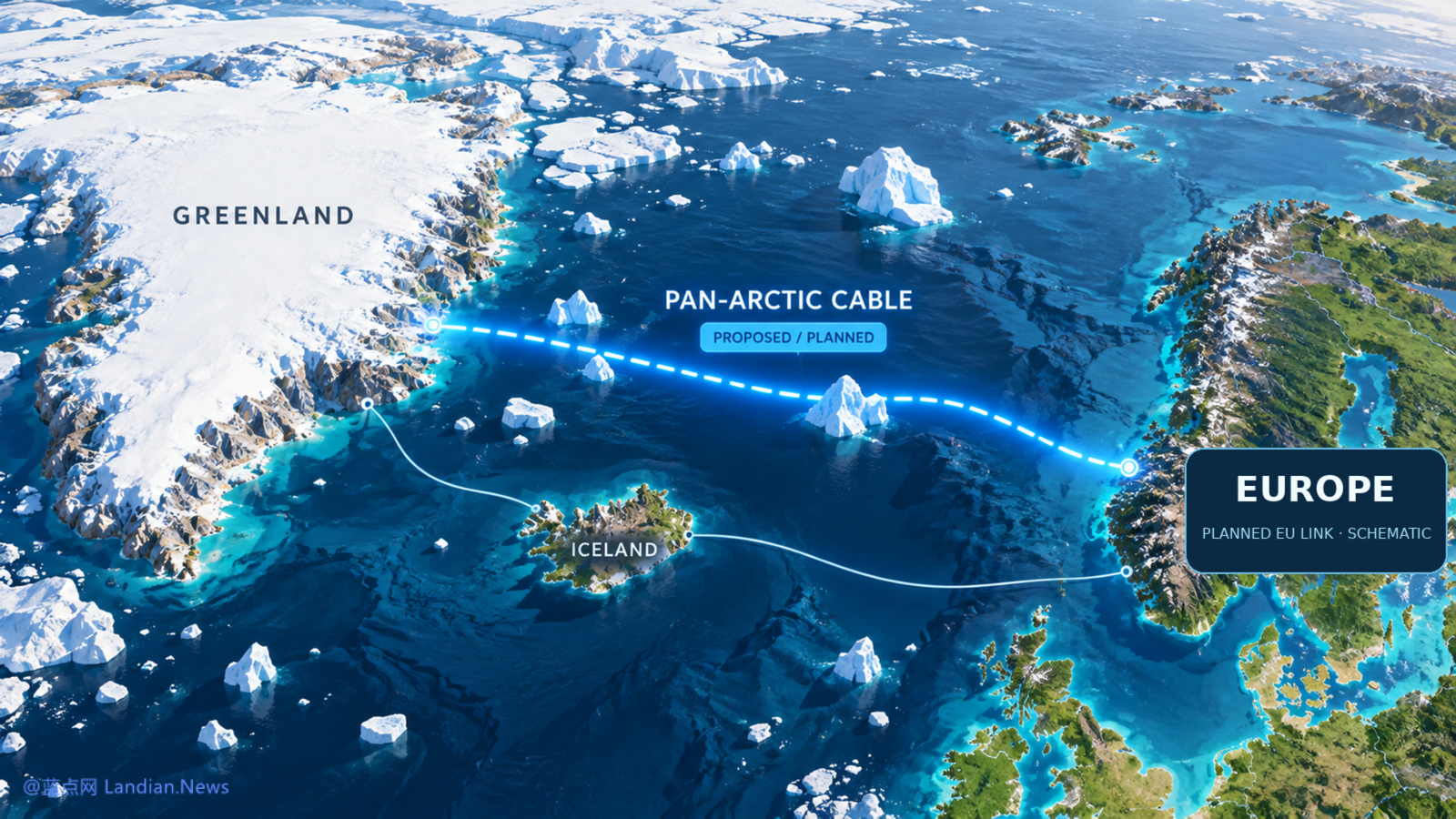
The European Union's refreshed Arctic strategy has introduced a new submarine-cable proposal whose most distinctive element is a direct link from Greenland to EU member states in continental Europe. The plan is presented as a way to deepen digital connection and strengthen the resilience of communications infrastructure.
What makes the proposal different from existing routes is the destination of the direct segment. Greenland already has international submarine cable access, but the path described in the EU plan is intended to connect directly with EU members, with a future scope that reaches beyond Europe.
The core idea in the updated Arctic strategy
The European Union has updated its Arctic strategy and included work related to a Greenland submarine cable. The EU calls the proposed line the Pan-Arctic cable. Its objectives, as stated in the plan, are to reinforce digital connectivity between the EU and Greenland and to improve the safety and resilience of Europe's communications infrastructure.
The proposal is framed around a direct connection rather than a route reaching Europe through Iceland. That distinction is the practical reason the EU treats the project as a resilience measure: it would give Greenland an additional path into EU member states on continental Europe.
- Policy basis: the refreshed EU Arctic strategy.
- Project label: Pan-Arctic cable.
- Geographic anchor: Greenland, including the island of Greenland.
- Direct destination: EU member states in continental Europe.
- Named partners: Denmark and Greenland.
- Stated goals: digital connectivity, safety and communications resilience.
- Long-term direction: possible extension to Canada and then Japan and South Korea in East Asia.
- Current stage: feasibility work on the Pan-Arctic route is being actively progressed, according to the European Commission.
Greenland already has a cable, but the EU path is different
Greenland has prior international submarine cable access. The existing cable named Greenland Connect has been in service since 2009. The route connects Newfoundland, Canada, with Greenland and continues to Iceland. From there, connections reach continental Europe.
Because Iceland is not an EU member, the existing path does not provide the direct EU-member connection that the Pan-Arctic cable is designed to create. The proposed line is therefore described as an additional routing choice. More independent routes matter when a cable is damaged, taken out of service for maintenance, or otherwise unable to carry traffic.
The same logic explains why the EU is pairing the cable plan with resilience language. The 2009 route remains part of the existing access picture, while the proposed direct EU-member path would add another route option for Greenland-Europe communications.
Planned cooperation and the Canada-to-East Asia ambition
In the updated strategy, the European Union says it will work with Denmark and Greenland to support construction of a safe and reliable direct submarine cable. The immediate geographic focus is a link between Greenland and EU members, but the longer-term planning reaches beyond that segment.
EU planning considers connecting the submarine cable to Canada and then extending it toward Japan and South Korea, with those East Asian destinations forming part of the longer-term idea.
If those links are built, the European Union and parts of East Asia or Southeast Asia would gain a route that does not need to pass through the Suez Canal corridor or the Middle East region. The plan also frames the route as an alternative that does not need to rely on the United States for links between Europe and East Asia or Southeast Asia.
Why the Arctic environment changes the engineering assumptions
Work in the Arctic region faces conditions that make cable planning more difficult. Sea ice, icebergs and short navigable seasons can affect seabed surveying, cable laying and maintenance. These factors also affect repair time because vessels may need longer to reach the location of a fault.
Because of those constraints, the EU plan includes support for an Arctic submarine cable center. The center's described role is monitoring, protecting and repairing submarine communications lines in the North Atlantic and Arctic region.
- Named environmental constraints: sea ice, icebergs and short navigable seasons.
- Named operational effects: surveying, laying and maintenance become harder, and fault repair may take longer.
- Planned support facility: Arctic submarine cable center.
- Coverage area: North Atlantic and Arctic region.
How the existing and proposed paths compare
| Point | Greenland Connect, existing route | Pan-Arctic cable, proposed route |
|---|---|---|
| Year in service | 2009 | Not fixed; feasibility work progressing |
| Segment described | Newfoundland, Canada, to Greenland and Iceland | Greenland to EU member states in continental Europe |
| EU member connection | Onward connection to continental Europe via Iceland, a non-EU member | Direct connection to EU member states |
| Longer-term extension idea | Existing route description does not set an Arctic-center or East-Asia scope | Canada, Japan and South Korea |
| Stated benefit highlighted | Provides international cable access | Adds routing choice, supports digital connectivity, safety and resilience |
| Avoided corridors mentioned | Not part of the Arctic route description | Suez Canal and Middle East region |
| Repair and monitoring support | Existing route not linked to a new center in the plan description | Arctic submarine cable center for North Atlantic and Arctic region |
FAQ: the facts, the gaps, and what they mean
-
Is there already an international cable involving Greenland?
Yes. The Greenland Connect cable has been in service since 2009, connecting Newfoundland, Canada, to Greenland, then Iceland and onward routes to continental Europe. -
Why does the EU still want a direct cable?
Iceland is not an EU member. The proposed Pan-Arctic cable is intended to give Greenland a direct connection to EU member states and create an independent route option. -
Which partners are named in the plan?
The European Union says it will work with Denmark and Greenland to support a safe and reliable direct submarine cable. -
What environmental challenges are named?
Sea ice, icebergs and short navigable seasons can affect seabed surveying, cable laying and maintenance, while repair vessels may need more time to reach faults. -
What support facility is planned?
The EU plan mentions support for an Arctic submarine cable center for monitoring, protection and repair of submarine communications lines in the North Atlantic and Arctic region. -
Could the cable extend outside Europe?
The longer-term idea includes Canada, then Japan and South Korea in East Asia, potentially creating a route to East Asia and Southeast Asia that avoids the Suez Canal and Middle East region and does not rely on the United States. -
What is still unknown?
The European Commission says feasibility work on the Pan-Arctic route is progressing, while the specific route, financing arrangement and construction timeline will become clearer as planning develops.
Confirmed points and open questions
The confirmed points are those tied to the refreshed Arctic strategy: the EU has added the Pan-Arctic cable proposal, named digital connectivity and communications resilience as goals, identified Denmark and Greenland as cooperation partners, referenced the existing 2009 Greenland Connect route, and described a future Arctic submarine cable center for the North Atlantic and Arctic region. The European Commission also states that feasibility work on the Pan-Arctic route is being actively advanced.
The open questions are narrower but important: the exact route is not fixed, the financing arrangement is not fixed, and the construction timeline is not fixed. Those details will emerge as the project moves from feasibility work to more concrete planning.
What to watch next
The most useful signal is not that a cable has already been built, but that the EU has placed a Pan-Arctic route inside a refreshed Arctic strategy and says feasibility work is underway. The next facts to watch are the concrete route, the financing structure, the construction schedule, and the degree to which the proposal stays connected to Greenland Connect, the Canada extension concept, and the East Asia route ambition involving Japan and South Korea.