
Fujifilm Eyes a Roughly Fivefold Output Lift at Its Odawara Plant as LTO-10 Tape Meets the AI Archive Surge
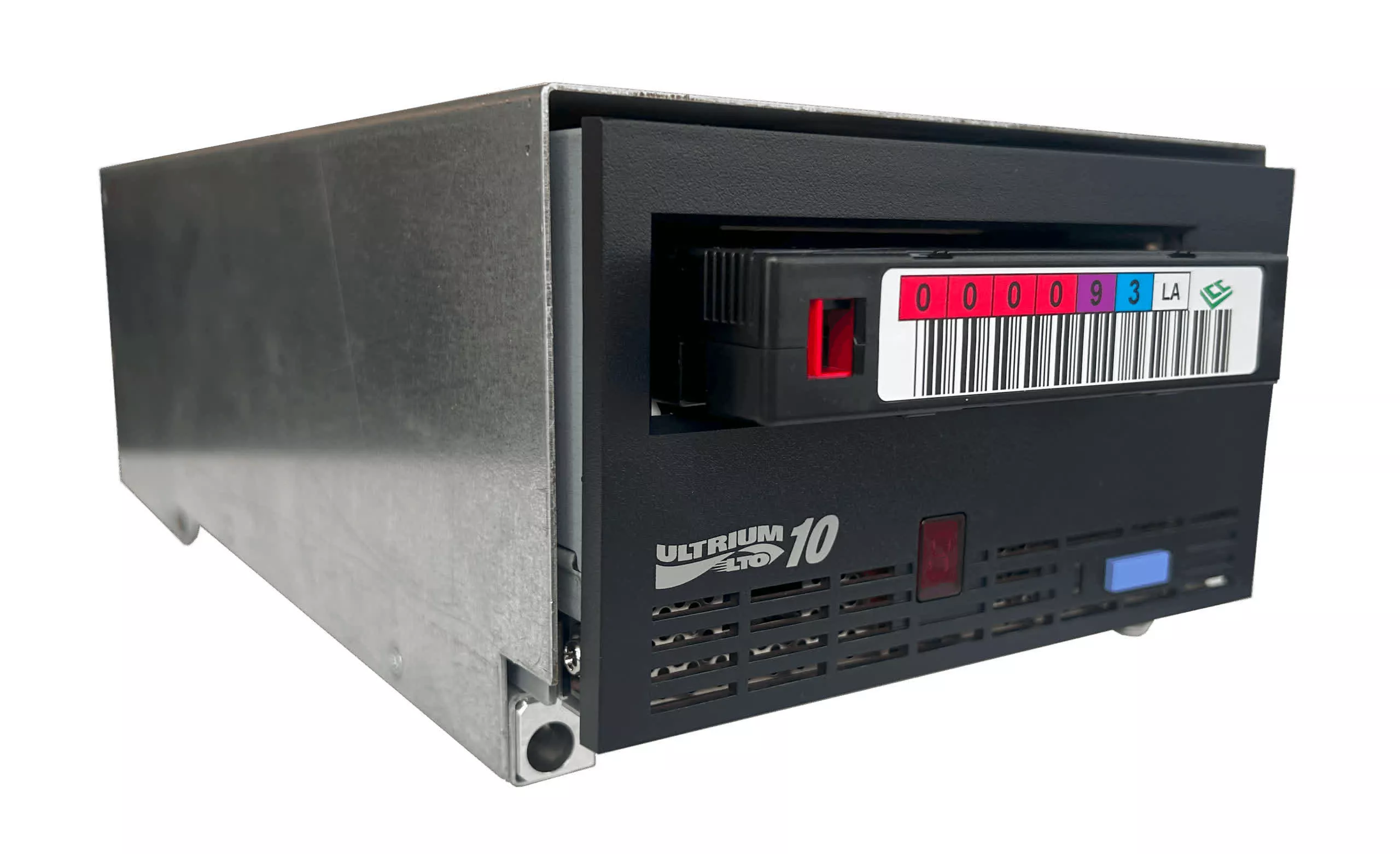
Some of the most consequential computing purchases of this decade are ending up on a medium that predates the cloud. In recent years, the data produced by large-model training and inference has pushed archive budgets back into the boardroom conversation, and magnetic tape has reappeared on procurement shortlists. It is against that backdrop that Fujifilm is preparing to scale up the operation it runs in Odawara, Kanagawa Prefecture, Japan — and the headline figure, a build-out toward roughly five times current output, says more about where AI cost pressure is landing than any single product launch does.
The plan in five lines
- Window: fiscal 2026 through fiscal 2028, so the work is spread across three fiscal years rather than compressed into one budget cycle.
- Site: the company's plant in Odawara, Kanagawa Prefecture, Japan.
- Stated driver: rising order intake from cloud service providers, data-center operators and enterprise customers.
- Target: once the expansion is complete, the plant's relevant production capability is expected to sit at about five times today's level — a company projection, not a delivered figure.
- Focus product: LTO-10 tape, the newest generation of the mainstream enterprise tape standard.
Why the demand signal is arriving now
High-performance solid-state drives and hard-disk systems carry the active processing workload, and nothing in the current plan changes that division of labor. The divergence shows up in long-term retention. Measured per unit of stored data, tape is cheaper, consumes less energy, and fits archives that are written once and read rarely. That combination — not raw throughput — is what has drawn renewed attention across the technology industry as generative AI accelerates the volume of data organizations feel obliged to keep.
Read this way, the Odawara decision is less a bet on a niche product than a hedge on a structural cost curve. If archive volumes keep climbing in step with model scale, the tier of storage that nobody was arguing about suddenly becomes the tier with the largest budget attached to it.
Three threads behind the renewed interest
- Unit cost: for data that will rarely be touched, tape still delivers the lowest cost per unit retained.
- Energy: cartridges sitting on a shelf draw essentially nothing, which reshapes the operating profile of a large archive.
- Isolation: a tape library can be pulled entirely off the network, closing off the attack path that live storage has to keep open.
LTO-10 and the numbers behind it
LTO technology is the enterprise tape standard in mainstream use today, and its origin is collaborative: IBM, HPE and Quantum are among the companies that drove its development, aiming to give corporate data archiving a unified, open solution instead of a scatter of vendor-specific approaches. The latest generation, LTO-10, is the product at the center of the Odawara expansion, and its published parameters frame the trade-off clearly.
| LTO-10 attribute | Figure | How it should be read |
|---|---|---|
| Native capacity per cartridge | 40TB | Baseline usable capacity before compression. |
| Capacity with data compression | Up to 100TB | An upper bound that depends on the data being compressible. |
| Transfer speed | 400MB per second | Comfortable for backup and cold-data archiving; not competitive with modern solid-state devices for active access. |
Set against flash, those figures are not designed to win a speed contest. For the job tape is actually bought for — backups and cold data archives — the specification clears the bar, and the cost and energy profile at shelf level is where the medium keeps its advantage. The practical takeaway for buyers is that the comparison is tier-to-tier, not device-to-device.
The security argument: air-gapping as a feature
Price per unit of retention is only half of the case. Tape can be disconnected from the network entirely and held in physically isolated storage, which removes the route an attacker would otherwise follow. That property lowers the data-loss exposure created by ransomware and other cyberattacks, and it explains why the medium retains real weight inside financial institutions, research organizations and large cloud providers instead of being treated as legacy equipment to be retired.
What industry voices and the roadmap point to
People close to the market describe the shift as a cost reassessment rather than a nostalgia-driven revival. As AI models keep growing and storage demand keeps climbing, enterprises are re-examining the long-run economics of every tier in their storage stack. On capacity, energy consumption and reliability, tape scores well enough that it has become a meaningful component of data-center infrastructure again.
The roadmap has not stalled either. In the coming years, the next generation, LTO-11, is expected to push storage density and per-cartridge capacity higher still, adding headroom for a data universe that keeps expanding.
What to watch next
- Whether the roughly fivefold output target for the fiscal 2026 to fiscal 2028 window holds through the later stages of the build-out.
- Whether order momentum from cloud service providers, data-center operators and enterprise customers persists or normalizes.
- How quickly LTO-11 moves from roadmap to purchasing specification for archive-heavy organizations.
- Whether isolation and cyber-risk requirements continue to hold tape in regulated and research-heavy environments.
FAQ: the questions this plan raises
What is Fujifilm actually expanding?
Production capacity at the Odawara, Kanagawa Prefecture, Japan plant, with LTO-10 tape as the focus product for the added output. The plan runs across fiscal 2026 through fiscal 2028.
How large is the increase?
About five times the facility's current level for the relevant production, according to the company's projection for the period after the expansion is completed.
Why not simply use solid-state drives for everything?
Because the workloads differ. Solid-state and disk systems handle active processing; tape remains cheaper per unit retained, uses less energy and suits long-term archiving, so it is being pulled back into the infrastructure conversation for data that must be kept rather than touched.
Where did the LTO standard come from?
IBM, HPE and Quantum are named among the companies that jointly pushed its development, with the goal of creating an open, unified approach to enterprise data archiving.
Is this about cyber risk as well as cost?
Both. Because tape can be physically isolated from networks, it reduces the damage ransomware and other attacks can do to stored data — one reason banks, research organizations and major cloud operators keep it in the stack.
What comes after LTO-10?
Industry roadmaps point to LTO-11 in the coming years, with higher storage density and larger capacity per cartridge.
The read-through
On the surface, the AI boom is a story about advanced GPUs, high-performance servers and ever larger data centers. At the other end of the supply chain, the same wave is reviving a technology that most observers had written down as a fading fixture. A medium carrying decades of history is being retooled for the fastest data surge on record, and its next chapter is being drafted in fiscal-year production plans rather than in retrospect.