
Case File: Inside the $115 billion Marvell-Lumentum Tie-Up and the Four Earlier Optics Deals That Set It Up
Vertical integration in AI networking rarely announces itself as a single headline. It shows up as a sequence of purchases, and only in hindsight does the last one look inevitable. Read that way, the agreement in which Marvell — the AI networking specialist Jensen Huang calls the next trillion-dollar company — takes over optical component maker Lumentum in an all-stock transaction valued at $115 billion is not a new story at all. It is the closing chapter of two separate build-outs, each under way since the early 2020s, that have finally met in the middle of the signal path.
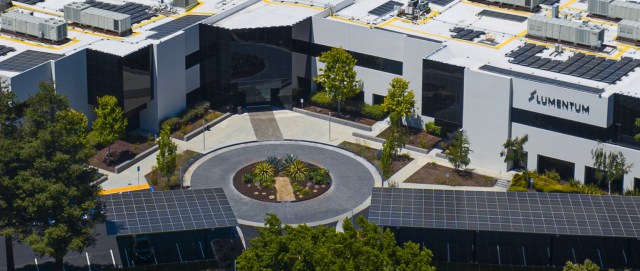 Lumentum supplies high-performance lasers, optical transceivers and optical circuit-switching capability used in AI connectivity products. (Source: Lumentum)
Stage one: what actually changes hands
Marvell contributes electrical and optical interconnects, network switching and XPU attach. Lumentum contributes high-performance lasers, optical transceivers, optical circuit switching (OCS) and specialised compound semiconductor manufacturing; the San Jose, California-based company also brings process technologies such as indium phosphide (InP). The stated design target is narrow and concrete: build network processors and the lasers inside optical transceivers as one programme, rather than as two hand-offs between two suppliers, and thereby become a category leader in AI connectivity.
Terms published with the announcement fill in the mechanics that the headline price leaves out. Lumentum stockholders would receive a fixed exchange ratio of 4.500 shares of Marvell common stock for each share they hold, and the companies expect the transaction to close in the first half of calendar year 2028, subject to shareholder votes and regulatory clearance, according to Marvell's investor-relations release. That is a long fuse for a deal sold as urgent.
“AI infrastructure is undergoing a fundamental architectural shift toward optical connectivity, creating an opportunity that comes along once in a generation,” said Matt Murphy, chairman and CEO of Marvell. “We intend to help shape the next era of AI connectivity,” Murphy added. Industry watchers have argued for closer co-design of electrical and optical technologies for years, and some describe this as a giant bet that the next generation of AI data will mostly travel on light rather than copper.
Stage two: four earlier deals explain this one
On the buyer's side, the ladder starts with Inphi. Marvell announced the purchase in October 2020 in a deal reported at roughly $10 billion and closed it in April 2021, which is why Marvell DSPs already sit inside data center optical transceivers today (CNBC). Marvell has recently acquired Celestial AI, the Photonic Fabric supplier whose chiplets it expects to co-package with custom XPUs and scale-up switches; that December 2025 agreement was reported at about $3.25 billion (Photonics.com).
Lumentum climbed from the other direction — from laser chips to finished modules. It agreed in November 2021 to buy NeoPhotonics at $16.00 per share in cash, an equity value of approximately $918 million, and completed the deal in August 2022 while projecting more than $50 million of annual run-rate cost synergies within 24 months (LightReading). Then came Cloud Light, taken out at a transaction value of approximately $750 million as disclosed in Lumentum's SEC filing in 2023, which converted a component vendor into a transceiver supplier selling finished assemblies straight into AI clusters.
Set side by side, the pattern is the lesson: neither company tried to buy the whole stack. Each bought the step immediately next to its own competence, and the merged entity is simply the first moment those two ladders touch. Through the Lumentum deal, Marvell gains laser chips that generate the light used in optical connections, plus optical circuit switches that redirect light without converting it back to electrical signals — a capability Lumentum says is scaling into a business of its own as AI fabrics widen.
Stage three: the demand evidence behind the headline number
Lumentum CEO Michael Hurlston has framed the prize as a “$550 billion” market opportunity, and Marvell's own investors have to underwrite that figure against a much smaller company: the chipmaker reported record revenue of $2.418 billion for the first quarter of fiscal 2027, up 28% year over year, with the data center segment as the driver (Marvell investor relations). Nvidia backs both companies and invested $2 billion each in Marvell and Lumentum earlier this year, a point worth mentioning — Murphy calls this deal a double down on supporting Nvidia.
The harder evidence is scarcity rather than slideware. In October 2026 Lumentum told Bloomberg that its AI-oriented optical parts were effectively sold out through early 2029 and that it could not meet roughly 70% of demand for some products through the following year. That is the strategic core of this case: lasers and compound-semiconductor capacity, not accelerators, are becoming the binding constraint on AI data-center build-outs, and Marvell has paid a $115 billion price to sit on the right side of that queue.
| Estimate | What it counts | Source |
|---|---|---|
| $550 billion | Broad AI connectivity market cited by Lumentum CEO Michael Hurlston, spanning electrical and optical parts of the signal chain | Marvell–Lumentum deal materials |
| Above $39 billion by 2030 | Combined co-packaged and near-packaged optics shipments, per a TrendForce estimate circulated by Commercial Light | m.c-light.com |
| $164.76 million in 2026 to $764.32 million by 2031 | Narrowly defined co-packaged optics market today, where shipping product is still limited to early design wins | mordorintelligence.com |
None of these numbers corrects another; they describe different slices. The practical reading for anyone planning capacity or supplier commitments is that the near-term revenue sits in pluggable transceivers and lasers, while the co-packaged prize that justifies a deal of this size is still a forecast.
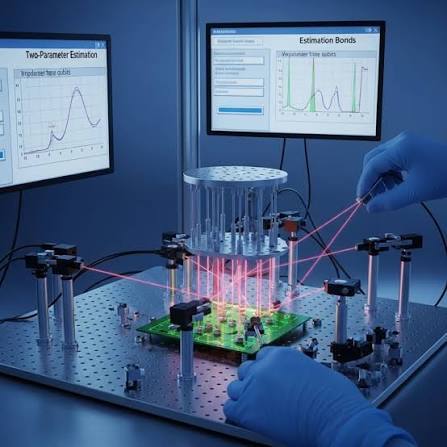 Lumentum manufactures semiconductor lasers, laser sub-assemblies and wavelength management systems. (Source: Lumentum)
Stage four: the market's first verdict, and why it was negative
Both companies' shares dropped after the announcement. Marvell fell more than 10% on Monday as some analysts questioned whether the chipmaker was stretching itself too thin, Reuters reported. It is one of the semiconductor industry's largest takeovers, and it landed after a week of bruising tech sell-off, at a time when investors are growing skittish about AI economics.
Axel Rudolph, chief technical analyst at IG Group, told Reuters this is an enormous bet, and that investors are right to ask whether Marvell is paying too much and taking on too much at once. The all-stock structure does not retire that question, it transforms it: with a fixed exchange ratio, every move in Marvell's own share price re-prices what Lumentum holders receive, so dilution replaces cash as the risk being debated. Equity researchers at Morningstar noted that Lumentum shares had risen 148% year to date before the deal broke and were trading at a premium to their own valuation of the company, which is why the price debate is live rather than rhetorical.
Strategically, the tie-up of two AI connectivity suppliers could create a more vertically integrated networking portfolio and let Marvell compete more aggressively with Broadcom, since greater influence over a constrained part of the AI networking value chain widens its foundation against a rival that sells switches, accelerators and optics adjacency in the same accounts. Murphy also shot down concerns about Nvidia's circular dealmaking. “I think having two of the key suppliers come together, that support that ecosystem, is going to be a big benefit for Nvidia,” he said.
Checklist: five reusable lessons from this case
- Buy the adjacent step, not the whole stack. Inphi, then Celestial AI, then Lumentum shows a repeatable sequence: acquire the layer immediately next to your own IP, then integrate.
- Own the constrained input. With optical parts sold out for years ahead, control of lasers and InP process capacity is now a scheduling advantage, not a cost advantage.
- Plan for a multi-year approval clock. NeoPhotonics took nine months from announcement to close; this deal is guided to the first half of calendar year 2028, so the strategic case must hold across two more product generations.
- Treat all-stock as a beta position. A fixed 4.500 exchange ratio links the seller's shareholders to the buyer's volatility — useful for alignment, painful in a sell-off.
- Distinguish TAM from addressable revenue. A $550 billion opportunity claim and a sub-$1 billion co-packaged optics market can both be true; budget against the narrower one.
FAQ: questions this case raises for AI and data teams
Is $115 billion the cash price?
No. It is an all-stock transaction valued at $115 billion, a figure global coverage describes as an enterprise-value calculation that includes debt (Reuters), with no cheque for the full amount leaving Marvell's balance sheet.
Why does the electrical-to-optical hand-off matter so much?
In cloud computing, passing data from a silicon-based network interface into a laser-driven transceiver and back again is a major connectivity bottleneck. Tightening that hand-off across the whole signal path — silicon, lasers, packaging, power — is where the latency and power savings sit, which is the operational reason this pairing exists.
Who should care if the deal does not close?
Buyers of AI networking hardware, especially teams standardising on 1.6T-class transceivers and early OCS deployments. A long approval window keeps laser supply in two competing hands for now, which preserves negotiating leverage that disappears once the two companies merge.
What is the realistic near-term payoff?
Shorter design cycles. A coordinated alignment of networking chips, lasers and other optical components can reduce integration risk and shorten design engineers' time to deployment — a benefit that shows up in socket-level roadmaps years before any co-packaged optics volume does.
What to watch next
The case is not finished, and three checkpoints will decide it. First, the approval path: shareholder votes and multi-jurisdictional clearance against the first half of calendar year 2028 guidance, with the NeoPhotonics precedent suggesting regulators move slowly in photonics. Second, capacity releases: whether laser and transceiver output that is booked out to early 2029 starts converting into shipped units on schedule, since the strategic logic depends on scarcity persisting rather than resolving. Third, competitive response: Broadcom and other full-stack vendors now face a supplier that owns DSPs, switches, custom accelerators and the lasers inside the transceivers, which may prompt a matching move in optics assets.
For readers tracking AI infrastructure spend, the transferable insight is this — the bottleneck has migrated from compute to connectivity, and the price of admission is now set at $115 billion. Marvell and Lumentum have effectively told the market that owning the light path is worth paying for years before co-packaged optics becomes mainstream volume.
Case review by David Nakamura for AI & Data News (AIdataNewsGlobal). Corrections and documents for this case file: editorial@aidatanews.com.