
AIDataNewsGlobal General: NVIDIA Backs Meta with US$3 Billion as Muse Partnership Expands
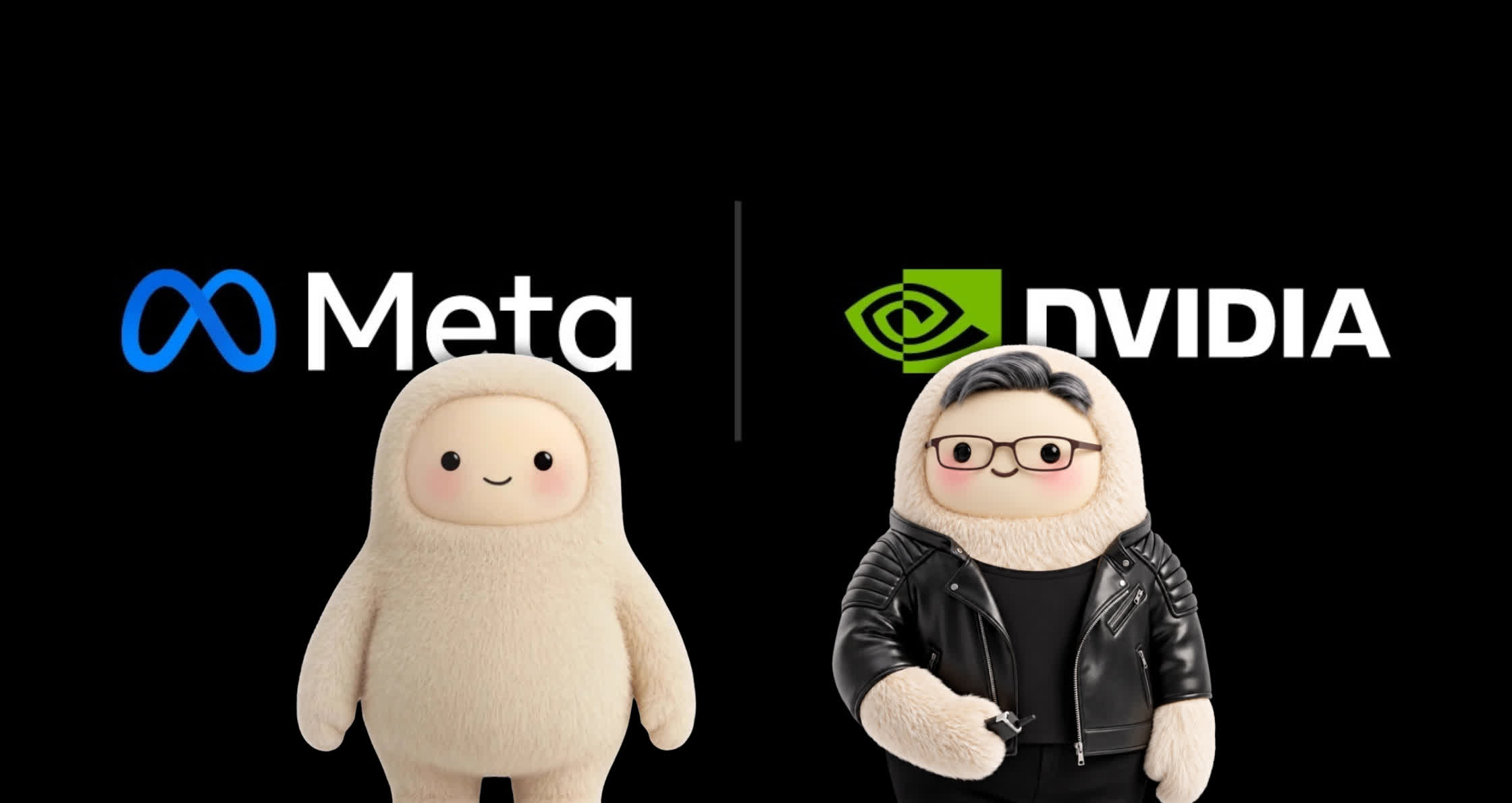
The October 27 confirmation from two United States technology companies connects a financing event, a hardware expansion plan and a personal AI assistant roadmap in one package. NVIDIA has agreed to contribute $3 billion to Meta's share issuance programme, while both firms say the cooperation will deepen around Muse, next-generation AI infrastructure and tools for safer agent deployment.
For readers tracking global AI and data developments, the transaction matters because it links capital, compute and consumer product strategy. A chip supplier is providing funding to a platform company, the platform company is expanding its use of supplier systems, and the partnership is framed around improving model performance, lowering operating costs and making autonomous agents more manageable at large scale.
Key facts at a glance
- NVIDIA's commitment: $3 billion tied to Meta's equity issuance plan.
- Meta's financing context: a public offering and subsequent share sales with a revised target moving from $95 billion to $97.5 billion.
- Collaboration scope: Muse and related models, AI workflow optimization, hardware deployment, networking, data processing, and agent security.
- Named technologies: Vera Rubin, Vera CPU, Spectrum-X, BlueField-4, OpenShell and Sentry.
- Spending context: Meta expects annual capital expenditure of $135 billion to $145 billion, mostly for AI infrastructure.
- Business context: Meta reported quarterly revenue up 26% to $64.6 billion.
Financing and Muse performance targets
Meta's plan is described as part of an effort to accelerate the construction of AI infrastructure. The company's total fundraising goal was raised from $95 billion to $97.5 billion, making it one of the company's largest financing exercises. The $3 billion NVIDIA contribution is linked to that issuance arrangement rather than presented as a simple purchase order.
Within the cooperation framework, the stated first priority is improving training and inference performance for Muse and related models while reducing operating costs. The firms also say they will work on deeper optimization of AI workflows, with the objective of improving compute efficiency and total cost of ownership. That framing places Muse inside an infrastructure economics problem: the assistant is not only a product surface, but a workload that has to be trained, hosted and served efficiently.
How the hardware and software stack is described
Meta plans to expand deployment of NVIDIA's next-generation AI infrastructure, including Vera Rubin systems and Vera CPU processors. The companies also reference Spectrum-X Ethernet networking and BlueField-4 data processing technology. According to the disclosure, these components are intended to strengthen data transmission efficiency, network throughput and computing performance per unit of energy consumption.
The non-hardware layer is also explicit. Meta and NVIDIA are evaluating further adoption of the OpenShell reference architecture. The described use case includes deploying AI agents securely with OpenShell and monitoring or managing agent behavior with Sentry. The stated aim is to improve system security and controllability, which is a notable point because the assistant product itself can access sensitive services and execute tasks.
Muse, personal superintelligence and the user layer
Mark Zuckerberg positions Muse as a central element of Meta's push toward "personal superintelligence." The company says it wants to bring advanced AI capabilities to billions of users and to build future-oriented personal intelligent agents and frontier models with NVIDIA. In that strategy, Muse is Meta's next-generation personal AI assistant.
The disclosed product behavior is what makes the infrastructure conversation concrete. With user authorization, Muse can access email, calendar, payment services, health applications, shopping platforms and smart-home systems. It can carry out tasks such as sending emails or arranging travel. Users can revoke permissions at any time. If these features expand, the underlying systems need to balance capability, cost, safety and governance rather than raw model scale alone.
Meta also says Muse and its model family have achieved leading results in multiple benchmark tests since launch and that user downloads have continued to rise. The company did not release specific figures. That disclosure gap is relevant to the data story: the financial investment and capital-spending range are quantified, but the assistant's performance and adoption claims are not.
Executive interpretation: AI agents as a new computing model
Jensen Huang, NVIDIA's chief executive, describes AI agents as representing a new computing paradigm. His account emphasizes that such software can do more than interpret a user goal: it can reason, invoke tools and complete tasks on the user's behalf. In this framing, the user relationship with computing changes from operating applications to collaborating with agents.
That explanation connects the hardware agreement to a product theory. If agents become the primary interface, then model quality, inference efficiency, secure deployment and behavior monitoring all become part of the same system design. It also explains why the partnership is not limited to chips: the parties describe workflow optimization, reference architecture evaluation and agent governance tools as part of the broader cooperation.
Market concern: circular financing debate
The investment has again raised discussion of circular financing. The concern is straightforward: because Meta is expected to make large purchases of NVIDIA AI hardware, outside observers question whether supplier funding can encourage further purchases of the same supplier's products. The public statements center on cooperation, while the market debate focuses on the commercial pattern created by that cooperation.
Meta's own guidance adds context. The company expects annual capital expenditure between $135 billion and $145 billion, with most of that spending directed to AI infrastructure. The latest quarterly results show revenue up 26% year over year to $64.6 billion. Those facts do not prove that circular financing is happening, but they show why a $3 billion supplier investment is read as a signal about the economics of the AI race.
Data references
| Reference point | Figure | Why it matters |
|---|---|---|
| Equity support | $3 billion | NVIDIA's contribution to Meta's share issuance plan. |
| Fundraising target | $95 billion to $97.5 billion | Meta's adjusted objective for a financing plan aimed at AI infrastructure. |
| Confirmation date | October 27 | Date on which the two companies confirmed expanded Muse cooperation. |
| Infrastructure outlook | $135 billion to $145 billion | Meta's expected annual capital expenditure range. |
| Revenue signal | 26% and $64.6 billion | Meta's reported quarterly revenue growth and scale. |
| User ambition | Billions of users | The reach Meta describes for bringing advanced AI capability to people. |
FAQ: Questions the announcement raises
What exactly is the $3 billion tied to?
The disclosed arrangement says NVIDIA will put $3 billion into Meta's equity issuance plan. Meta had announced fundraising through a public offering and subsequent share sales to support AI infrastructure, and its target later moved from $95 billion to $97.5 billion.
What does the Muse collaboration cover?
The companies describe cooperation around improving training and inference performance for Muse and related models, reducing operating costs, and optimizing AI workflows. They also discuss expanded use of Vera Rubin, Vera CPU, Spectrum-X and BlueField-4, as well as evaluation of OpenShell and Sentry.
Why do observers mention circular financing?
Because Meta remains a major buyer of NVIDIA AI hardware and has guided to $135 billion to $145 billion in annual capital expenditure, the market sees supplier funding as potentially feeding back into demand for that supplier's products. The concern is about the commercial pattern, not a single stated guarantee.
Are Muse's benchmark and download claims quantified?
No. Meta says Muse and its model family have performed strongly in multiple benchmark tests since launch and that downloads have continued to grow, but it did not provide the specific numbers.
What comes next
Analysts expect the Meta-NVIDIA relationship to deepen as AI competition intensifies. Their reading is that both firms are positioning around a possible shift in which AI agents become the next major computing platform, following the mobile internet era. The visible variables now are how much of the financing target converts into deployed infrastructure, how quickly Muse's agent capabilities expand, and whether OpenShell and Sentry can provide governance that matches the scale of autonomous tools.
For global AI and data observers, the announcement is therefore less a single supplier-customer event than a snapshot of a broader industrial transition: large-scale capital formation, infrastructure optimization, model deployment and agent governance are being discussed together. The facts disclosed by the companies set the outline; the performance claims remain partly qualitative, and the circular financing debate remains a market interpretation rather than a stated design goal.