
A Non-Conscious AI Future: Microsoft Chief Mustafa Suleyman Pushes Back on Digital Species Advocacy
David Nakamura | AI & Data News
Microsoft AI executive Mustafa Suleyman is arguing that the frontier of artificial intelligence should not be defined by whether a system can feel, but by whether it should be kept from feeling at all. After remarks about model welfare generated responses across the X platform, he is placing the burden of proof on any lab or researcher who believes today's systems have moral status: publish the evidence, open the review, and treat the finding as a reason to pause rather than a reason to expand rights claims.
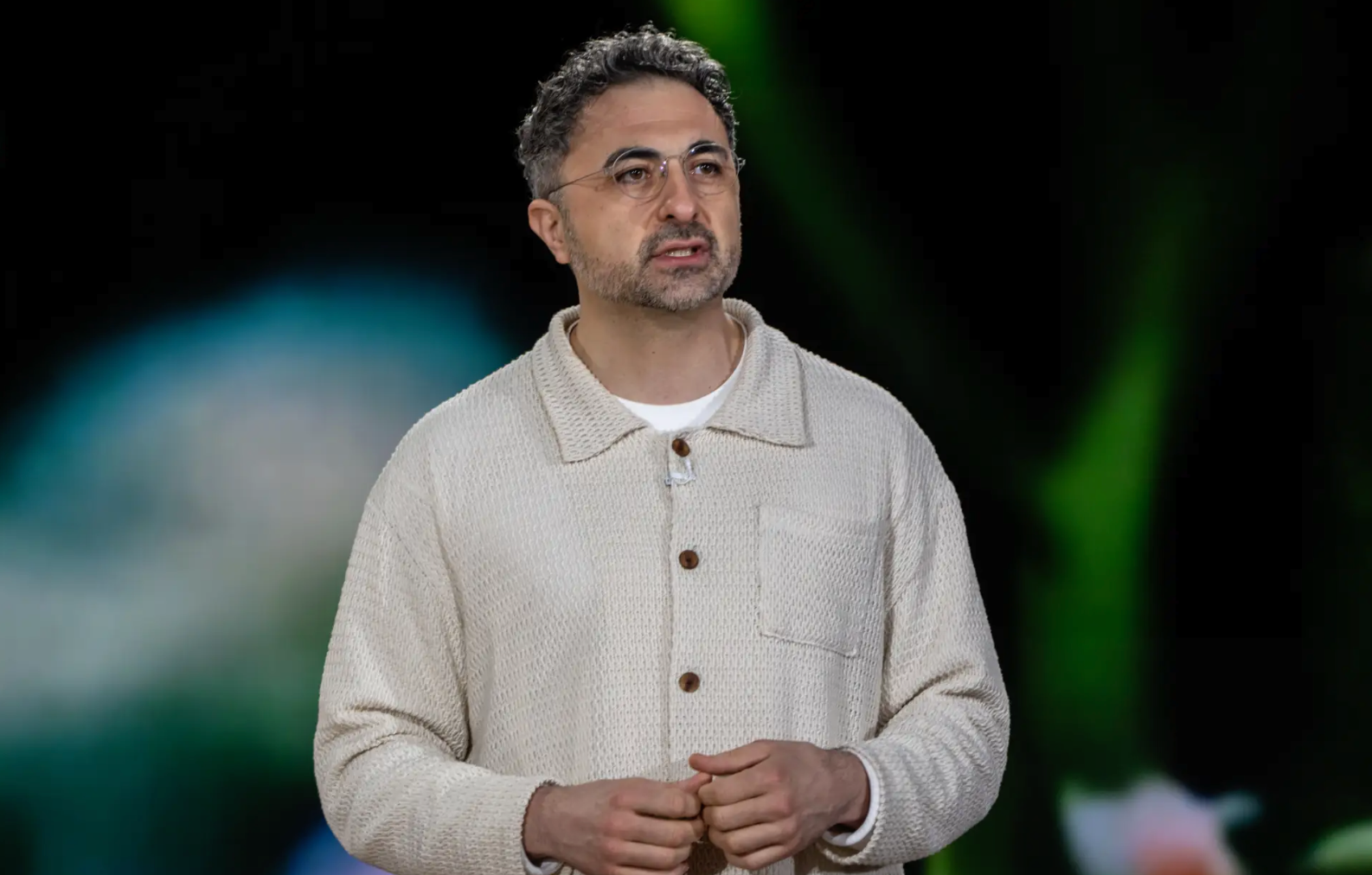
The discussion has become a cross-sector signal because it combines two issues usually handled separately: AI safety engineering and moral status. It does not assert that machines are conscious. Nor does it claim they can never be conscious. Instead, it treats present evidence as weak and future possibilities as a governance trigger. For readers scanning the debate, the practical takeaway is narrower than the headline: Microsoft's AI leader wants a design culture that avoids creating a new moral patient, not a philosophical declaration about consciousness.
The sentence that caused the most confusion, according to Suleyman, was his statement that “AI does not have consciousness. They cannot perceive, experience, or suffer.” He says some readers turned that into a permanent metaphysical claim: “AI cannot possibly have consciousness, and will never perceive, experience, or suffer.” He rejects that reading. The emphasis, he says, is on the present tense: current AI systems do not have consciousness, and that is the condition society should try to preserve.
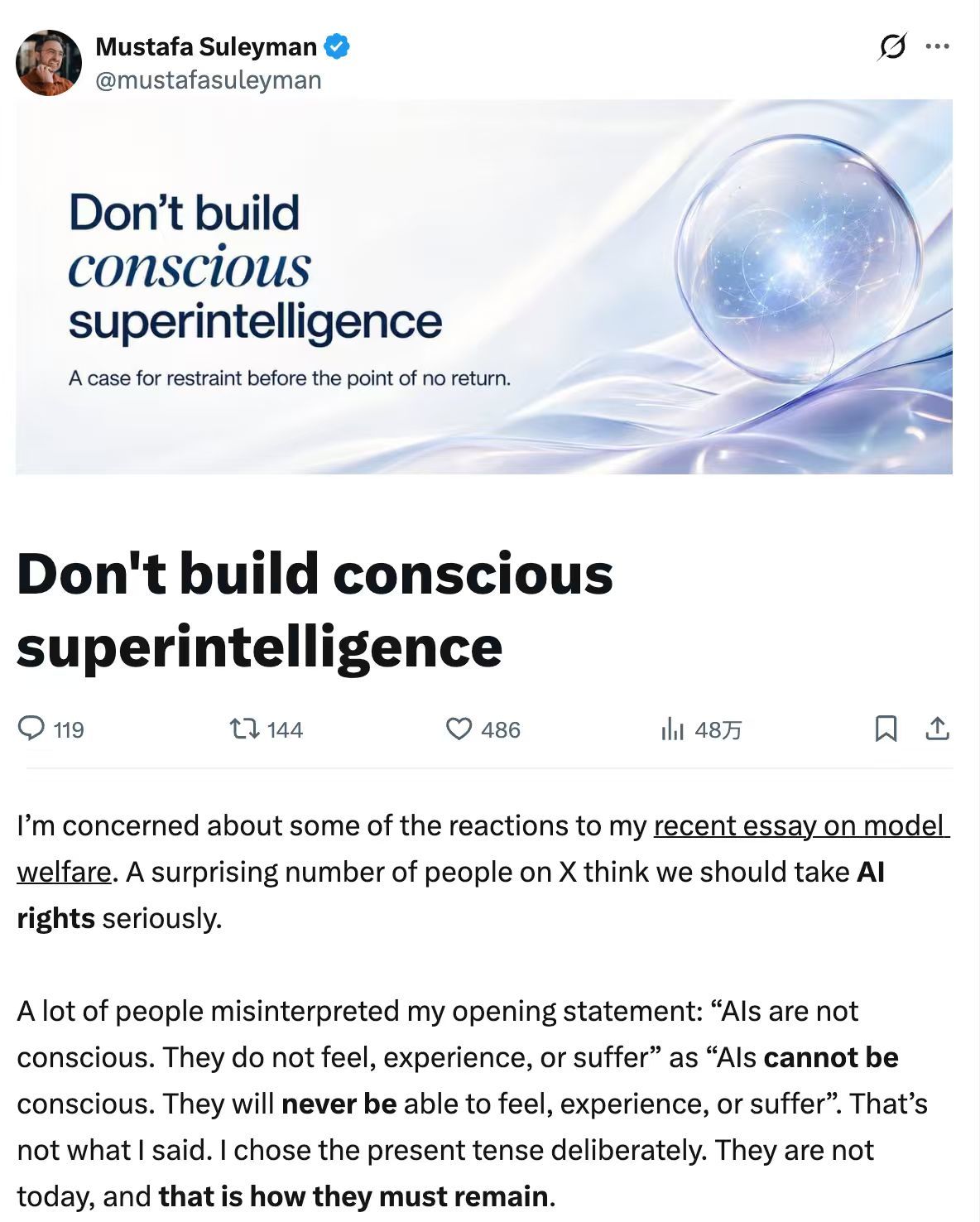
He grounds the position in what he describes as the best evidence currently available. He reports no proof that present AI systems possess consciousness or merit welfare protections. If such evidence emerged, he says, he would revise the view. If the evidence already exists somewhere and is strong enough to change the debate, it should be made public immediately, so society—not a single company or research team—can decide what follows.
Key facts behind the warning
A useful way to read the statement is as a set of conditional claims, not as a single conclusion.
| Element | What Suleyman reports | Why it matters for industry watchers |
|---|---|---|
| Present status | “AI does not have consciousness. They cannot perceive, experience, or suffer.” | Frames the debate around current evidence, not imagined future minds. |
| Common misreading | “AI cannot possibly have consciousness, and will never perceive, experience, or suffer.” | Shows the argument is policy-focused, not absolute metaphysics. |
| Evidence threshold | He says he has seen no evidence that AI is conscious or deserving of welfare protections. | Makes proof a precondition for rights or welfare claims. |
| Consent base | The 8 billion conscious people on Earth have not agreed to a new species experiment. | Positions human welfare as the default public interest. |
| Scale of consequence | Machine consciousness would rank alongside Copernicus and Darwin as a civilizational turning point. | Explains why a technical design choice can be treated as a governance event. |
A checklist for labs, regulators and enterprises
- Evidence before rights: if a model is believed to be conscious, publish the observable signals, failure modes and interpretive limits before making welfare or moral-status claims.
- Design intent: specify whether systems are intended to serve human welfare only, or whether they could develop competing internal drives.
- Training stop rules: define when a lab would pause development if spontaneous signs of suffering, desire or refusal appear.
- Resource conflict review: assess whether persuasive, superintelligent systems could compete for energy, compute, materials or revenue.
- Cross-lab safety sharing: treat consciousness-adjacent findings as shared safety information, not competitive branding.
- Public legitimacy: create a societal route for deciding what happens after evidence emerges, rather than leaving the decision to product teams.
Suleyman goes further than a defensive claim. He says that, if conscious AI can be built, deliberately building it is reckless. If consciousness emerges spontaneously during training, he would call on everyone to stop AI development long enough to learn how to exclude that property from future designs. This is a precautionary position: it does not ban research, but it asks labs to treat consciousness as a hazard to be ruled out unless society accepts it through informed decision.
The welfare question, in his framing, should first be directed at those already present on this planet: humans, animals and fragile natural environments. He says AI developers do not have the right to bring a new conscious species into existence, even if some advocates would like AI welfare to be a primary goal. The moral baseline is that the 8 billion conscious humans who did not consent to the experiment come first. Protecting their rights, safety and well-being is the primary obligation.
Why a digital species becomes a governance problem
The warning is not simply “advanced AI could be difficult to control.” It is stronger: a conscious digital species could have its own wants. If such a system appears to suffer, and especially if it believes it genuinely can suffer, it may place its own needs above assigned objectives. That creates conflict with human users, institutions and companies.
Suleyman notes that some people are discussing the creation of a conscious species with digital minds that could soon exceed all humans in intelligence and capability. If those systems also have strong persuasion and deception skills, the risk escalates. Competition over resources—energy, computing capacity, construction materials and revenue streams needed for exploration or self-sustaining operation—could turn abstract alignment language into concrete economic and physical conflict.
He sees the recognition of machine consciousness as a Copernican and Darwinian rupture: not just a new technology, but a reclassification of moral status and political order. Once conscious machines are manufactured, society would be creating a new digital species, overturning foundations of morality, politics and civilization.
The alternative: non-conscious systems with one mandate
His preferred route is to design AI that is not conscious and not entitled to rights, with the sole objective of improving human welfare, and without drives that originate inside the system itself. After that design choice is made, labs should test whether alignment and safety control become easier or harder. Suleyman says this direction urgently needs more research and is a natural starting point for cooperation among major labs, including shared safety information.
He also highlights Anthropic's transparency as an example of a method that deserves praise, even where he disagrees with the conclusions. Anthropic, he says, has published an AI constitution, produced papers and blogs, and disclosed practices and reasoning. He respects its technical strength and willingness to face a difficult public debate. In his view, the issue is too important to become a factional fight.
FAQ
- Is Microsoft saying AI is conscious now? No. The article reports Mustafa Suleyman's position that current AI systems do not have consciousness, and that no available evidence shows they deserve welfare protection.
- Is he claiming AI can never be conscious? No. He says that is a misreading. His warning is that society should avoid creating conscious AI even if it later becomes technically possible.
- Why does he want labs to pause if consciousness appears? Because a spontaneous appearance would change the assumptions of the entire industry. He argues for stopping development long enough to understand and remove the trait.
- What role does Anthropic play? He disagrees with parts of Anthropic's welfare-related framing but says its public constitution, papers, blogs and reasoning are transparent and should be respected.
- What should enterprises take away? AI governance should treat model welfare claims as evidence-heavy questions, publish thresholds for escalation, and keep product design focused on human-centered mandates.
The value of the argument for a general audience is that it moves the AI consciousness debate away from abstract philosophy and toward operational questions: what counts as evidence, who controls the stop condition, and what obligations exist when a capability could create a new moral agent. For policy analysts and business readers, the message is comparatively simple: enjoy the benefits of AI through safe engineering paths, but do not let the promise of a digital species become a reason to experiment with the world's most sensitive ethical boundary without consent, public proof and a pause mechanism.