
Case Retrospective: Three Real AI PC Rollouts Behind Microsoft's 8GB-to-128GB Tier Plan
By David Nakamura · AI & Data News, General desk
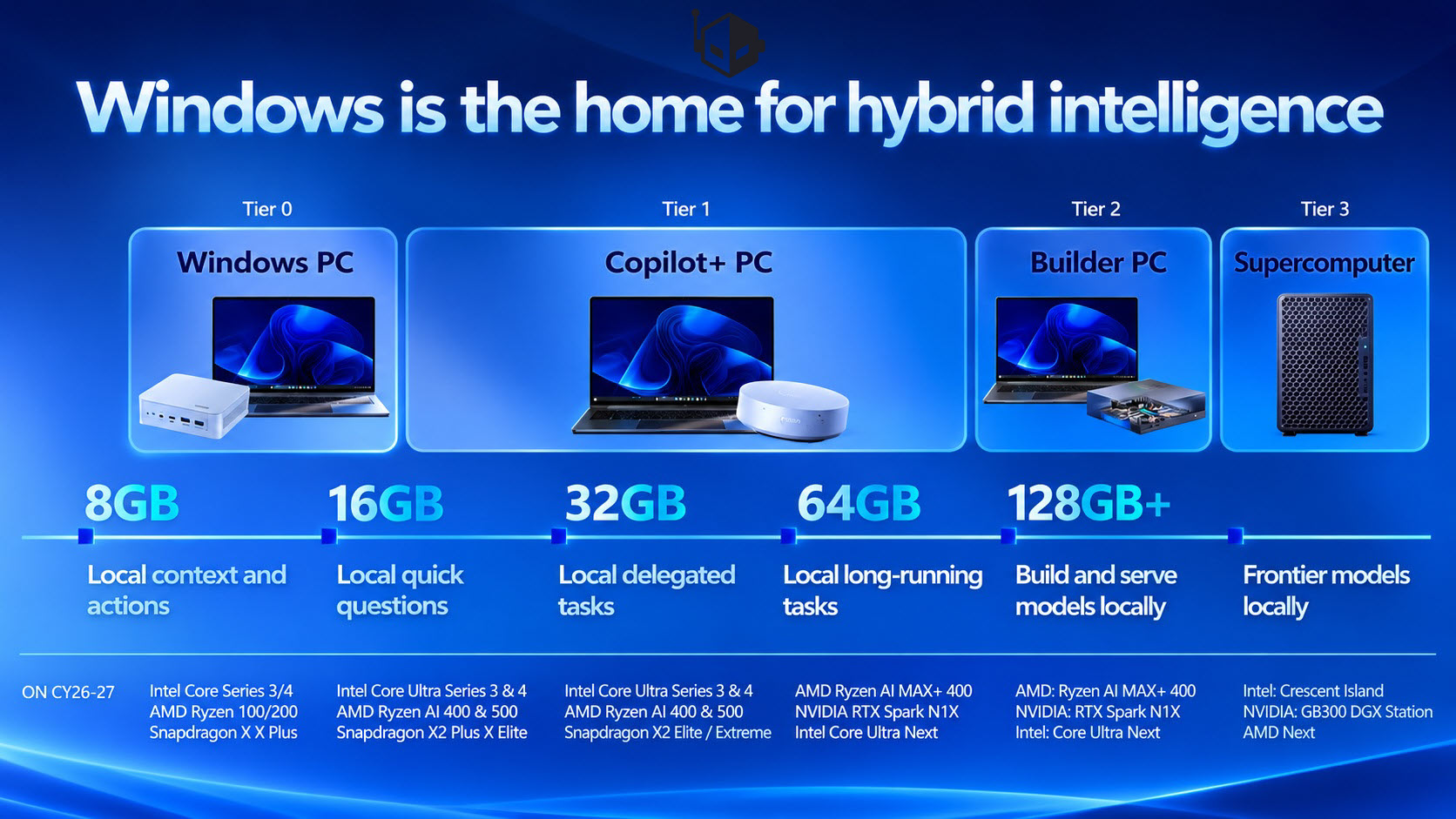
Spec sheets describe what a vendor intends to build; deployed machines reveal what survives contact with users, auditors and supply chains. So instead of restating the tiered AI PC roadmap that Microsoft has been circulating — the plan anchored on the line "Windows is the home of hybrid intelligence," and spanning a ladder from 8GB to 128GB and above — this retrospective reads that ladder backwards through three episodes that already happened: the 2024 launch that stalled on governance rather than silicon, the entry-level $500 band now colliding with a memory-cost shock, and the 128GB builder-class boxes that quietly proved the local-model premise. Each episode stress-tests one assumption inside the roadmap, and each leaves a lesson that procurement leads, IT teams and data-product owners can reuse.
Case file one: the first Copilot+ generation, when the chip bar passed and the trust bar did not
The assumption under review is the one the roadmap places on the middle of the ladder. Tier 1 covers 16GB to 64GB, every device in that band meets the Copilot+ PC standard, and it is where Microsoft expects local agents and long-running AI workloads to live — tasks that once had to be uploaded to the cloud and instead finish on-device, with faster response, tighter privacy and less dependence on the network.
The process, as it actually played out, is instructive. Copilot+ PC debuted in June 2024 behind a hardware bar of an NPU rated at 40 or more TOPS, and the chip partners cleared that number on schedule. What did not clear was the showcase feature. Recall, the on-device screenshot archive, was pulled from a broad preview dated June 18, 2024 and moved back into the Windows Insider ring after security researchers published how the store could be read back; Microsoft said as much in its Windows Experience blog update of June 7, 2024, and researchers such as DoublePulsar kept testing the rebuilt version through 2025. Broad delivery to Copilot+ machines arrived only in April 2025, roughly eleven months after the unveiling, according to GeekWire's report on the rollout.
The result reframes the roadmap. A tier label built on memory size and NPU throughput does not by itself unlock the local workloads the tier promises; the gate is the governance envelope around a data store that sits inside the machine. That is also why the follow-up act looks different: at the Windows and Surface event Microsoft staged in San Francisco on October 7, 2026 with Nvidia on stage, the framing was building Windows for hybrid intelligence — orchestration and containment first, hardware second.
Case file two: a $500 Tier 0 machine meets a memory market that moved
The bottom rung is where the roadmap is most candid and most exposed. Tier 0 means 8GB of memory, devices aimed at the entry market, expected to handle local context understanding and simple actions: email processing, office document editing, video calls and light web browsing. The silicon slate for Tier 0 is broad — Intel Wildcat Lake series processors, AMD Ryzen 100 and Ryzen 200 series products, and the Qualcomm Snapdragon C, Snapdragon X and Snapdragon X Plus platforms. Several of these machines are already on shelves, with prices sitting around $500.
Two outside facts complicate that picture. The first is classification. Microsoft's published Windows 11 requirements state that devices with fewer than 16GB of RAM are not Copilot+ PCs, which places Tier 0 below the flagship feature line by design, and means any purchase order that says "AI PC" without the 16GB-and-40-TOPS qualifier is overstating what the buyer receives. The second is input cost. Gartner has projected that combined DRAM and SSD prices will rise about 130% by the end of 2026 against 2025, lifting average PC prices roughly 17% and compressing the thinnest margins at the bottom of the market; Tom's Hardware tracked 128GB of DDR5 desktop memory at $3,399 in August 2026 after a twelve-month climb near 500%. Layer on the end of Windows 10 support on October 14, 2025, which pushed fleet replacement volume straight into this price band, and the picture is clear.
The reusable finding: around $500 is the most fragile number in the entire ladder, not because Tier 0 lacks a purpose, but because an 8GB configuration has the least room to absorb a bill-of-materials shock. Treat Tier 0 as a shared-workstation, classroom, kiosk and light field-worker class. If the memory cycle forces OEMs to defend price instead of spec, 8GB stops being the floor of AI adoption and becomes the compromise — and the burden of proof shifts to whoever sells the machine.
Case file three: the 128GB builder box that turned a local model into a daily tool
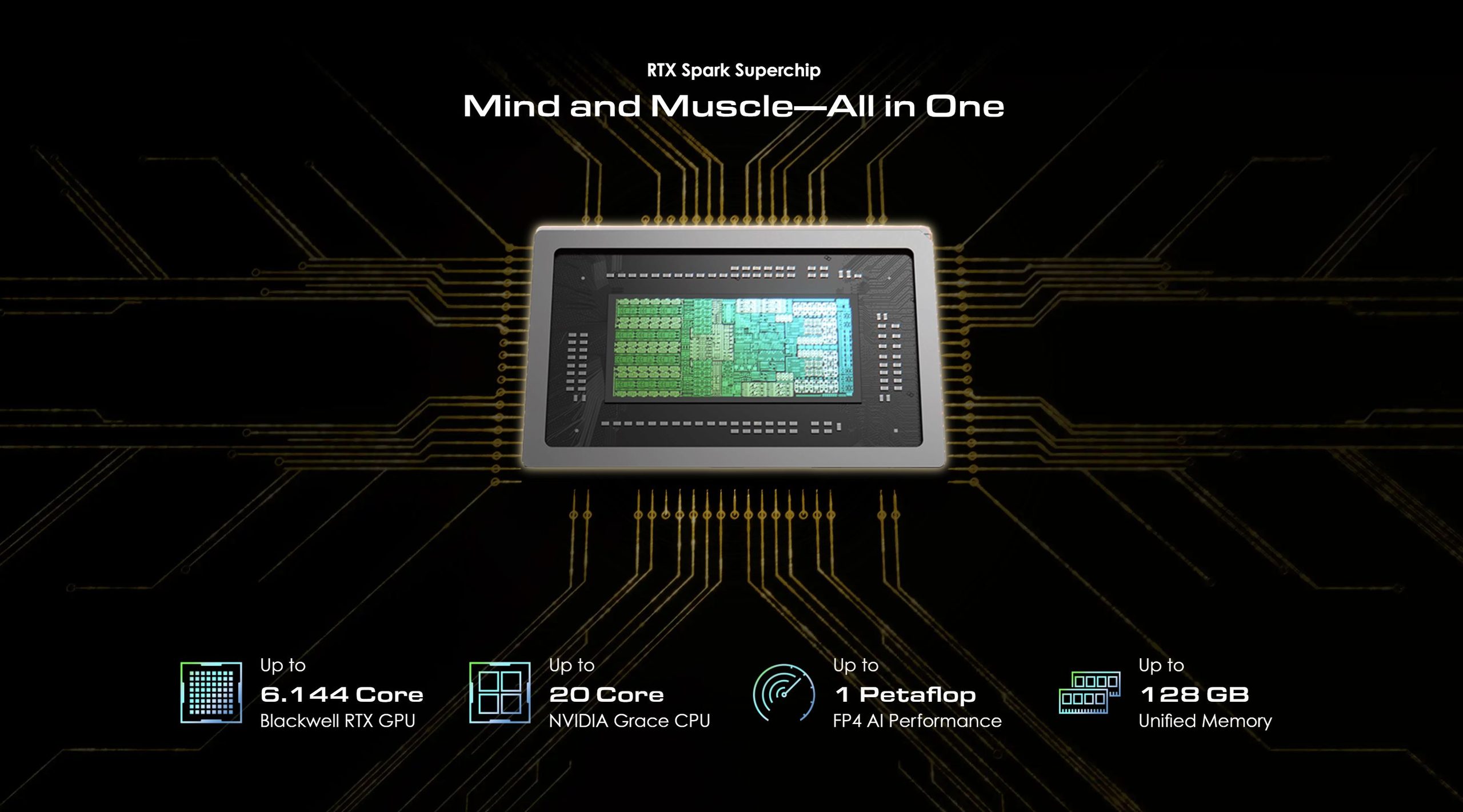
At the top, the roadmap sets a deliberately aggressive target. As local model sizes keep growing, higher grades of AI device will push memory to 64GB and above, with some professional platforms reaching 128GB or higher. Microsoft labels these machines as "builder computers" and "supercomputer-class AI PC" hardware, aimed at developers, research groups, content creators and enterprise users who need to run larger models locally for reasoning, code generation, content production and specialist computation. The chip plan extends past next-generation AMD and Intel AI processors into heavier graphics compute, including Nvidia-based solutions.
Here the precedent is no longer hypothetical. AMD's own engineering blog documented a 128GB-equipped Ryzen AI Max+ 395 system loading models of up to 128 billion parameters through llama.cpp and LM Studio, a test published in July 2025. Community benchmarking has since mapped quality, throughput and tool-calling behaviour across a dozen local models on the same 128GB class of hardware — the kind of hands-on reporting that turns a spec target into a workload claim.
Two lessons carry down the ladder. First, capacity decides whether a model loads at all, and that single fact, not clock speed, is what separates 128GB territory from 16GB territory. Second, once the model fits, the binding constraint becomes memory bandwidth and sustained thermals, which is why token throughput on a builder machine looks nothing like the marketing peak. Teams that budget by model size alone consistently under-buy on the cooling and memory configuration that determines whether the device is used daily or demoed once.
The same ladder, read as a decision table
| Rung | Memory | Silicon named in the roadmap | Workload it can realistically own | Where the plan breaks first |
|---|---|---|---|---|
| Tier 0 — entry | 8GB | Intel Wildcat Lake; AMD Ryzen 100 and Ryzen 200; Qualcomm Snapdragon C, X, X Plus | Mail, office documents, video meetings, light browsing, basic local context | Multi-task ceilings; below the Copilot+ PC line; priced around $500 under RAM inflation |
| Tier 1 — mainstream | 16GB to 64GB | Intel Core Ultra 3 Panther Lake; AMD Ryzen AI 400 "Gorgon Point"; Qualcomm Snapdragon X2 Plus, X2 Elite | Local agents, sustained AI workloads, on-device tasks that used to need the cloud | Feature availability still depends on governance and rollout, as the Recall case showed |
| Beyond — builder tier | 64GB and above, up to 128GB or higher | Intel Nova Lake and AMD Ryzen AI 500 "Medusa Point" in long-range plans, plus Nvidia-class graphics | 100-billion-parameter class models, complex reasoning, code generation, specialist compute | BOM cost and memory supply, not compute, set the shipping price |
Five lessons worth reusing
- Match tiers to failure modes, not to logos. Tier 0 fails on multitasking headroom; Tier 1 fails on feature rollout timing; the builder tier fails on cost and thermals.
- Buy against the published requirement, not the marketing label. Under Microsoft's own Copilot+ PC criteria, an 8GB machine is not one.
- Assume the local/cloud split will be decided by policy. Routing AI tasks by task type, device capability, security rules, cost and latency is an administrative decision before it is a technical one.
- Price the memory you will still need in eighteen months. Component markets moved 130% in one projection cycle; a spec bought at the floor rarely stays there.
- Demand evidence of containment for anything that records on-device context. The 2024 episode cost a year of feature availability precisely because that evidence was missing.
A checklist before your organisation commits to a tier
- Confirm NPU throughput, memory and storage against the Copilot+ PC baseline, and record which devices fail it.
- Write down which AI tasks must stay local for regulatory or client-confidentiality reasons, and which may go to the cloud.
- For Tier 0 fleets, validate behaviour with 8GB under realistic multitask loads — browser tabs, meeting client and office suite open at once.
- For Tier 1, test one long-running local agent task end to end rather than a single prompt.
- For builder computers, measure tokens per second at your target model size and check sustained thermals after ten minutes of load.
- Price an upgrade path for memory, because a ladder drawn from 8GB to 128GB and above is a promise that configurations will keep moving.
FAQ
Why would Microsoft plan an 8GB AI PC at all?
Because the ladder has to start where the market actually buys. Tier 0 covers mail, documents, meetings and light browsing, and its stated role is to be the entry vehicle for AI adoption rather than a high-intensity productivity platform. The trade-off is explicit: around $500 today, and a configuration that does not qualify as a Copilot+ PC.
Is Tier 1 the tier to standardise on?
For most organisations, yes, with a caveat. The 16GB to 64GB band meets the Copilot+ PC standard and covers local agents and longer AI workloads, but the Recall case shows that qualification does not guarantee that a feature is available on day one. Standardise on hardware, then track feature rollout separately.
What changes between 16GB and 128GB, in practical terms?
Which model you can hold resident. Sixteen gigabytes supports small on-device models and Windows AI features; 64GB and above, up to 128GB or higher, is what makes very large open models runnable locally, as AMD's published 128GB test with llama.cpp and LM Studio demonstrated.
Which roadmap items should I actually watch?
Three: whether Intel Panther Lake and Nova Lake, AMD Ryzen AI 400 "Gorgon Point" and Ryzen AI 500 "Medusa Point", and Qualcomm Snapdragon X2 Plus and X2 Elite hold their launch windows; whether the ~$500 Tier 0 anchor survives DRAM and SSD inflation; and whether the Copilot+ ecosystem is marketed with governance features shipped in advance rather than retrofitted.
Read as a case file rather than a press release, the roadmap looks less like a product sheet and more like an attempt to write the hardware standard before the next cycle does it for Microsoft. Over the next several years, competitive weight inside the Windows ecosystem shifts from raw CPU performance toward local AI compute, NPU performance and large-model runtime, and the line "Windows is the home of hybrid intelligence" becomes testable device by device. The unresolved variables are mundane and decisive: memory pricing, tier definitions that hold outside the demo, and whether tasks that stay local are provably contained. Future reporting by AI & Data News will revisit each tier as the next-generation silicon ships.
Corrections, documents or tips: reach the AI & Data News editorial desk at editorial@aidatanews.com.