
AI Factory Connectivity Explained: NVIDIA and Cisco's USFP Optics Aim for 400 Gb/s-per-lane Density
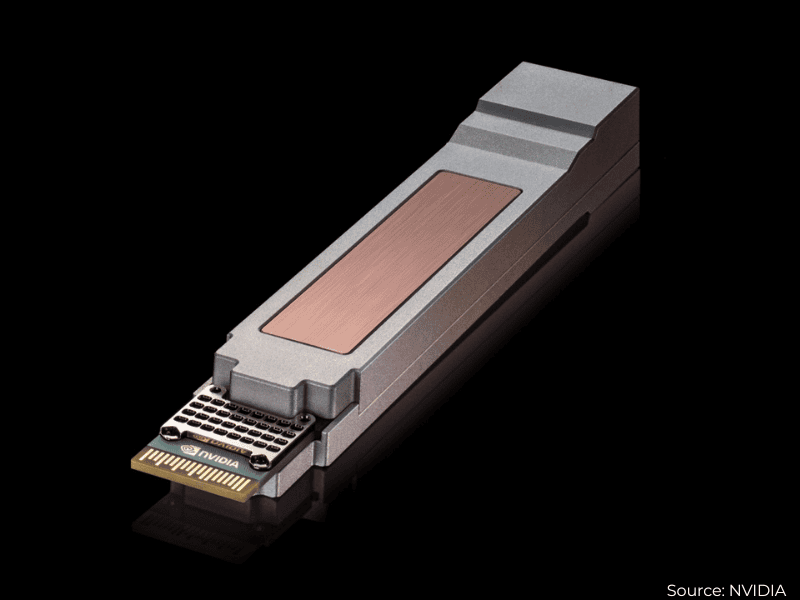
Pluggable optics have quietly become a pinch point in AI factory build-outs, and two companies have now teamed up to redefine the format. NVIDIA and Cisco have created Ultra-Dense Small Form Factor Pluggable, known as USFP, an optical transceiver form factor engineered to carry 400 Gb/s-per-lane links in next-generation AI factories. The partners state that the approach yields four times the bandwidth density of current 200 Gb/s-per-lane pluggable optics, along with better power efficiency and capacity of up to 12.8 Tb/s. The AIdataNewsGlobal General desk breaks down the specification, the connector design behind it, the ecosystem plan and what it changes for infrastructure buyers worldwide.
Key figures, stated by the partners
| Dimension | USFP figure | Reference point |
|---|---|---|
| Link rate | 400 Gb/s per lane electrical signaling | Performance at 200 Gb/s is also improved |
| Bandwidth and front-panel density | four times | Existing 200 Gb/s-per-lane pluggable modules |
| Power efficiency | approximately 1.3 times better | Current pluggable optics |
| Aggregate capacity | up to 12.8 Tb/s | Per module |
| Lane count | 16 full-duplex lanes in an OSFP-sized footprint initially | Later variants may grow to 32 lanes or more |
| Thermal handling | up to 100W dissipated | No dedicated embedded cooling circuit required |
| Ecosystem partners named so far | TE Connectivity and Amphenol | More partners expected to join |
Why density, rather than raw speed, is the design driver
AI infrastructure is increasingly limited less by how fast a single link runs than by how many computing systems can be reached through the panel space available in a rack. Growing the network by adding switching layers brings extra latency, extra cost and extra power consumption with it.
The stated goal of USFP is therefore to let AI infrastructure operators attach more computing systems within the same network footprint, sidestepping those additional layers. Initial transceivers are planned to pack 16 full-duplex lanes into an OSFP-sized footprint, serving both switches and SuperNICs, and the partners say later variants may grow to 32 lanes or more.
Relative to existing 200 Gb/s-per-lane pluggable modules, the companies report four times the bandwidth and front-panel bandwidth density, plus approximately 1.3 times better power efficiency.
The connector: a two-dimensional array and a two-step insertion
The central innovation sits in the physical interface. USFP uses a two-dimensional array connector combined with a two-step insertion mechanism, in which high-speed electrical contacts engage only after the module is inserted.
- Reduced contact wear, because contacts mate after insertion rather than during it.
- Improved signal integrity at 400 Gb/s per lane, with performance at 200 Gb/s also raised.
- More predictable insertion force for operators handling modules in the field.
- Up to 100W of dissipation without a dedicated embedded cooling circuit, which may simplify switch designs and improve reliability.
- Support for optical technologies that simplify signal processing to cut latency and power consumption, while accommodating different connection distances.
What the vendor side says
“Building the world’s largest AI factories starts with rethinking the smallest of connections,” said Gilad Shainer, senior vice president NVIDIA.
“With USFP, NVIDIA and Cisco are building an ecosystem to reinvent pluggable optics — connecting more computing with greater efficiency to power the next generation of AI factories.”
An open specification is the stated aim
With TE Connectivity and Amphenol, NVIDIA and Cisco are developing USFP connectors, cages and modules, and more partners are expected to join.
The firms also intend to create an open industry specification through a community-led multi-source project. For component suppliers, the promise is a common platform for interoperable high-density optical hardware rather than a single-vendor path.
The effort extends the existing collaboration between NVIDIA Spectrum-X Ethernet networking and Cisco Silicon One-based networks, and is aimed at AI infrastructure deployments across enterprises, neocloud providers and sovereign cloud operators.
Who is affected, and how
- European data center operators scaling AI infrastructure without adding network complexity or power consumption.
- Network equipment makers reworking switch front panels, cooling assumptions and serviceability.
- Optical component suppliers looking for a shared high-density interface to build against.
- Connectivity manufacturers, as Ethernet networks shift toward higher density.
- European AI infrastructure developers, for whom the proposed standard may offer a more flexible route to higher-bandwidth networking while preserving the serviceability and deployment advantages of pluggable optics.
FAQ: the questions this announcement raises
What is USFP?
Ultra-Dense Small Form Factor Pluggable, a jointly created optical transceiver form factor built to enable 400 Gb/s-per-lane links in next-generation AI factories.
How much denser than today's optics?
The partners state four times the bandwidth and front-panel bandwidth density of present 200 Gb/s-per-lane pluggable modules, with capacity of up to 12.8 Tb/s and approximately 1.3 times better power efficiency.
What are the lanes doing?
Initial transceivers are planned with 16 full-duplex lanes in an OSFP-sized footprint, serving switches and SuperNICs; later variants may grow to 32 lanes or more.
Why does the insertion mechanism matter?
The two-dimensional array connector and its two-step insertion mean high-speed electrical contacts engage only after the module is inserted, which helps reduce contact wear, improve signal integrity and give a more predictable insertion force.
How is heat handled?
Modules can dissipate up to 100W without a dedicated embedded cooling circuit, a feature that may simplify switch designs and improve reliability.
Is this a closed, single-vendor interface?
The stated intent is the opposite: connectors, cages and modules are being developed with TE Connectivity and Amphenol, and the firms plan an open industry specification via a community-led multi-source project.
Where does it fit in existing product lines?
The work extends collaboration between NVIDIA Spectrum-X Ethernet networking and Cisco Silicon One-based networks, targeting enterprises, neocloud providers and sovereign cloud operators.
What to watch next
The announcement sets a direction rather than a shipping date, and the practical signal to track is the breadth of the partner list: more participants are expected to join the connector, cage and module work alongside TE Connectivity and Amphenol, and the multi-source project will show whether an open specification for this density level actually converges.
For buyers planning AI networks, the test is narrower: whether a four-times density gain in the same OSFP-class footprint, at 400 Gb/s per lane and with approximately 1.3 times better efficiency, lets them connect more computing without adding switching layers, power and complexity in equal measure.