
From Pilot to AI Factory: A Practitioner's Playbook for Cities Building Local AI Compute
AI & Data News · By David Nakamura
BARCELONA, Spain — The working question for city teams is no longer whether artificial intelligence can read cameras or draft replies, but how it gets installed as durable civic infrastructure. The answer argued here at the Smart City Expo World Congress is procedural rather than heroic: inventory the urban data a city already collects, pick one genuinely transformational use case, stand up shared local compute — an “AI factory” — that the municipality owns, rents or co-invests in, wire legacy records and live sensors into it, then publish what data is used and by whom. Scale follows proof, not the reverse.
That thesis came from Paolo Guglielmini, Nvidia’s VP for EMEA, in a keynote, and was carried forward by an executive panel convened by Michael Lake, CEO of Leading Cities, which brought municipal leaders from Europe and the U.S. to the same stage. What follows is a practitioner-facing reconstruction: the steps, the checklists, the reference deployments and the traps that recur.
Why do so many city AI projects stall before production?
Because the operating system around the technology — procurement, data estate, skills, accountability — is not ready for it. That, rather than model quality, is what the Barcelona panel identified as the binding constraint.
“Technology doesn’t fail because it’s bad,” said Lake, president and chief executive of Leading Cities. “Technologies and communities fail because the system that it needs to survive is not ready for it.”
Charbel Aoun, director of smart cities and spaces for EMEA at Nvidia, named the failure mode directly: municipalities treat AI as disconnected software trials instead of weaving it into daily operations, a habit panel members called “death by a thousand pilots.”
“Most of the pilots end up being a lessons-learned paper,” Aoun said. “What we need to prove is the value and the adoption.”
The pattern is measurable. A survey of 525 senior officials in 215 cities, fielded by Dell Technologies and Nvidia in July and August 2026 and published on 2 November 2026, found most municipalities scoring roughly 50 out of 100 on AI maturity, while the leader group reported a 99% return on investment realised in 38 months — about double the return of peer cities. The study is vendor-commissioned, so the absolute returns should be read as directional; its structural claim matches what Guglielmini described from the stage: pilots stall when they are funded as experiments rather than tied to a named public outcome, housed in one department, and bolted to infrastructure nobody else can reuse. Independent analyses of enterprise programmes put the share of AI pilots that never reach production near 88%, a private-sector figure, but with the same plumbing-and-ownership mechanism.
Lake structured the panel around three core principles — purpose, power and proof — and each maps to a checklist item later in this guide.
What is an AI factory, and why treat it like a water main?
Guglielmini's keynote, titled “From AI Factories to Intelligent Cities,” framed municipal AI as a structural bottleneck rather than a software gap. “Your organizations, your city’s municipalities, and regions have never had so much data available to you,” he said, pointing to continuous streams from water utilities, air quality monitors, traffic sensors, mobile devices, GPS trackers and satellite imagery. “But the gap between the data that’s available and the data that we use for decision-making has never been this great.”
His remedy is a five-layer architecture for civic technology: energy, compute hardware, foundational infrastructure, software models and end-user applications. Cities, he observed, spend heavily on hardware, yet much economic value is generated at the application layer.
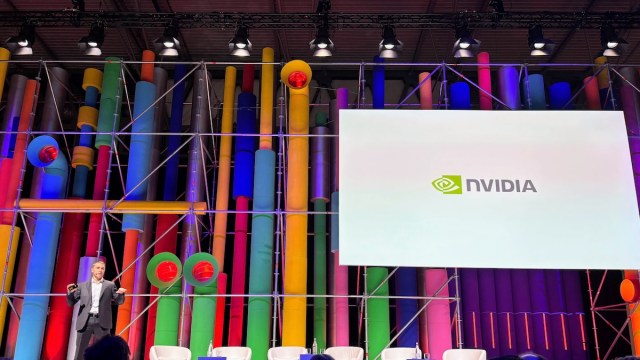 Paolo Guglielmini on stage at the Smart City Expo World Congress (Pablo Valerio | EE Times)
Two consequences drive budget and hiring decisions. First, value follows the application layer; second, people follow the machines.
“Economic opportunity will happen where compute resides,” Guglielmini said. “Talent will stay where compute infrastructure is built. The lion’s share of startups created today are AI-native startups, and entrepreneurs and innovators will always follow where infrastructure is built.”
He also identified the drag inside city halls. “Very often, the organizations you are within have a lot of legacy,” Guglielmini said. “We have data that is nested. We have silos. We have applications built over tens of years. AI is perfect to build that layer on top that harnesses the power of data.”
Aoun's advice was to stop booking compute as software spend. “AI is becoming critical infrastructure,” Aoun noted. “If we achieve that point, then we need to learn from the broadband mistake and from previous mistakes. Cities can own it, rent it, or partner, but they need an AI factory foundation.”
The same argument had been pitched a couple of weeks before Barcelona. At GTC Berlin on 21 October 2026, Nvidia's own event newsroom described three days and more than 100 sessions on agentic AI, robotics, physical AI, open models and accelerated computing, with European sovereign compute a recurring theme — a signal that vendor roadmaps and municipal demand are converging on the same asset class.
How should a city actually start? A six-step checklist
- Map data collected against decisions made. List every feed — water, air quality, traffic, permits, mobile and GPS telemetry, satellite imagery — and mark which ones influence an operational decision today. The gap between the two columns is the project brief.
- Choose one transformational use case, not a portfolio of experiments. “Adding the right level of ambition is fundamental, but getting started with a use case that is really transformational for your communities and thinking about it in modular terms is fundamental to get going,” Guglielmini said.
- Decide the compute model in writing: own, rent or partner. The three options carry different capital, control and procurement profiles; the shared requirement is that the layer survives any single vendor contract.
- Start small and modular. “Your AI journey can start from something very small—something portable and powerful,” Guglielmini said, noting that numerous European technology enterprises began operations using compact desktop supercomputing units. Nvidia has since described single-workstation or small-GPU starting points for city agent services, and shared platforms that let departments and local developers build on one base rather than each buying hardware.
- Set control, permissions and language coverage before launch. Sovereignty is not only geopolitical: it is who may see which record. Local hosting keeps public data inside municipal control, Guglielmini argued.
- Instrument adoption and value, and diarise the regulatory calendar. For European municipalities, the EU AI Act matters operationally because Annex III covers access to and enjoyment of essential public services; the European Commission's AI Act Service Desk describes phased application with main milestones scheduled through 2 August 2028, and transparency duties entering force from 2 August 2026. Brussels has been revisiting the high-risk timetable, so verify dates against the official timeline rather than vendor summaries.
What do working deployments look like? three reference cases
Guglielmini pointed to three distinct deployments across European regions to show how localised computing becomes municipal operations. The differences between them are the useful part: one is asset-centred, one is event-centred, one is language-centred.
| Site | What was built | Operational payoff |
|---|---|---|
| Doubs department, eastern France | Digital replicas of more than 500 public buildings, layered with live utility, maintenance and environmental records | Cheaper, faster simulation of urban planning and infrastructure upkeep |
| Palermo, Italy | A centre of excellence running a real-time AI model over camera and multi-sensor feeds | Monitoring fused with traffic management, emergency dispatch and waste tracking |
| Barcelona | An agentic service platform from municipal technology developer 1 Million Bots, built on “Laia,” a specialised language model developed at the Barcelona Supercomputing Center | Regional administrative procedures handled in Spanish and regional languages, including Catalan, Galician and Basque |
On the French case, Guglielmini was explicit that geometry alone is not the deliverable. “This is not about pure geometry,” he said. “These are mock-ups that are enriched with data maintenance, data records, and utility records. Simulating cities and urban planning into the future has never become so affordable, so quick, and so valuable.”
On the Italian case: “Palermo went off and built a center of excellence that is incredibly capable of fusing sensor data from a multiplicity of facets and really shorten the time to emergency response,” he explained.
On the Spanish case, sovereignty was the selling point. “Laia is a model that is highly specialized and highly sovereign for the Spanish language, and for all the [languages] that are important to address the largest possible population of your citizens,” Guglielmini said. “The city is in control of the applications, in control of the data, and in control of the permitting and permissions of who gets to see that data.”
That deployment is no longer a single-city pilot. In a post published on 3 November 2026, Nvidia said its urban agent stack has been rolled out across more than 150 projects in Spain, covering municipal procedure filing, appointment requests, urban-planning incident reports and service inquiries — evidence that the agent layer can scale nationally once the compute base is shared.
How do U.S. cities buy trust while cutting paperwork?
 From left to right: Michael Lake, Keith A. James, Jane Castor, Valeria Baglio, Jakub Mazur, and Charbel Aoun (Pablo Valerio | EE Times)
American city leaders described narrow, legally bounded starting points chosen to build public confidence.
Mayor Keith A. James of West Palm Beach, Fla., selected public records processing as his first application because staff handle heavy paperwork under strict legal timelines, making retrieval a natural fit for automation.
“Cities tend to be very labor-intensive or paper-intensive,” James said. “You want to show the residents the AI working, and you want to begin with realistic applications. Our project involves public records requests. It helps our residents because we respond efficiently, and it takes some of the burden off our staff.”
In Tampa, Fla., Mayor Jane Castor said public safety departments led technology adoption because immediate operational demands made them early adopters. Tampa recently deployed an automated drone response system linked directly to its real-time crime center, allowing aerial units to reach emergency scenes ahead of ground vehicles. The city is also deploying “Iris,” a software platform that consolidates data from water quality, wastewater, solid waste, purchasing and permitting into a single executive dashboard to prevent department silos.
Castor's condition for residents was blunt boundaries. “You have to share information with your community so that trust is there,” Castor said. “They shouldn’t feel like there’s a surveillance state in your community.”
How do European cities anchor accountability and equity?
European participants described frameworks that tie deployment to universities and to geographic fairness, rather than to single-purpose software purchases.
First Deputy Mayor Jakub Mazur of Wrocław, Poland, said his administration replaced ad hoc software trials with a citywide strategy anchored by the Wrocław University of Science and Technology and its 25,000 students. The city deployed an AI-assisted enrolment system that handles 95% of school placements for local families while encouraging technical graduates to remain in the regional economy.
Mazur stressed that decisions affecting citizens must stay answerable to elected officials. “We need to own it because the city is responsible for data and the decision-making process,” Mazur stated. “We are democratically elected; we can be voted out. The algorithm cannot be voted out.”
For Rome, Italy, Deputy Mayor Valeria Baglio outlined neighbourhood-wide inclusion: instead of concentrating digital investment in tourist-heavy central districts, the city extends digital public services across outer residential areas through “CTE Roma“, or Houses of Innovation, a municipal network linking city government, regional universities, startup incubators and living labs.
“We are working to bring digital services closer to residents across all districts, so that innovation isn’t just focused around central stations or downtown hubs,” Baglio said.
Which traps break municipal AI programmes?
- Legacy-first architecture. Teams start from the newest interface instead of the nested data and applications built over tens of years, so the model has nothing reliable to read.
- Pilot theatre. Multiple demos, no adoption metric — the “lessons-learned paper” outcome Aoun warned against.
- Departmental ownership. Compute bought by one office becomes a silo; a shared base is what makes the second and third use case cheap.
- Hardware without an application layer. Value accrues where applications are built, not where boxes are racked.
- Trust by surprise. Deploying camera or sensor fusion before explaining purpose invites the surveillance-state perception Castor flagged.
- Accountability left to the model. Enrolment, dispatch and permit decisions still need a named elected official who can be voted out.
- Ignoring language coverage. A service that only works in a dominant language excludes precisely the residents municipal AI is meant to reach.
FAQ: what city teams ask next
Does a municipality need a data centre to begin?
No. Guglielmini's counter to the multi-gigawatt image was modularity: “Your AI journey can start from something very small—something portable and powerful,” with growth driven by workload rather than by a single capital event.
Who stays accountable when an algorithm affects a resident?
The elected official. Mazur's formulation from the panel is the cleanest test: “We are democratically elected; we can be voted out. The algorithm cannot be voted out.”
Is local compute really different from buying cloud AI services?
The difference is control, not capability. Guglielmini's Barcelona example turned on permissions: “The city is in control of the applications, in control of the data, and in control of the permitting and permissions of who gets to see that data.” Aoun's procurement answer keeps all three routes open — own it, rent it or partner — but requires the shared foundation.
What should a first project be?
Something with a legal clock and a paper trail. James's public-records workflow is the template: measurable response times, a resident-visible benefit, and staff burden removed.
What is the timeline cities should plan against?
Guglielmini expects the next decade of urban technology to shift from experimentation to permanent, on-the-ground computing assets. “Infrastructure build-out for the next 10 years is going to mean building intelligence that is at your fingertips to help you run your cities more effectively and economically,” he said.
What to watch from here
Guglielmini closed with the allocation advice city finance officers are most likely to reuse: “Focus on the use cases that are most transformational for where you are, bring together the right ecosystem, and look at the resources you have available to build compute capacity that serves your community.”
AIdataNewsGlobal's read: the story moving through 2027 will not be which model a city adopts, but which budget line the compute sits in. Treat it as capital infrastructure — asset register, maintenance contract, security perimeter, published permissions — and pilots stop being experiments. Treat it as software procurement, and the thousand-pilot graveyard repeats. The practical next steps for teams are to publish an AI system inventory, name an accountable officer per use case, and re-cost the coming fiscal cycle around reuse rather than per-department purchase.
Tip-offs and corrections for this desk: editorial@aidatanews.com.
Reference sources
- European Commission, AI Act Service Desk — implementation timeline: https://ai-act-service-desk.ec.europa.eu/en/ai-act/timeline/timeline-implementation-eu-ai-act
- European Commission, AI Act Service Desk — Annex III, essential public services and benefits: https://ai-act-service-desk.ec.europa.eu/en/ai-act/annex-3
- Dell Technologies, “Building a People-First, AI-Powered City: What 215 Municipalities Reveal About AI and Public Value” (2 November 2026): https://www.dell.com/en-us/blog/building-a-people-first-ai-powered-city-what-215-municipalities-reveal-about-ai-and-public-value
- Nvidia, GTC Berlin 2026 news hub (October 2026): https://blogs.nvidia.com/gtc-berlin-2026-news/
- Nvidia, “Cities Worldwide Build and Scale AI Services” (3 November 2026): https://blogs.nvidia.com/blog/cities-physical-agentic-ai-applications/
- Keynote and panel remarks as reported from the Smart City Expo World Congress, BARCELONA, Spain (Pablo Valerio | EE Times photography).