
AIdataNewsGlobal General Review: Korea's Sovereign AI Stack — How NVLink Fusion, the Rebel R200 and MGX Compare with the Alternatives
Short answer: this collaboration keeps Korean silicon inside NVIDIA's rack ecosystem rather than competing with it. Rebellions connects its Rebel R200 neural processing units to NVIDIA's open infrastructure platform through NVIDIA NVLink Fusion, develops rack-scale systems on the NVIDIA MGX architecture, and SK Telecom plans to deploy them with backing from the Ministry of Science and ICT (MSIT). The trade-off is time and proof: R200 systems are only expected to be deployment-ready in 2028, and the core technical bet — GPUs running prefill while NPUs run decode — still has to earn its cost per token.
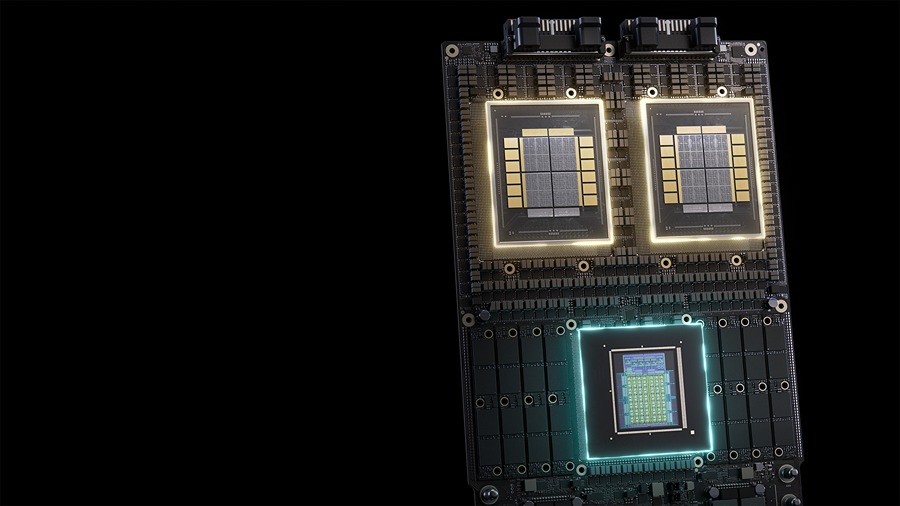
Read this as an evaluation rather than a launch story. Three parties, two interconnect standards, and a visible gap between the operator's GPU build-out and the domestic chip timeline — those are the variables that decide whether sovereign AI becomes a procurement template or a policy demonstration.
What does each partner actually contribute?
Conclusion first: NVIDIA supplies interconnect and rack standards, Rebellions supplies inference-specific silicon, SK Telecom supplies the deployment surface, and MSIT supplies the mandate. No row in the table below is optional.
| Party | What is committed | Why it matters in a comparison |
|---|---|---|
| NVIDIA | Extends its vertically integrated but horizontally open platform to custom XPUs through NVLink Fusion, with the NVIDIA MGX rack architecture, reference designs and an established supply chain of original design manufacturers and component suppliers | Reframes a national chip programme as a semi-custom infrastructure project rather than an alternative stack |
| Rebellions | Next-generation Rebel R200 NPUs aimed at low-latency, energy-efficient inference on frontier models, including multitrillion-parameter mixture-of-experts models, linked inside the rack through NVIDIA NVLink scale-up networking | The only Korean NPU with a public path onto NVIDIA fabrics so far — a different signal from being an NVIDIA customer |
| SK Telecom | AI data centre operating experience plus proprietary foundation models and public-facing services deployed in MGX racks, including services under the government's AI for All project | The integrator and first buyer; without telco-scale deployment, the R200 remains a reference design |
| Ministry of Science and ICT / MSIT | Support for collaboration between NVIDIA and Korean NPU companies, starting with Rebellions and SK Telecom | Converts a commercial deal into policy infrastructure with budget exposure and a public-interest workload pipeline |
Context worth adding: NVLink Fusion is not new. NVIDIA unveiled it around Computex in May 2025 specifically so industry could build semi-custom AI infrastructure on its partner ecosystem, naming Alchip, Astera Labs and Marvell among silicon partners and citing Fujitsu and Qualcomm pairing custom CPUs with NVIDIA GPUs (NVIDIA investor release). Rebellions is the first Korean NPU vendor to join that list, and that is the most durable fact in the announcement.
Why NVLink Fusion instead of UALink or Ethernet scale-up?
Conclusion first: Korea bought access to ecosystems that already ship, not a vote on standards that will ship later. That choice favours schedule certainty and penalises protocol independence.
- NVLink Fusion — third-party silicon integrates NVLink IP and joins NVIDIA scale-up networking and MGX racks. The partner list has kept lengthening: in late August 2026 MediaTek said it would offer NVLink Fusion as a design foundation for customers developing custom AI accelerators (MediaTek press release).
- UALink — the UALink Consortium's 1.0 specification targets 200G per lane and accelerator pods of up to 1,024 devices under consortium-driven governance, and its 2026 white paper openly benchmarks itself against NVLink and Ethernet scale-up (UALink white paper). Volume products, however, are still ahead of the specification.
- Ethernet scale-up — Broadcom's Scale-Up Ethernet and the Ultra Ethernet Consortium push scale-up semantics onto Ethernet fabrics; analyst commentary has repeatedly placed meaningful commercialisation around 2027 and later, the same window in which Korean NPUs are meant to reach market (IEEE ComSoc technology blog).
For a sovereign programme with a fixed silicon schedule, the decisive advantage of MGX is not bandwidth but procurement: reference designs plus an existing ODM and component supply chain lower deployment risk and shorten time to market, exactly the arguments the partners make. The offsetting risk is structural — the rules of the fabric remain NVIDIA's, and a national stack built on licensed IP inherits that governance.
Does prefill-on-GPU, decode-on-NPU actually deliver?
Conclusion first: the disaggregated design is an energy-per-token and cost-per-token argument, and it only pays once KV-cache hand-off stays cheap. It is not a speed claim.
- Work on disaggregated serving finds that gains from separating prefill and decode are conditional rather than automatic, depending on request load and the cost of moving KV cache between pools (arXiv survey of disaggregated LLM serving). Open-source stacks such as vLLM and llm-d have added dedicated KV-transfer paths precisely because naive splits can erode throughput.
- Rebellions has claimed up to 3.2x higher energy efficiency than traditional GPUs for its inference-optimised NPU architecture, a figure published alongside its Red Hat OpenShift AI listing in December 2025 and repeated in Korean trade press (Rebellions newsroom). This is a vendor number, not an independent benchmark, and should be discounted until public, reproducible serving results exist.
- The rack-level logic is sound. Prefill is compute-bound; decode is memory- and bandwidth-bound. Placing NVIDIA GPUs and Rebellions NPUs in the same MGX rack, sharing footprint, power delivery and cooling, lets an operator assign each stage to the better-suited architecture instead of buying one box that does both adequately.
Two things remain unproven in the public record: whether the KV-cache hand-off between the two processor classes stays within acceptable latency on real SK Telecom traffic, and whether a mixed GPU/NPU pool reduces total cost per token enough to justify the added software complexity. Anyone benchmarking this should test at production request mixes, not synthetic single-prompt runs.
How does this rank against Korea's other sovereign AI builds?
Conclusion first: there are now two rival Korean sovereign stacks — an NVIDIA-anchored open-platform route and an AMD-anchored heterogeneous route — and domestic silicon sits roughly a year behind the operator's GPU build-out.
| Dimension | NVIDIA / Rebellions / SK Telecom | AMD / FuriosaAI / MangoBoost |
|---|---|---|
| Integration layer | NVLink Fusion plus NVIDIA MGX racks | AMD Instinct GPUs plus Korean NPUs in one heterogeneous cluster |
| Public commitment | Collaboration backed by the Ministry of Science and ICT | MoU signed 4 November 2026 at AMD Advancing AI Seoul, targeting a Seoul cluster by the following spring (DIGITIMES) |
| Silicon readiness | R200 systems expected ready for deployment in 2028 | Shipping Korean NPUs plus AMD Instinct MI355X capacity already operated in Seoul |
| Capital signal | Korea's National Growth Fund approved a $166 million investment in Rebellions in March 2026 (Reuters); the company also closed a reported $400 million pre-IPO round | FuriosaAI raised a reported $620 million Series D in October 2026 |
- SK Telecom is simultaneously building NVIDIA-led capacity ahead of its own NPUs: a gigawatt-scale AI Cloud in Korea on the NVIDIA DSX platform, with the first AI factory planned to come online in 2027 (NVIDIA newsroom), and a 2-gigawatt Vera Rubin DSX AI factory under the July 2026 expansion of the SK Group–NVIDIA partnership. Sovereign GPUs arrive before sovereign silicon — the sharpest tension in this deal.
- That gap between separately sized heterogeneous pools is the same design problem visible elsewhere in the market, for instance in NVIDIA and Oracle splitting capacity tracks for Vera Rubin NVL72 systems and Vera CPUs, so operators can adjust GPU and CPU capacity independently.
- Meanwhile NVIDIA's capital strategy pulls the other way: its $3 billion investment in Meta deepens vertically integrated systems, while Korea's programme assumes openness around NVLink Fusion and MGX is enough to keep domestic silicon commercially alive.
- Scale context, flagged as third-party analysis rather than official data: market trackers estimate NVIDIA hardware in roughly 45% of more than 180 tracked sovereign AI projects worldwide (Market.us sovereign AI report). Against that baseline, the Korean deal's novelty is that a sovereign programme adopts the foreign fabric as its integration layer rather than buying only foreign boxes.
Who should treat this as a template, and who should wait?
Conclusion first: this is a template for jurisdictions that must show domestic compute while still needing frontier-class serving capacity, and a caution for anyone who needs that silicon before 2028.
Pilot or track it now if you are
- A public-sector or telco operator with residency mandates. AI services shaped by Korea's language, industries and priorities — the government's AI for All project being the obvious first pipeline — can absorb the early-silicon performance penalty because demand is policy-driven rather than market-driven.
- A data-centre planner constrained by power rather than chips. Decode-stage NPUs plus shared MGX rack design elements let operators retrofit inside existing envelopes; this is fundamentally a power argument.
- A Korean component supplier or ODM. MGX's established supply chain of original design manufacturers and component suppliers is a procurement channel as much as an engineering one.
Wait if you are
- A frontier-training buyer. The R200 is positioned for low-latency, energy-efficient inference on frontier models, including multitrillion-parameter mixture-of-experts architectures — not for pre-training at NVIDIA scale.
- An owner of CUDA-locked workloads. Portability must still be demonstrated on Rebellions' software stack; the interconnect being solved is only half the migration question.
- An operator on an aggressive refresh cycle. Deployment readiness in 2028 means shipping against whatever NVIDIA generation is current then, and against UALink or Ethernet scale-up that may finally be in volume.
- An investor relying on policy continuity. MSIT backing is real but budget-dependent; watch whether the National Growth Fund's direct-investment posture persists beyond the current cycle.
Frequently asked questions
Is the Rebel R200 a replacement for NVIDIA GPUs?
No. The plan is co-existence in the same rack: NVIDIA GPUs handle prefill, Rebellions NPUs handle decode, and the two are joined by NVLink Fusion and NVIDIA NVLink scale-up networking inside an MGX rack. It is an efficiency play, not a substitution play.
What does NVIDIA MGX add that NVLink Fusion alone does not?
MGX standardises the mechanical and electrical layer — rack footprint, power delivery, cooling — and opens an established supply chain of ODMs and component suppliers. NVLink Fusion solves the fabric; MGX solves manufacturability and deployment.
Who is paying for the domestic chip side?
Mixed public and private money. Korea's National Growth Fund approved a $166 million investment in Rebellions in March 2026 per Reuters, and Rebellions has separately closed a reported $400 million pre-IPO round. MSIT provides programme backing rather than a disclosed per-project figure.
When could a customer actually run on it?
Per the announcement, Rebellions' R200 systems are expected to become ready for deployment in 2028. By contrast, SK Telecom's first NVIDIA DSX-based AI factory is planned for 2027, so sovereign GPU capacity precedes sovereign NPU capacity by roughly a year.
Does this guarantee AI services stay in Korea?
Not by itself. Sovereignty here rests on three layers — Korean-designed silicon, Korean foundation models, and Korean data centre operations, wired to services such as those under the AI for All project. Any of the three can be substituted; the NVLink Fusion route deliberately does not touch the interconnect layer.
What to watch next
Four signals will determine whether this becomes infrastructure or a press release. First, reproducible serving numbers for the prefill/decode split at production request mixes, not vendor-published efficiency ratios. Second, the appearance of MGX-based reference designs that place third-party NPUs alongside NVIDIA GPUs, which is what makes the model repeatable outside Korea. Third, whether UALink or Ethernet scale-up reaches volume before the R200 ships — if it does, the "certainty" rationale for licensing NVIDIA's fabric weakens materially. Fourth, the budget line: MSIT support and National Growth Fund follow-on capital will show whether Seoul intends to fund a second Korean NPU onto the same platform, or treat Rebellions as the single national entry.
References
- NVIDIA — semi-custom AI infrastructure with NVLink Fusion, unveiled May 2025: https://investor.nvidia.com/news/press-release-details/2025/NVIDIA-Unveils-NVLink-Fusion-for-Industry-to-Build-Semi-Custom-AI-Infrastructure-With-NVIDIA-Partner-Ecosystem/default.aspx
- NVIDIA newsroom — SK Telecom gigawatt-scale AI Cloud on NVIDIA DSX, first AI factory planned for 2027: https://nvidianews.nvidia.com/news/sk-telecom-ai-infrastructure
- MediaTek — NVLink Fusion as design foundation for custom AI accelerators (August 2026): https://www.mediatek.com/press-room/nvidia-and-mediatek-deepen-long-standing-partnership-to-build-ai-edge-to-cloud-computing-platforms
- UALink Consortium — scale-up interconnect white paper and 1.0 specification context: https://ualinkconsortium.org/wp-content/uploads/2026/01/UALink_White_Paper_Publication_Candidate_FINAL_VERSION.pdf
- Reuters — South Korea to invest $166 million in Rebellions via the National Growth Fund (March 2026): https://www.reuters.com/world/asia-pacific/south-korea-invest-166-million-ai-chip-startup-rebellions-2026-03-26/
- Rebellions — Red Hat OpenShift AI listing and energy-efficiency claim (December 2025): https://rebellions.ai/newsroom/rebellions-and-red-hat-introduce-red-hat-openshift-ai-powered-by-rebellions-npus-to-fuel-choice-and-flexibility-in-enterprise-ai/
- arXiv — revisiting disaggregated LLM serving; conditional gains from prefill/decode separation: https://arxiv.org/html/2601.08833v1
- DIGITIMES — AMD, FuriosaAI and MangoBoost heterogeneous Seoul cluster (November 2026): https://www.digitimes.com/news/a20261105VL229/amd-south-korea-ai-chips-development-software.html
- IEEE ComSoc Technology Blog — NVLink Fusion versus UALink, Ultra Ethernet and Broadcom SUE: https://techblog.comsoc.org/2026/09/01/analysis-nvidia-mediatek-deepen-ai-platform-collaboration-what-it-means-for-ai-ran-dci/
- Market.us — sovereign AI infrastructure market tracker (third-party estimate): https://market.us/report/sovereign-ai-market/