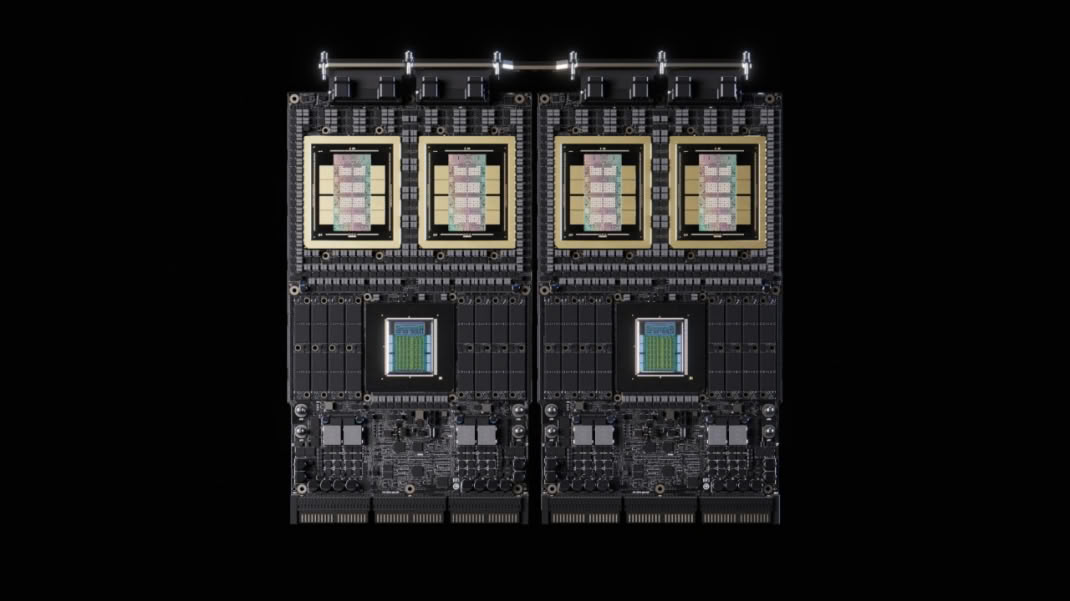
AIdataNewsGlobal General Briefing: How Nvidia's Vera Rubin Bandwidth Reset Reshapes HBM4 And NVLink Tradeoffs
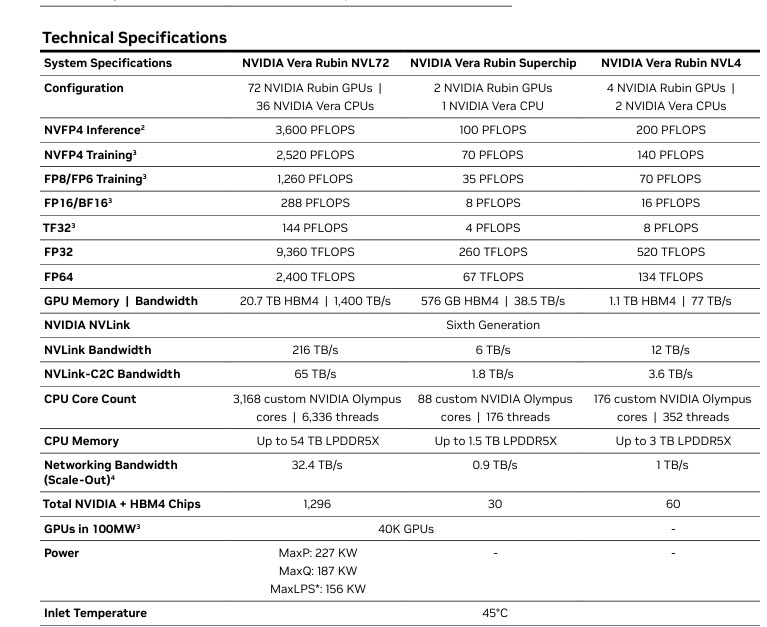
A refreshed look at Nvidia's Vera Rubin platform shows that the Rubin GPU is currently associated with 288GB of HBM4 memory and a 19.2TB/s memory-bandwidth figure. Compared with the earlier maximum possible 22TB/s target, the current number is about 12.7% lower. The wording matters: because the earlier figure was framed as a ceiling rather than a guaranteed value, the updated spec should be read as a re-baselining of platform expectations rather than proof that every shipped product will lose the same amount of performance.
Why The Rubin GPU Memory-Bandwidth Change Matters
HBM4 is described as a next-generation high-bandwidth memory technology with a wider memory interface. Its role is to feed artificial-intelligence training and inference workloads with enough data to keep compute resources busy. As model size grows, a GPU needs to access not only stronger arithmetic capability but also large volumes of model parameters and intermediate state. If memory bandwidth is insufficient, the processor can wait for data even when its theoretical compute potential remains high.
The Rubin platform's earlier pursuit of a higher memory-bandwidth target placed demanding technical constraints on the HBM4 supply chain. Memory vendors must satisfy transfer-speed, power, heat, signal-integrity and long-term reliability requirements at the same time. A higher bandwidth goal can make design validation and mass production harder because more elements of the memory stack must perform at the extreme end of the specification window.
If Nvidia lowers the memory-bandwidth bar, the pool of HBM4 chips that meet product requirements may broaden, and suppliers may see a better share of qualified output. That does not necessarily mean vendors must redesign an entire memory family. Instead, devices that missed an earlier peak target but satisfy the revised requirement can enter the supply path, improving overall availability.
Checklist: What The Updated Vera Rubin Specs Confirm And What They Do Not
- Confirmed in the updated spec framing: Rubin GPU is shown with 288GB HBM4 and 19.2TB/s memory bandwidth.
- Confirmed delta versus earlier materials: The 19.2TB/s figure is about 12.7% below the previous maximum possible 22TB/s target.
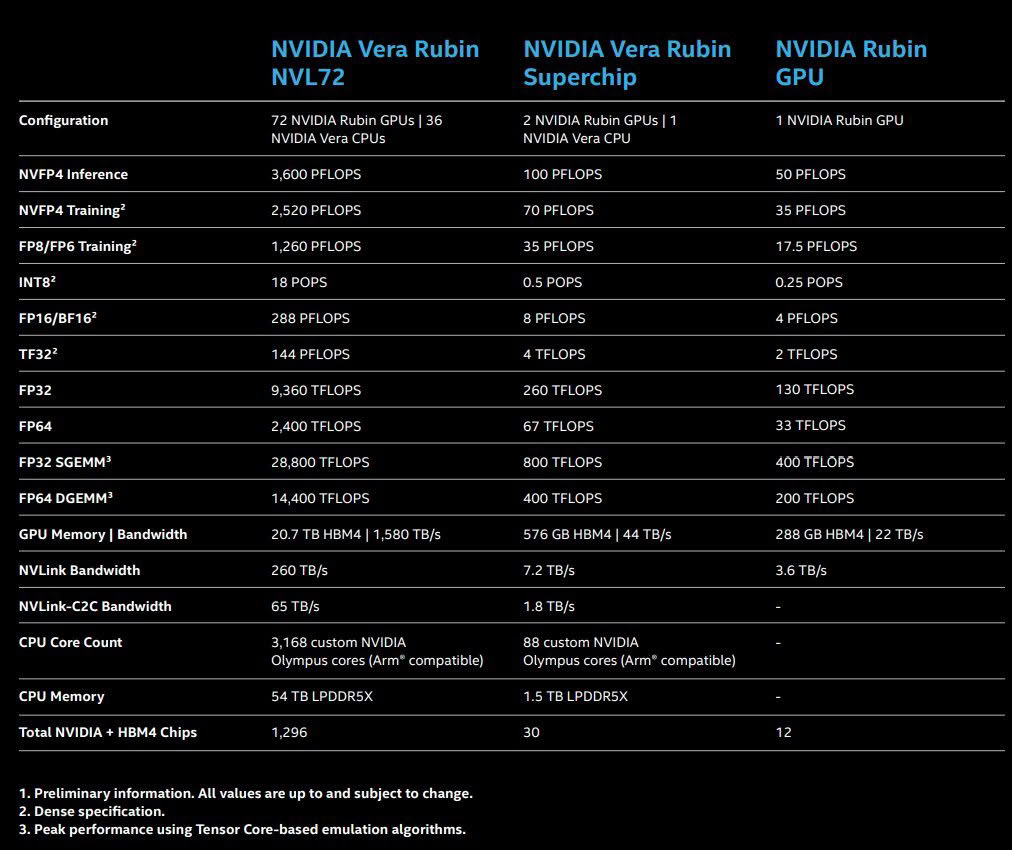
- Confirmed NVLink change: Vera Rubin superchip NVLink bandwidth is listed at 6TB/s, down from 7.2TB/s, a reduction of about 16.7%.
- Confirmed scale-out network change: Network bandwidth moves from 0.8TB/s to 0.9TB/s.
- Not confirmed: that Nvidia has proved a memory shortage exists.
- Not confirmed: that the sole reason for the adjustment is higher yield, because certification progress and supplier qualification status remain needed.
NVLink And Scale-Out Network: A Different Balance Between Chip-To-Chip And Node-To-Node
The interconnect side of the Vera Rubin superchip also changes. The product data now gives NVLink bandwidth of 6TB/s, compared with the previous 7.2TB/s figure. NVLink is Nvidia's high-speed link between GPUs and is important for data exchange in multi-GPU systems, parallel model training and complex artificial-intelligence inference tasks.
In large AI clusters, GPUs move gradients, activation values and other intermediate data frequently. For models using expert-mixture architecture, communication between different compute units can be a central bottleneck. A lower NVLink bandwidth target may therefore affect communication-intensive workloads. The real-world effect, however, depends on model architecture, software scheduling and actual load; it cannot be reduced to a simple multiplication of bandwidth loss into total compute loss.
At the same time, the scale-out network bandwidth rises. Existing materials show a move from 0.8TB/s to 0.9TB/s on the Vera Rubin superchip. This kind of network links separate compute nodes and lets a data center organize many GPUs into a single cluster. A wider node-to-node path can help when workloads must be spread across servers, especially in training or inference tasks that require cross-machine coordination.
Key Bandwidth Data Points
| Platform element | Earlier reference | Current reference | Direction | Change |
|---|---|---|---|---|
| Rubin GPU HBM4 memory bandwidth | maximum 22TB/s | 19.2TB/s | down | about 12.7% |
| Vera Rubin superchip NVLink bandwidth | 7.2TB/s | 6TB/s | down | about 16.7% |
| Vera Rubin superchip scale-out network bandwidth | 0.8TB/s | 0.9TB/s | up | 0.1TB/s absolute change |
| Rubin GPU memory capacity | 288GB HBM4 | 288GB HBM4 | unchanged in current framing | capacity remains a key platform anchor |
| Vera Rubin NVL72 GPU count | 72 Rubin GPUs | 72 Rubin GPUs | unchanged in official rack framing | connected by sixth generation NVLink |
What This Says About Nvidia's Platform Tradeoffs
The combination of one lower bandwidth metric and one higher network metric points to a systems-level tradeoff. GPU-internal and rack-level communication matter, but as cluster size grows, node-to-node traffic may also shape end-to-end performance. The revised figures suggest Nvidia may be reallocating the performance budget across the platform rather than pushing every individual interconnect toward its highest historical target.
For the HBM4 supply chain, the change can alter competitive priorities. If earlier peak transfer speeds are no longer the central filter, vendors may compete more directly on yield, delivery scale, power, stability and cost. Suppliers that can manufacture compliant memory in volume could gain more opportunity even if they did not previously satisfy the stricter maximum target.
Platform performance should also be read more broadly. A Vera Rubin system is not defined only by memory bandwidth. GPU compute capability, memory capacity, chip-to-chip links, network topology and software optimization together determine results. Nvidia's official Vera Rubin NVL72 rack description includes 72 Rubin GPUs and uses sixth generation NVLink to connect multiple GPUs for large-scale training and inference.
FAQ: General Reader Questions About The Vera Rubin Adjustment
Is a 12.7% bandwidth reduction the same as a 12.7% performance loss?
No. The 12.7% figure is a comparison between the current 19.2TB/s memory-bandwidth value and an earlier maximum possible 22TB/s target. Actual model performance depends on memory capacity, compute throughput, interconnect bandwidth, network topology, software implementation and workload shape. A bandwidth gap may or may not translate into a comparable compute gap.
Why could a lower HBM4 bandwidth target improve supply?
High-speed memory qualification is hard because transfer rate, power consumption, thermal behavior, signal integrity and reliability all move together. If the requirement becomes less extreme, a wider set of HBM4 devices may qualify without a full redesign. That can increase the share of acceptable output and make volume delivery easier to plan.
Does the NVLink reduction reduce the value of Vera Rubin NVL72?
Not automatically. Vera Rubin NVL72 still includes 72 Rubin GPUs and sixth generation NVLink, and its value comes from the combination of GPU count, memory capacity, compute architecture, interconnect and system optimization. The reduction from 7.2TB/s to 6TB/s may matter most for communication-intensive tasks, while the scale-out network increase from 0.8TB/s to 0.9TB/s addresses cross-node movement.
What should analysts watch next?
The next evidence points are supplier qualification status, mass-production progress, certification reports and Nvidia's subsequent disclosures. Those will help determine whether the adjusted Vera Rubin platform can expand shipments as planned and whether real training and inference performance matches customer expectations.