
GPT-6.1 Terra Cuts Costs in Half, but Developers Are Still Waiting for a Frontier Model
By David Nakamura | AI & Data News
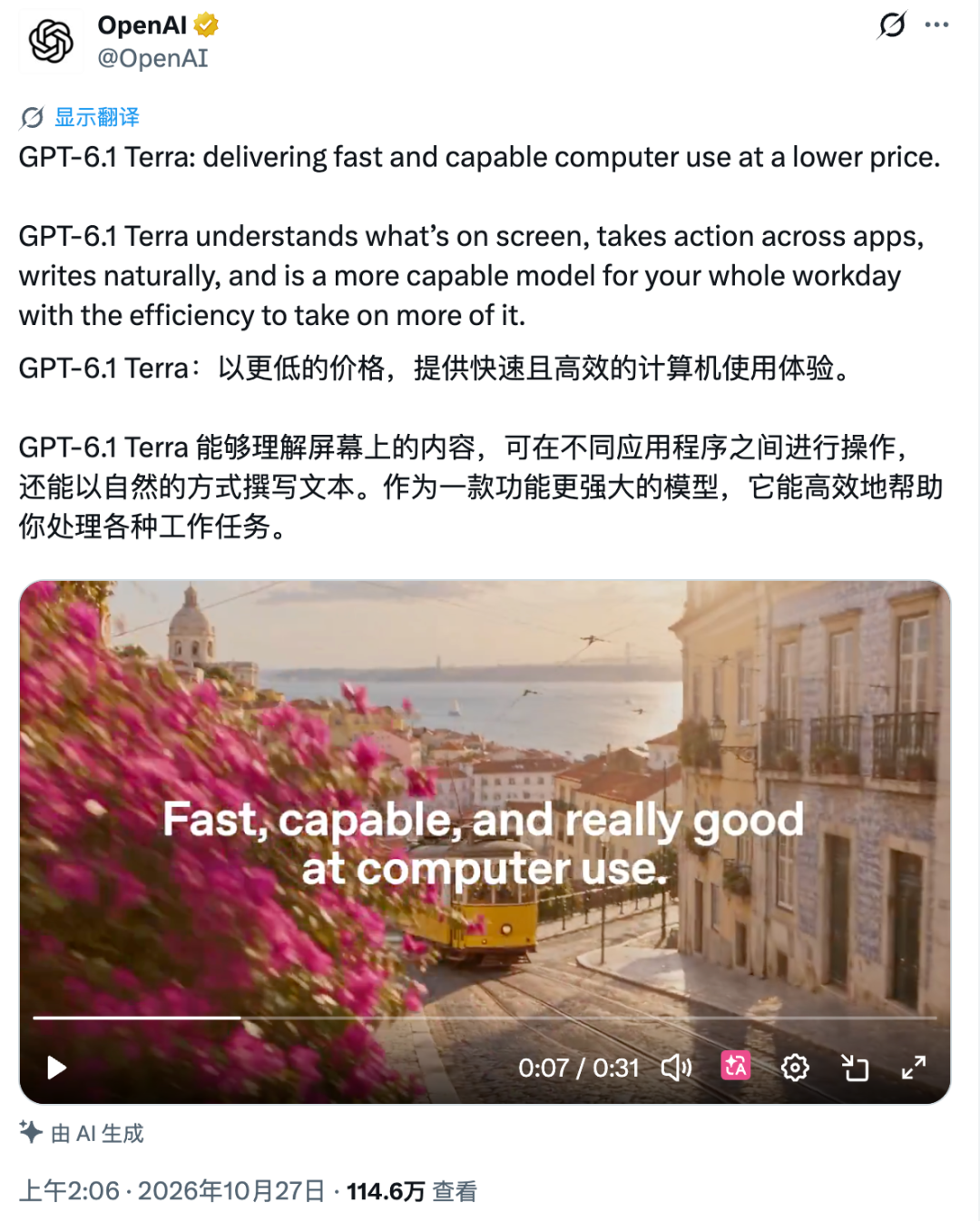
Cost per completed task, rather than benchmark leadership, is the axis on which OpenAI's newest model arrives. GPT-6.1 Terra ships with API pricing about half of GPT-6.1 Sol's, larger gains in coding and computer use than its predecessor, and an independent intelligence index score that still trails Sol as well as Anthropic's Claude Opus 5.5. The response from developer communities makes one thing clear: a discount alone does not settle the argument.
Many users had been waiting for a direct answer to Claude Opus 5.5, the model that has drawn most of the recent attention around coding workflows. What they received instead is a value-oriented mid-tier release, and the gap between those two expectations is now the story.

Pricing is the clearest win in the release
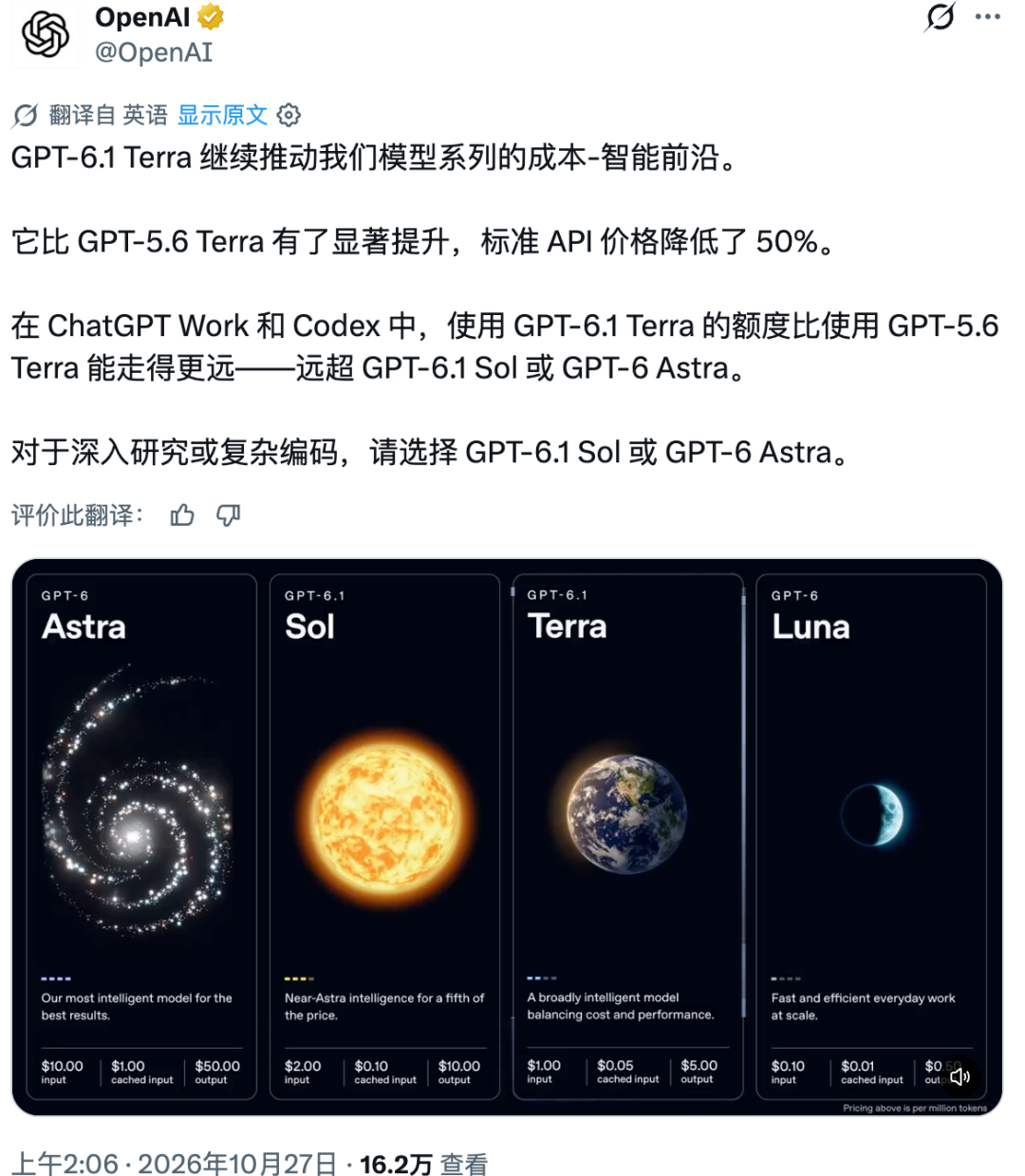
On the API, GPT-6.1 Terra is listed at $1 per million input tokens, $0.05 per million cached input tokens and $5 per million output tokens. Compared with the previous generation, input pricing falls 50% and output pricing falls about 58%. Within OpenAI's current lineup, the overall level is roughly half that of GPT-6.1 Sol.
| Pricing item | GPT-6.1 Terra | Change vs. previous generation |
|---|---|---|
| Input per 1M tokens | $1 | down 50% |
| Cached input per 1M tokens | $0.05 | not disclosed |
| Output per 1M tokens | $5 | down about 58% |
| Overall level | about half of GPT-6.1 Sol | not disclosed |
Availability is split across surfaces:
- Terra is live through the API.
- Plus, Pro, Enterprise and Edu accounts can reach it in ChatGPT Work and Codex.
- It is not yet callable from ordinary Chat conversations.

Benchmark evidence: real progress, second-tier finish
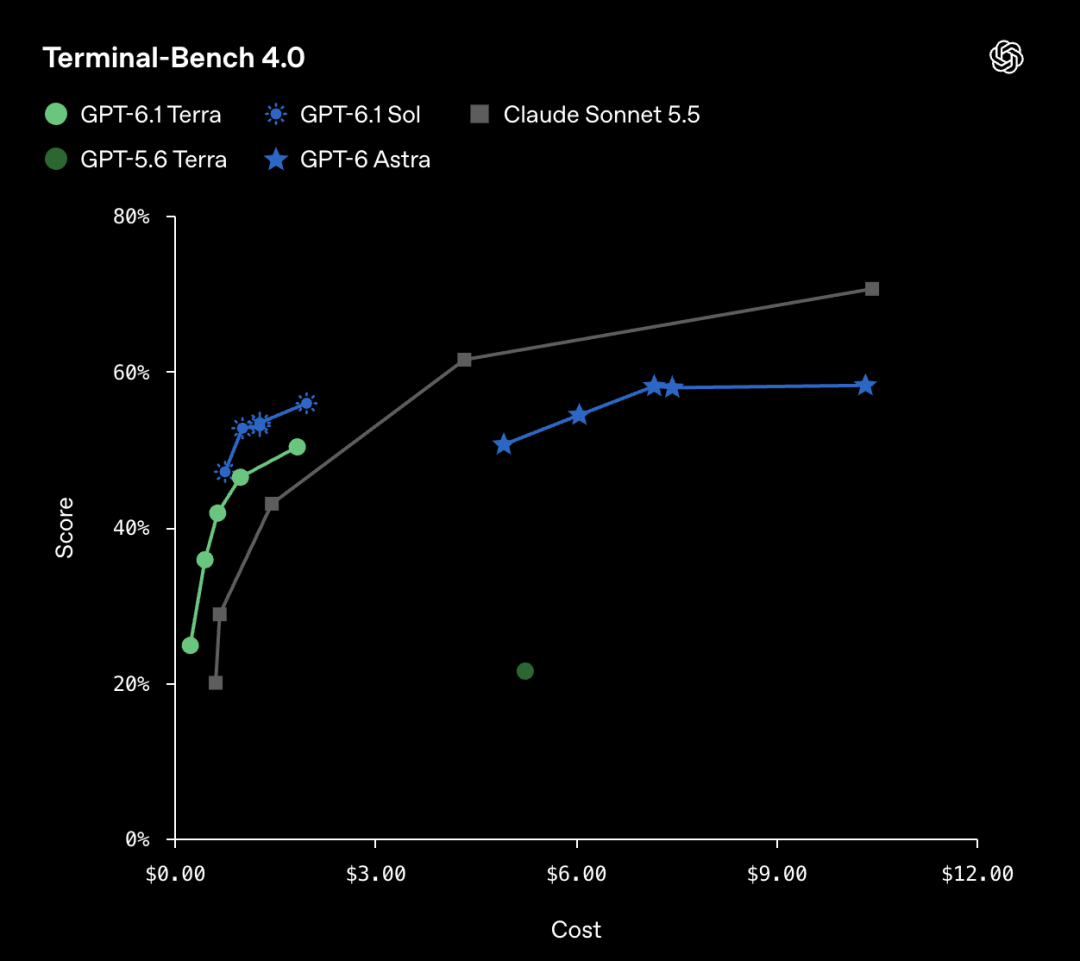
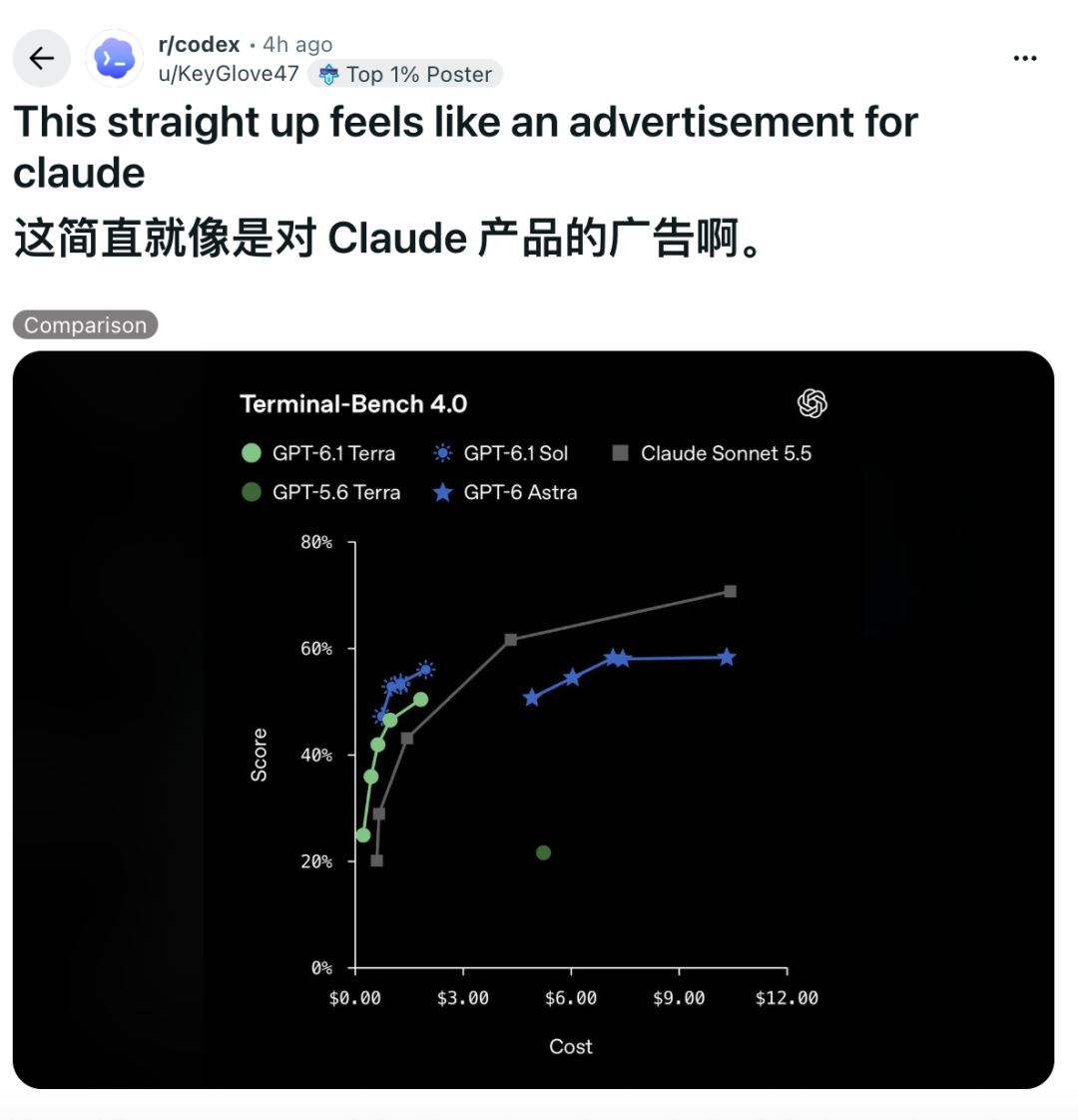
OpenAI's own numbers report gains in coding, visual understanding and computer use. On Terminal-Bench 4.0, the benchmark used to measure AI coding agents, Terra's task completion rate rises from 21.5% in the previous generation to 50.3%.
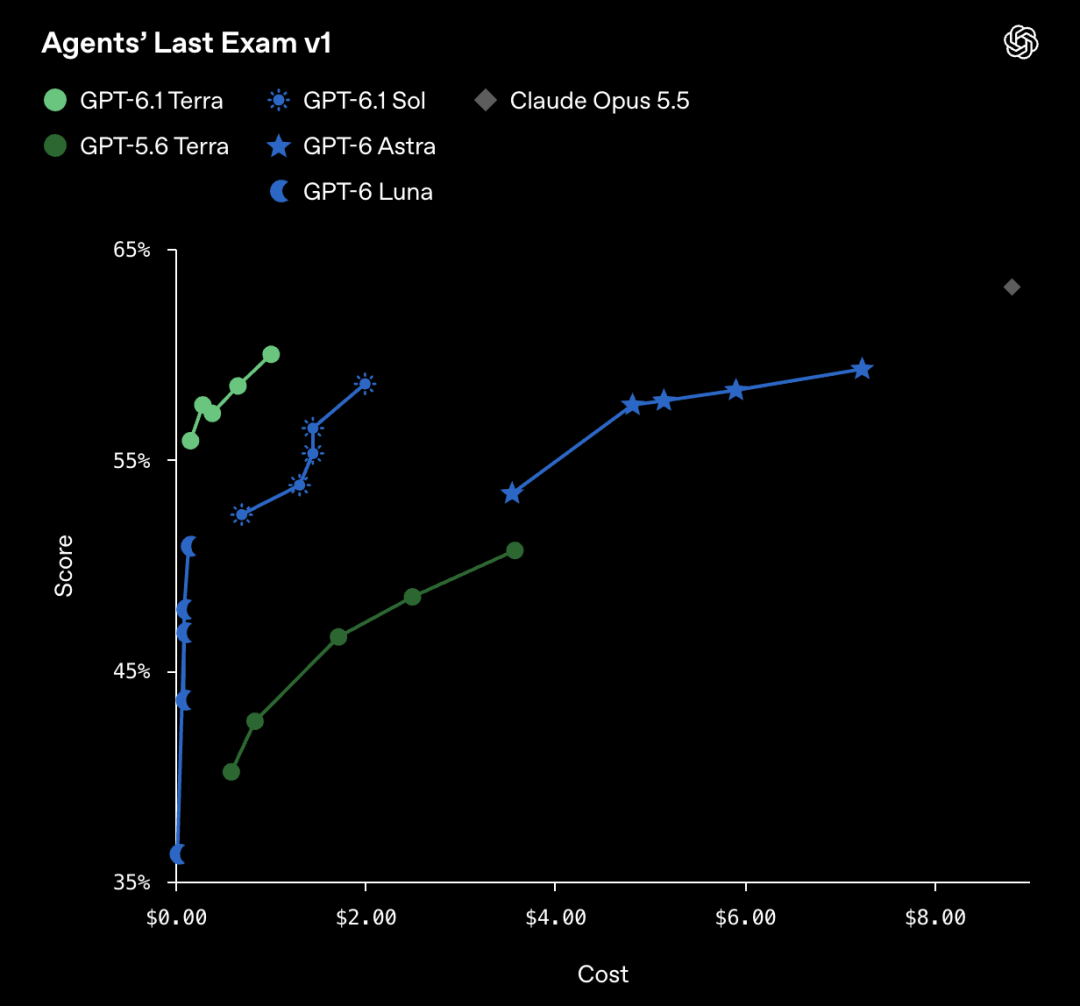
In the Agents' Last Exam computer-use test, Terra records 60.0%, close to the 63.2% posted by Claude Opus 5.5. OpenAI has leaned hardest on this comparison: at the highest reasoning effort, Terra reaches a comparable result at roughly one-ninth of Opus 5.5's task cost.
Independent measurement is more cautious. Artificial Analysis scores Terra's intelligence index at 48 at maximum reasoning effort, 6 points above the previous generation, but below GPT-6.1 Sol's 52 and below Claude Opus 5.5's 58.
| Model | Intelligence index (highest reasoning effort) |
|---|---|
| GPT-6.1 Terra | 48 |
| GPT-6.1 Sol | 52 |
| Claude Opus 5.5 | 58 |
Cost efficiency moved faster than capability. In the same outlet's composite intelligence evaluation, Terra's average cost per completed task dropped from $1.40 to $0.40, a decline of more than 70%.
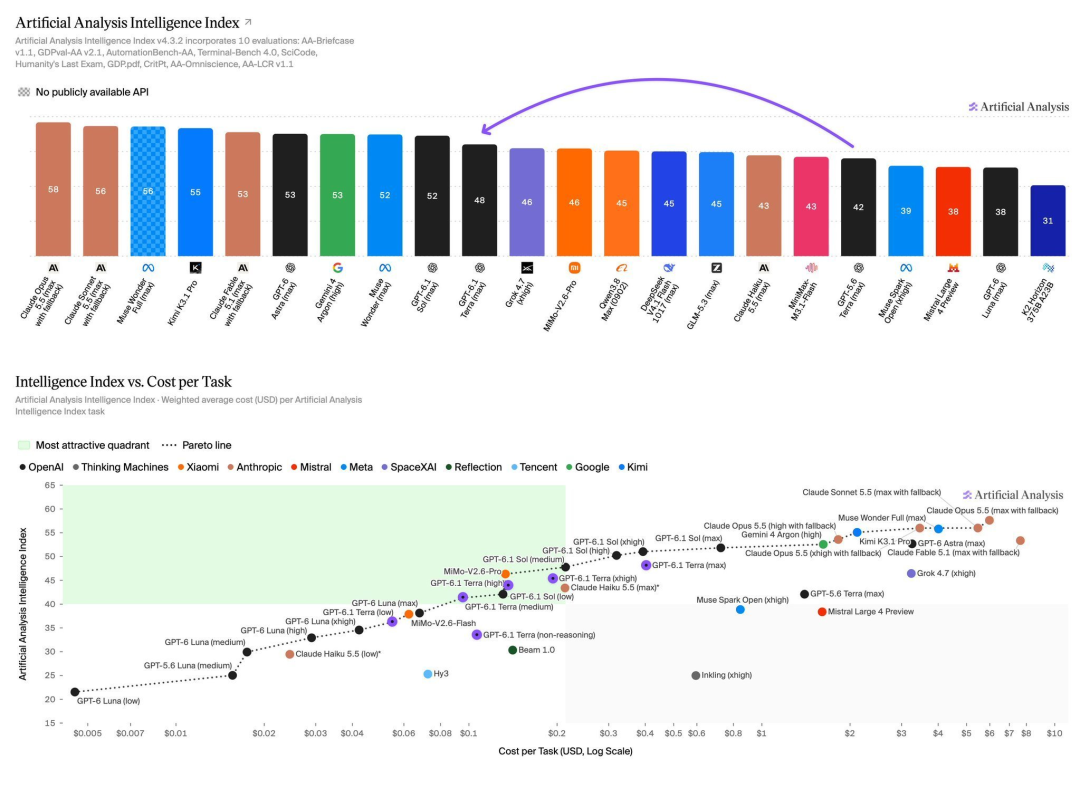
If one label has to be attached, 6.1 Terra is a "middling" model: pricing neither high nor low, capability neither weak nor best-in-class, clear progress over its predecessor — yet it did not overtake OpenAI's own Sol, and it is further from matching Opus 5.5. Teams running high-volume, cost-sensitive calls have reason to be pleased. Users waiting for the company's strongest model, less so.
Beyond the scores: claims still short of public evidence
The release also counts as part of OpenAI's streak of 28 consecutive days of updates, and is the first new model logged in that run.
According to Tibo, GPT-6.1 Terra is the first OpenAI model to make significant progress in writing quality, model personality and a nuanced understanding of what users need. He describes it as solid across the board, strongest at computer use, and able to deliver twice the usage allowance of GPT-6.1 Sol in the API and in subscription tiers.
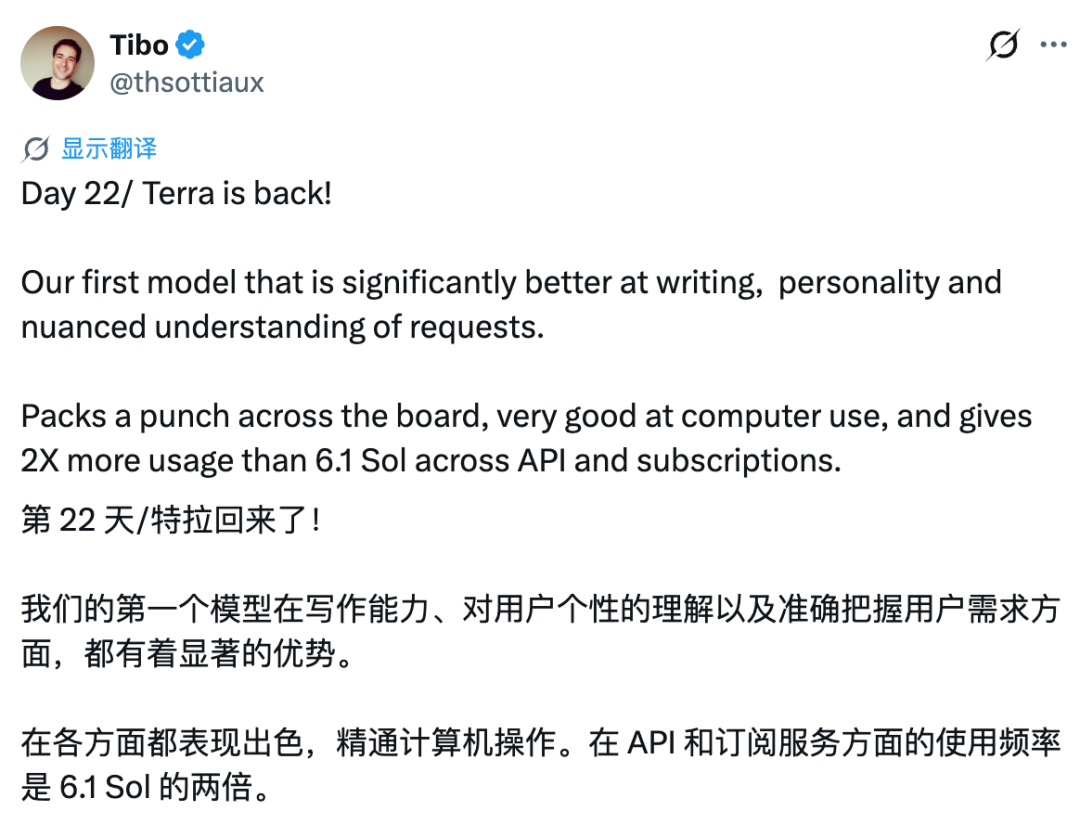
The three qualities he highlights, however, are not yet backed by public evidence. OpenAI's announcement states that Terra generates clearer, more natural text, but no dedicated comparison test covering writing, personality and user-intent understanding was published, and no benchmark output demonstrating a notable leap was shown. Whether the model really writes better and reads users more accurately will likely be settled by hands-on feedback.

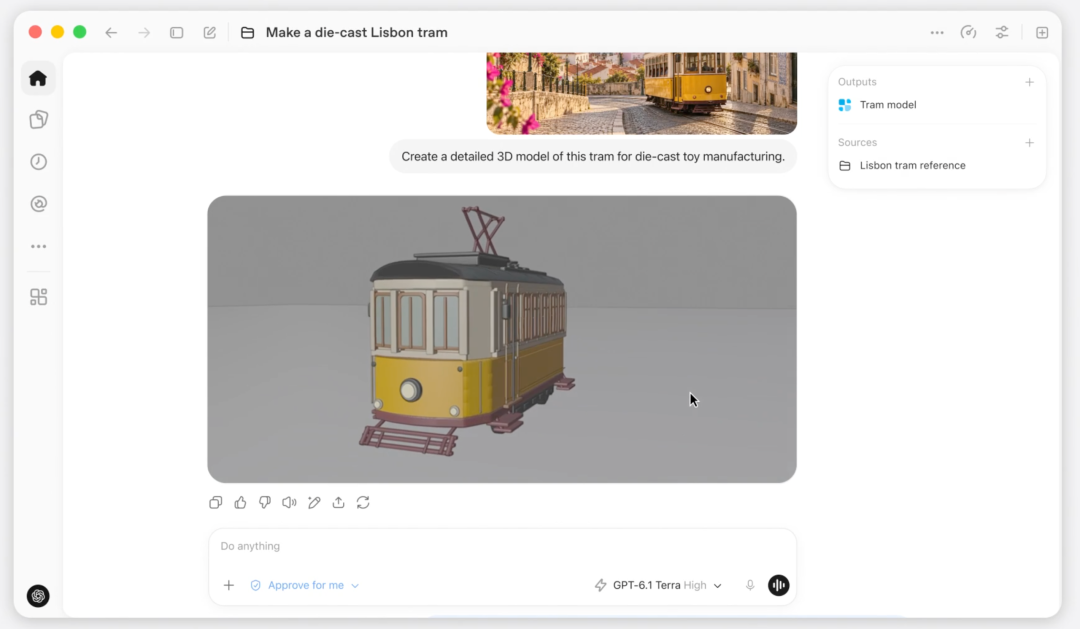
Computer use is the easier improvement to see: in the launch video, OpenAI shows Terra building a 3D model from an image. Official materials also list tasks such as generating 3D models from architectural drawings and inspecting animations frame by frame to organize timecodes, and position Terra for routine work including filling out forms and matching product photos to catalog entries.
Sam Altman framed the launch around exactly that capability, writing on X: "GPT-6.1 Terra is here! It is good at many things, but we are especially excited about this new era of computer use."

Reliability is the second pillar of the pitch. In a high-difficulty factuality test designed by OpenAI itself, Terra's factual error rate falls from 53.6% in the previous generation to 16.7% at low reasoning effort, and drops further to 4.3% at maximum reasoning effort. Those figures remain internal measurements.

How developers read the launch
Community reaction ran noticeably cooler than the official tone, and the sharpest criticism was aimed not at price but at the ceiling.
"Dude, we need a model stronger than Opus 5.5. Nobody cares whether it is faster or cheaper."
The same commenter said he had all but stopped using his Codex subscription because it had become of little use to him.
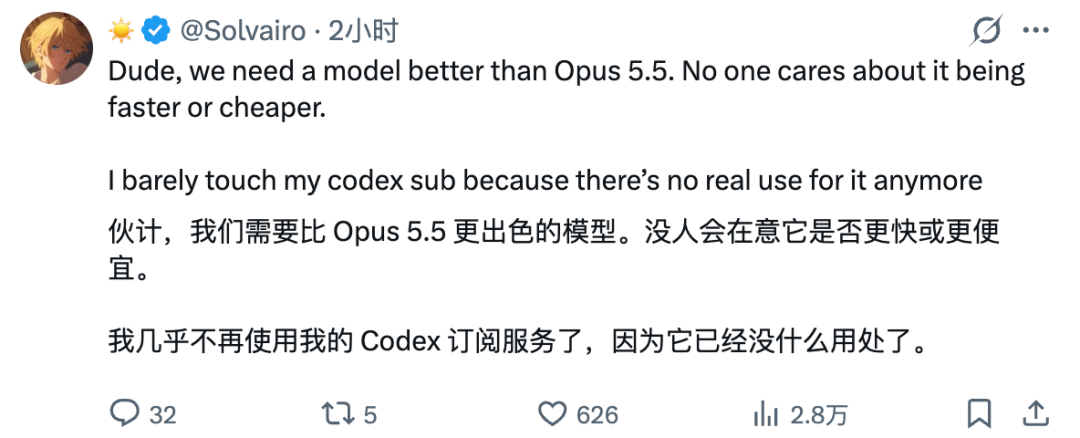
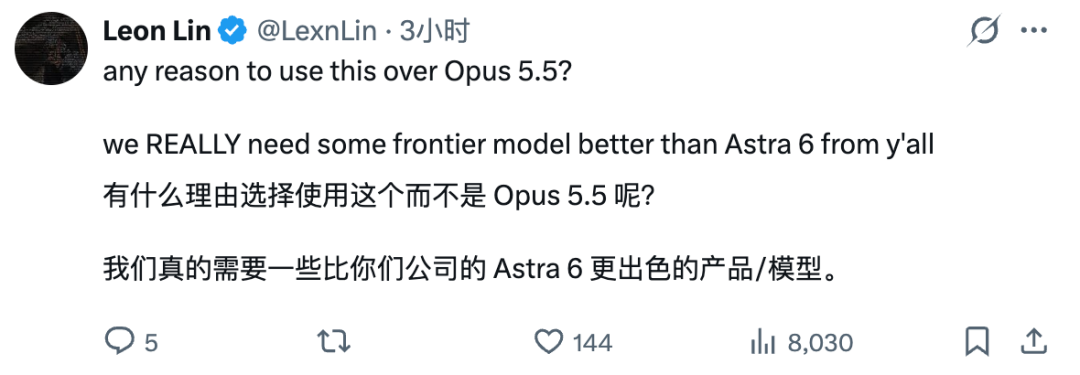
Others pressed the substitution question directly: "What is the reason to choose this instead of Opus 5.5?" One user told OpenAI plainly that what is actually needed is a frontier model stronger than GPT-6 Astra.
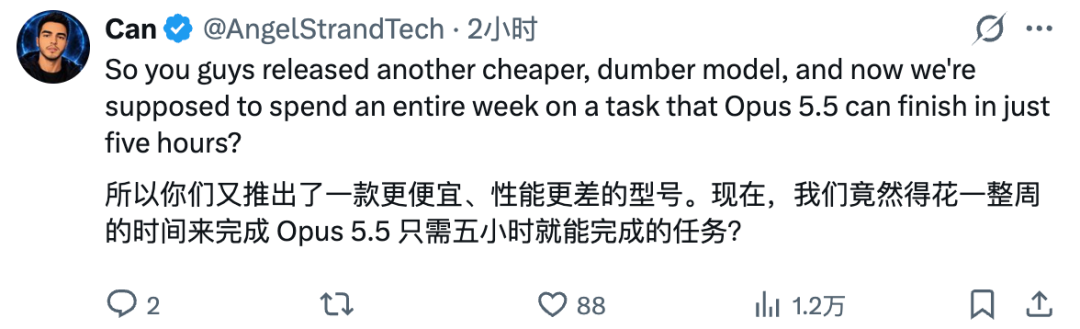
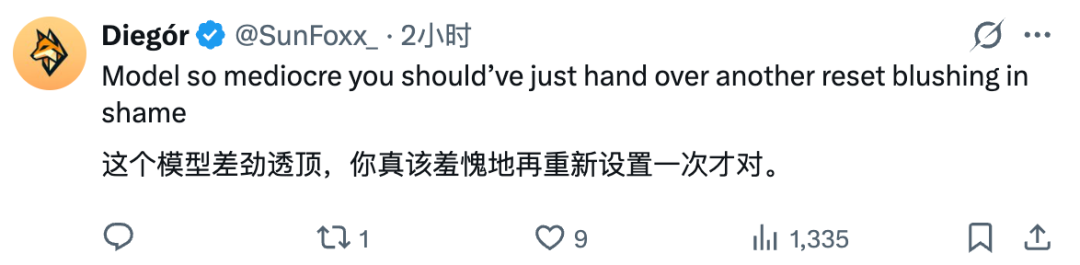
A further complaint concerned disclosure rather than performance: several users noted that earlier launches typically opened with a full benchmark table, and this one did not.

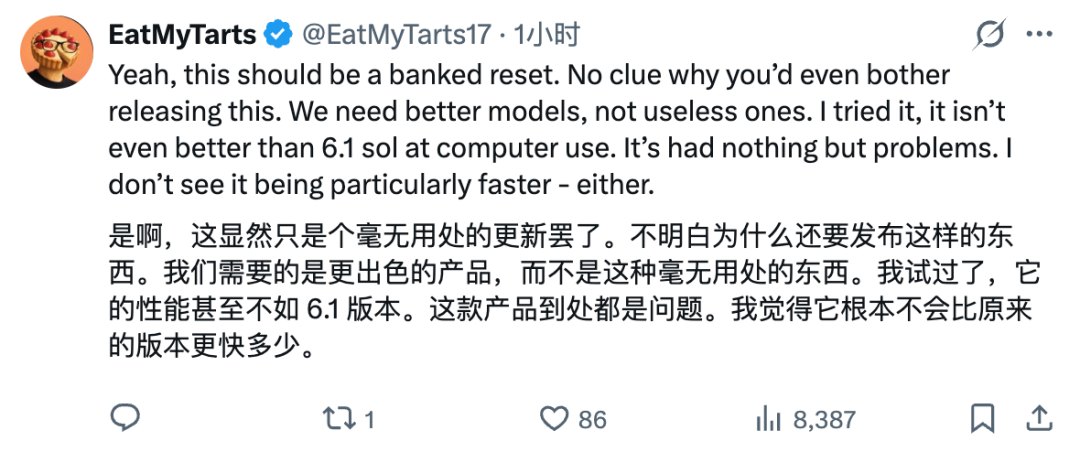
A handful of early testers reported that Terra's computer use fell short of 6.1 Sol and that it did not feel as fast as advertised.
"We need a better product, not this useless thing," one wrote.
Similar dissatisfaction surfaced on Reddit. In r/codex, one post characterized the launch as little more than advertising for Claude.
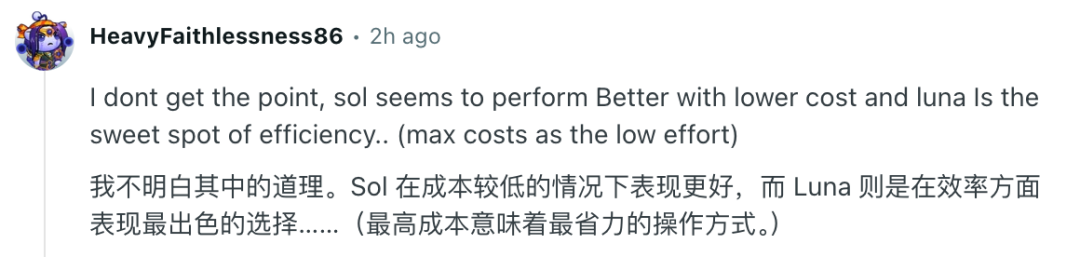
Another thread framed the awkwardness as one of positioning:
- Terra's API price is 10 times that of Luna.
- Users chasing the lowest unit cost can simply pick Luna.
- Users who need a stronger model find Sol the more logical choice.
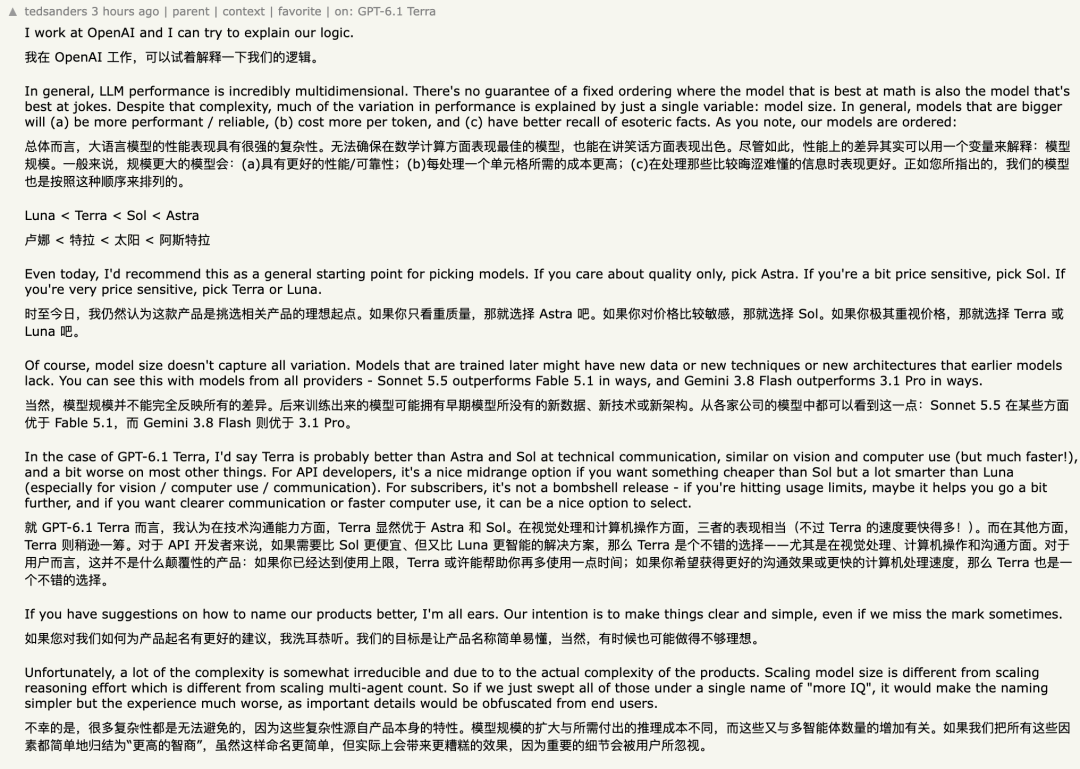
Naming has compounded the confusion. Because the tiers launch on different schedules and their results cross over on individual tasks, some users say they can no longer work out how to choose among Terra, Sol and Astra.
OpenAI researcher Ted Sanders answered those criticisms on Hacker News, arguing that Terra may lead Sol and Astra in technical communication, sits close to them on visual understanding and computer use, runs faster, but is slightly behind in most other tasks. Addressing subscribers, he conceded: "This is not a blockbuster release."
Not all of it was critical. Some users argue that reaching workloads near flagship quality at a far lower cost is a value in itself — and that many of them are now looking past Terra toward the next Astra, and toward the rival's Fable 5.5.
FAQ: what buyers should take from the launch
Is GPT-6.1 Terra actually cheaper than GPT-6.1 Sol?
Yes. At $1 per million input tokens, $0.05 for cached input and $5 for output, its overall API level is about half of Sol's. Against the previous generation, input pricing is down 50% and output pricing down about 58%.
Where can Terra be used right now?
Through the API, and inside ChatGPT Work and Codex for Plus, Pro, Enterprise and Edu accounts. It is not yet available in ordinary Chat.
Did Terra overtake Claude Opus 5.5?
Not on capability. On Agents' Last Exam it scores 60.0% against Opus 5.5's 63.2%, and on Artificial Analysis's intelligence index it posts 48 versus Opus 5.5's 58 — though OpenAI notes comparable computer-use results at roughly one-ninth of the task cost at the highest reasoning effort.
Which improvement is best supported by data?
Cost efficiency. Average cost per completed task in Artificial Analysis's composite evaluation fell from $1.40 to $0.40, more than 70% lower. Coding performance also improved materially on Terminal-Bench 4.0, from 21.5% to 50.3%.
Are the writing and personality claims verified?
Not publicly. OpenAI's factuality figures — 53.6% down to 16.7% at low reasoning effort and 4.3% at maximum effort — come from internal tests, and no dedicated public benchmark has been published for writing quality, personality or user-intent understanding.
What should the market watch next?
Three things: independent replications of the computer-use cost claim, whether Terra appears in ordinary Chat, and whether a stronger frontier release follows the current mid-tier positioning.
What to watch next
For enterprise buyers, Terra's significance is budgetary before it is qualitative: an agent workload that averaged $1.40 per completed task now lists at $0.40, and the price gap between model tiers has narrowed with it. For capability-driven teams, the open question is whether the "by the book" label sticks to OpenAI's next release, or whether the frontier conversation resets entirely once stronger models arrive.