
AIdataNewsGlobal Brief: OpenAI Weighs a Google TPU Buy to Spread Its AI Compute Bets
Alphabet's Google has moved onto OpenAI's hardware shopping list. According to people familiar with the matter, the ChatGPT developer is preparing to purchase artificial intelligence chips from Google, adding tensor processing units, or TPU, to an infrastructure build-out that until now has run along two tracks: large-scale Nvidia GPU capacity and a homegrown chip program. Final terms of the reported transaction had not been settled or disclosed, and both OpenAI and Google declined to comment.
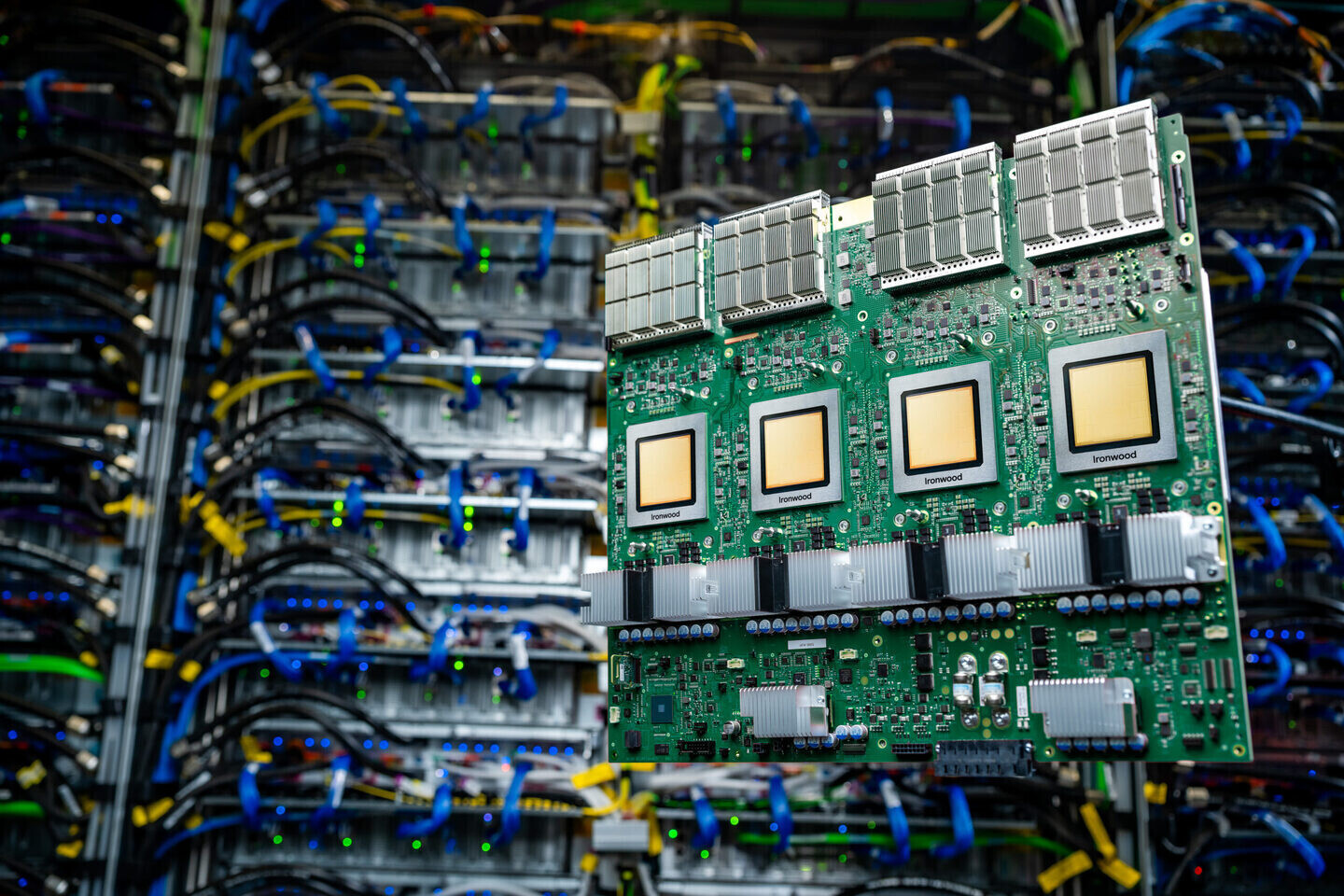
Taken alone, the story is a sourcing note. Taken together with the announcements that surround it, it is a snapshot of how frontier model labs now assemble compute. Chip buyers hunting for lower cost and a better fit for the way AI models run have increasingly treated Google's TPUs as a viable option outside Nvidia's market-leading AI silicon, and Google itself has this year begun selling TPUs directly to some customers.
Two Tracks, Then a Third: How OpenAI Layers Its Compute
Before the Google reporting surfaced, OpenAI had already signalled that silicon of its own design would come online later this year to serve its AI models. That plan folded the company into the in-house chip rush now sweeping the industry, in which several large firms are trying to loosen Nvidia's grip on AI compute. A purchase of Google TPU hardware would not displace either of those efforts; it would sit next to them. That layering is why the reported move reads less like a pivot and more like a widening of the supplier set.
The human connections between OpenAI's chip work and Google are worth noting. Richard Ho, who leads OpenAI's internal chip team, previously took part in Google TPU development, and senior Google employees provided assistance on Jalapeno, the in-house chip OpenAI is building jointly with Broadcom. Google started TPU research more than a decade ago, originally to accelerate its web search engine and raise efficiency. Those chips were later shown to be valuable for AI tasks and, in recent years, have steadily become positioned as an alternative to Nvidia GPU deployments.
A Long Nvidia Era, Measured in Gigawatts
The reported purchase would deepen OpenAI's ties to a subsidiary of Alphabet, a group it competes with directly in artificial intelligence products and in search. For a long time, OpenAI's compute story was almost a single-supplier story: from training the first GPT model to the moment ChatGPT took off worldwide, nearly every step in OpenAI's core model evolution depended on clusters of tens of thousands of Nvidia GPUs. Nvidia CEO Jensen Huang personally handed over the world's first DGX AI supercomputer to OpenAI, and OpenAI's breakout success helped carry Nvidia to the top of the global market-capitalisation ranking.
Key figures attached to that relationship, as publicly stated:
- August this year: Jensen Huang said OpenAI had committed to deploying Nvidia AI infrastructure at large scale by 2030.
- Existing plus planned deployments amount to about 12 gigawatts.
- Huang said the figure has room to expand to roughly 16 gigawatts.
- Compute gaps at the frontier are discussed in the range of millions of chips.
- Historical footprint: tens of thousands of Nvidia GPUs behind OpenAI's core model training.
None of that commitment has pulled OpenAI away from supply diversification. Inference costs keep rising, closing a compute gap can require millions of chips, and leaning on a single vendor brings a weaker bargaining position along with the risk of a supply interruption. OpenAI evidently did not want everything resting on one supplier.
Oracle Puts Google TPUs on the Cloud Menu
The resale channel for these chips is also forming in public. Oracle Corporation announced this Tuesday that it would, for the first time, offer customers compute based on Alphabet-owned Google TPU chips on its cloud platform. Mahesh Thiagarajan, president of Oracle Cloud Infrastructure, said in a statement that AI workloads do not have identical compute requirements, so the option lets customers choose, for each individual workload, the infrastructure with the best combination of performance, throughput and economics. Amin Vahdat, a Google executive, said in the statement announcing the Oracle transaction: "The next generation of artificial intelligence will require diverse compute."
The Deal Sheet: Four Ways Buyers Are Adding Compute
| Route | What has been reported | Stated timing or status | Reported rationale |
|---|---|---|---|
| In-house silicon | OpenAI plans to enable self-developed chips, including Jalapeno built with Broadcom, with help previously from senior Google staff | Later this year | Supporting OpenAI's own AI models; joining the in-house chip rush |
| Second external supplier | OpenAI preparing to buy AI chips from Google, adding Google TPU to its fleet | Final terms undisclosed; both sides declined comment | Lower-cost, better-suited chips; reducing reliance on one vendor |
| Incumbent supplier | Commitment to large-scale Nvidia AI infrastructure deployment through 2030, about 12 gigawatts, potentially 16 gigawatts | Disclosed by Jensen Huang in August this year | Proven scale; tens of thousands of Nvidia GPUs already underpin the GPT model line |
| Cloud resale | Oracle to provide Google TPU-based compute on Oracle Cloud Infrastructure | Announced this Tuesday | Matching performance, throughput and economics to each AI workload |
Frequently Asked Questions
What has actually been confirmed?
Little, so far. The account rests on people familiar with the matter; the final terms of a possible OpenAI purchase of Google chips were not disclosed, and both OpenAI and Google refused requests for comment. Google has, separately and independently, confirmed this year that it has begun selling TPUs directly to some customers.
Why buy chips from a competitor?
OpenAI's relationship with Alphabet's Google has always had two layers: head-on competition in AI products and search, and practical overlap in infrastructure talent. Richard Ho came from Google TPU work to lead OpenAI's internal chip team, and Google staff assisted on Jalapeno. A TPU purchase is therefore best read as one more hedge rather than a change of allegiance.
Are TPUs genuinely an alternative to Nvidia GPUs?
They are treated as one. Google launched TPU development more than a decade ago to speed up web search; the chips proved their value on AI tasks, and in recent years they have been viewed as an alternative to Nvidia GPU capacity. Nvidia still holds the market-leading AI chip position, a fact underlined by OpenAI's dependence on tens of thousands of its GPUs from the first GPT model onward.
Does this undercut the OpenAI-Nvidia commitment?
Not on the numbers available. Jensen Huang said in August this year that OpenAI had committed to deploying Nvidia AI infrastructure at large scale by 2030, with existing and planned deployments of about 12 gigawatts and an opportunity to grow to about 16 gigawatts. The reported Google purchase runs alongside that commitment, not instead of it.
What should readers watch next?
Four things stand out: disclosure of the terms, if any, of an OpenAI purchase of Google TPU hardware; whether OpenAI's self-developed chips go live later this year as planned; how customers respond to Oracle Cloud Infrastructure's Google TPU offering; and whether this multi-supplier pattern spreads further among the firms caught up in the in-house chip rush.
The Wider Read
For industry observers, the more useful signal is the shape of demand rather than the identity of a second vendor. Compute planning has become portfolio management: buyers now weigh cost per inference, supply security and negotiating leverage at the same time, and they expect to keep several architectures warm. Oracle's first TPU-based cloud offering and OpenAI's reported interest in buying Google TPU capacity point the same way — diversification is no longer an exception but the default posture. Amin Vahdat's line about the Oracle deal, that the next generation of artificial intelligence will require diverse compute, reads less like a vendor pitch and more like the planning assumption the whole sector is now working from.