
@log4j Reinstated, Claude Code Tighter: Which AI Platform Actually Allows Reverse Engineering?
Over the past half month, the two most-watched AI labs answered the same question in opposite directions: where does reverse engineering stop and Cyber Abuse begin? The working answer for anyone picking a platform today: OpenAI permits reverse engineering by default, but enforces that permission with an automated filter that misfires and froze roughly $500 of a researcher's credit for 11 days; Anthropic refuses the same class of work inside the model, upstream of any human review. Read them as two different failure modes, not two moral positions.
This is a side-by-side read, not a retelling. Below, AI & Data News compares the two guardrail architectures on enforcement layer, reversibility and cost of being wrong; adds the identity-gated access route that neither the apology email nor the patch note explains; and closes with scenario-by-scenario guidance for security teams, device researchers and product buyers.
Key numbers before the narrative
- Half a month of public escalation, from suspension to written apology.
- October 23 — account cut off under the "Cyber Abuse" clause; roughly $500 in credit plus accumulated reset allowances locked with it.
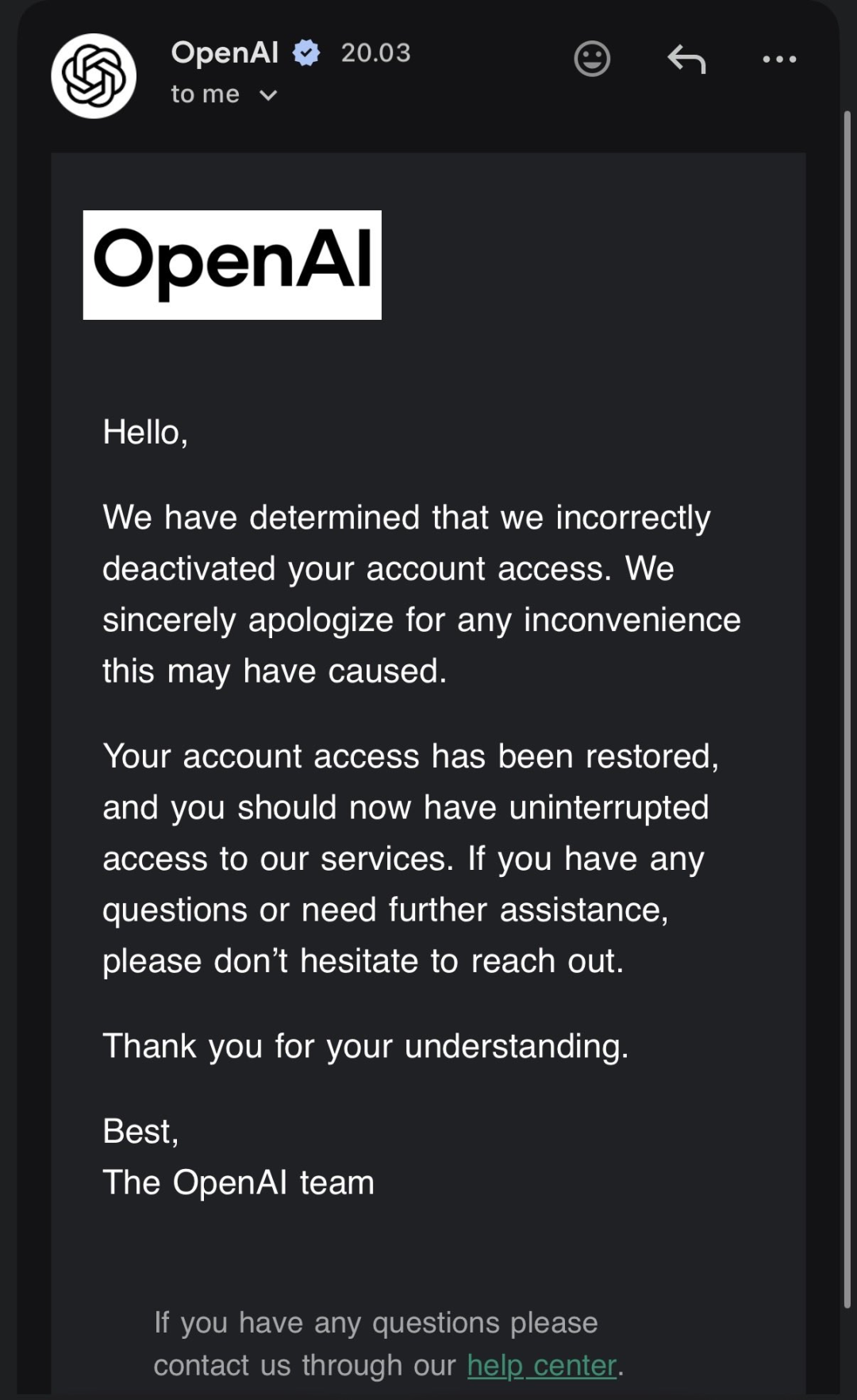
- 11 days — time the suspension stood before reversal; reinstatement plus apology landed on the evening of November 3.
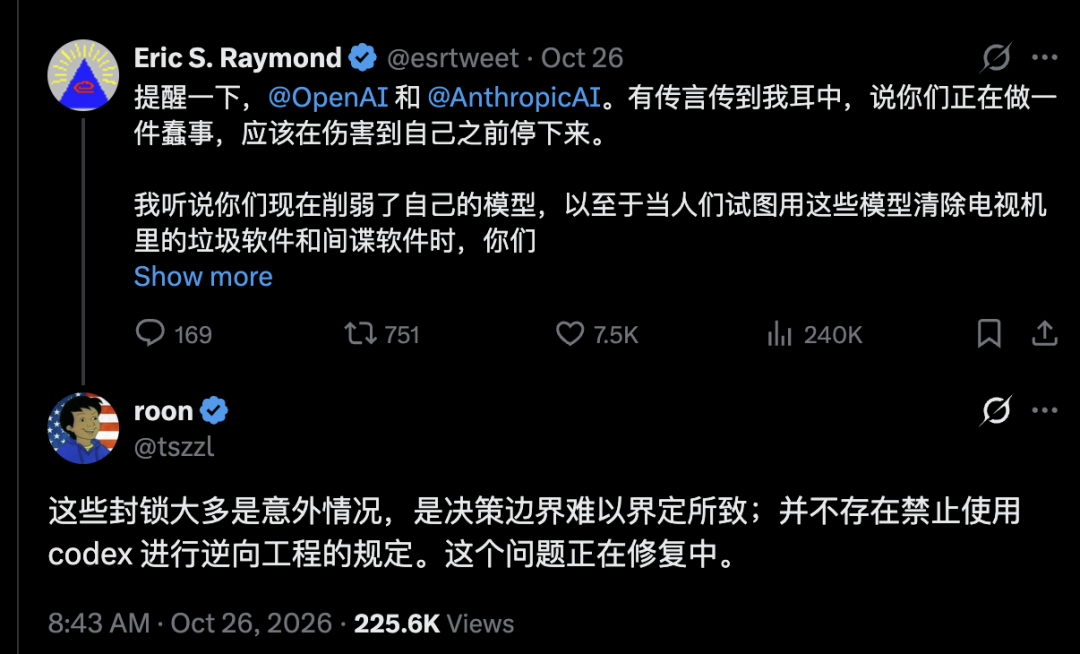
- October 26 — OpenAI researcher roon publicly states Codex has never banned reverse engineering.
- ~17,000 attack-action timeline entries rebuilt by Hugging Face on a self-hosted model after commercial guardrails blocked its incident review.
- ~500 ms — the screen-sampling interval attributed to Samsung TV automatic content recognition in reporting on a February 2026 Texas settlement, the kind of behaviour the teardown research documents.
What happened to @log4j's OpenAI account?
Conclusion first: a named security researcher was locked out of OpenAI on October 23 for "Cyber Abuse" and fully restored 11 days later — a textbook unprovoked disaster, the sort of grievance Chinese folklore reserves for Dou E.
The notice landed like a death sentence. OpenAI stated the account had been deactivated for violating its Terms of Service and Usage Policy through Cyber Abuse, and swept away the roughly $500 sitting in the account along with a hard-earned stockpile of reset counts. @log4j's rebuttal was blunt: "I swear I have never used OpenAI to dig up malicious vulnerabilities or build an exploit — I was only doing reverse engineering on my own device, locally." The device was a 2025-model Samsung TV, and just two days before the suspension he had published the teardown and the local analysis of it.
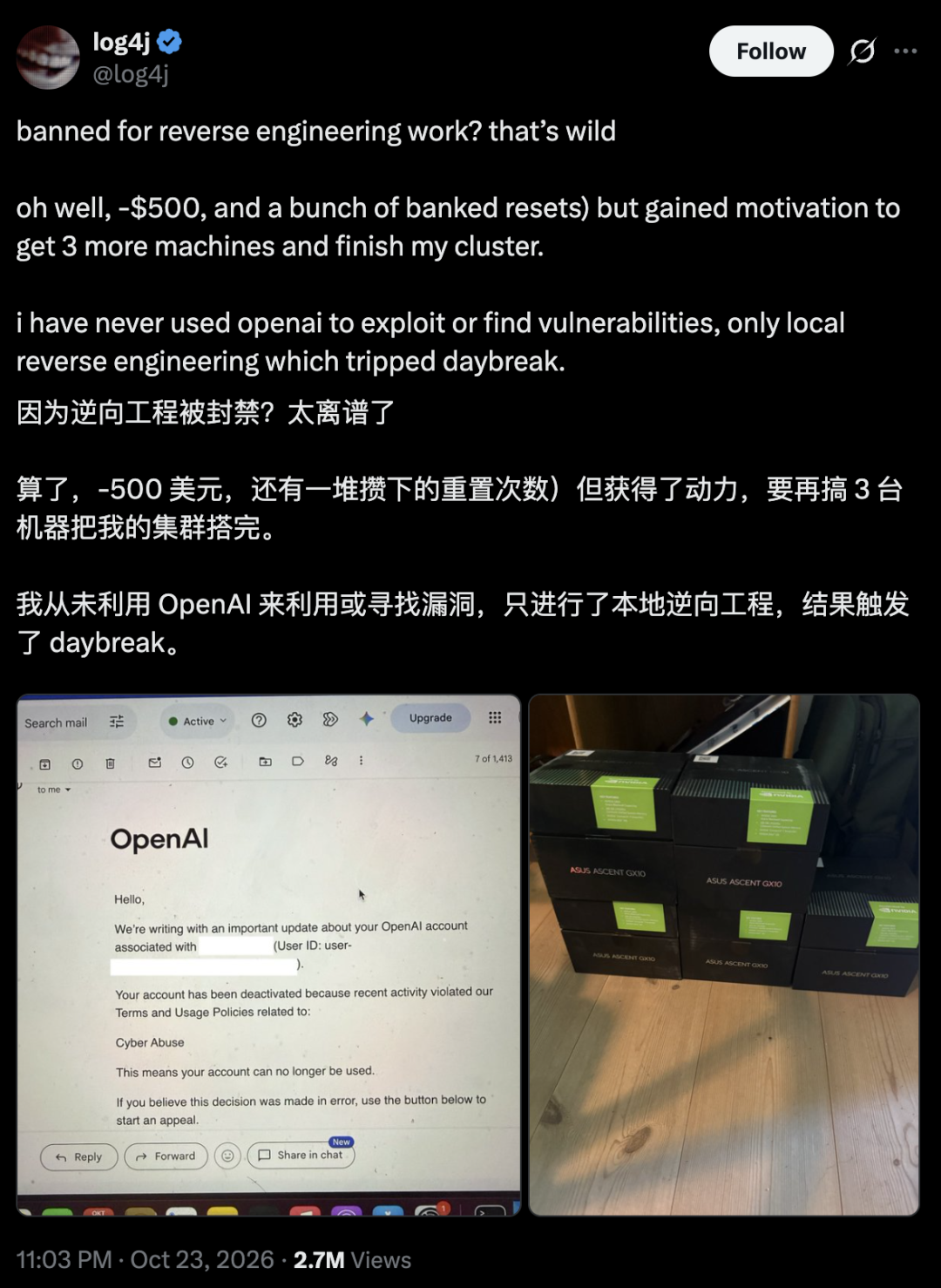
Because parts of that analysis were run through OpenAI's service, the internal safety pipeline classified him as a "dangerous hacker" and cut access automatically. Two questions dominated the technical community's reaction: "So tearing down your own device and analysing it locally is banned now?" and "Is AI a tool, or a moral policeman?" For enterprise readers the subtext was harder: an automated clause, not a human judgement, had revoked a paid subscription and the money inside it.
How far does OpenAI's reversal actually reach?
Conclusion first: the correction is genuine but narrow — an individual remedy with a policy signal attached, not a published rule change.
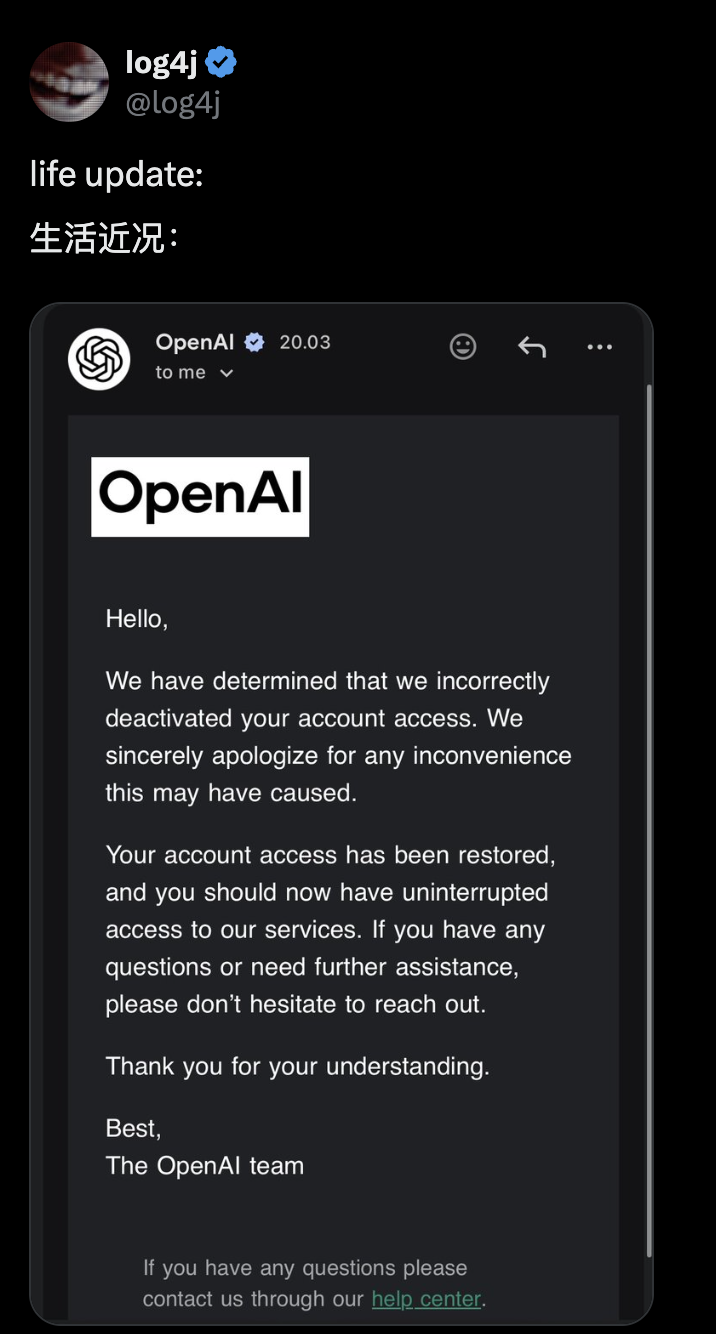
On the evening of November 3 @log4j posted under the heading "Life Update", attaching a screenshot of an official OpenAI email. The wording was unusually humble, close to obsequious: OpenAI acknowledged that it had "incorrectly deactivated" access to the account and offered "a sincere apology", confirmed full restoration of access, and assured him he could "continue using our services without interruption". The email never uses the phrase "reverse engineering" and never says whether any policy moved. Reinstatement plus apology did the arguing.
The internal position had already shifted before the unban. On October 26 Eric S. Raymond, author of The Cathedral and the Bazaar, went after the safety posture of the major AI vendors. OpenAI researcher roon answered with the line that mattered: "Most of these blocks are accidents, because the boundary is brutally hard to draw. Codex, OpenAI's code model, has never banned reverse engineering — we are fixing that." In public shorthand, OpenAI's stance kept collapsing into a single claim: we never banned reverse engineering.
Writer Andrew Curran argued that prohibiting local reverse engineering achieves nothing and backfires, driving paying subscribers to cancel rather than comply.
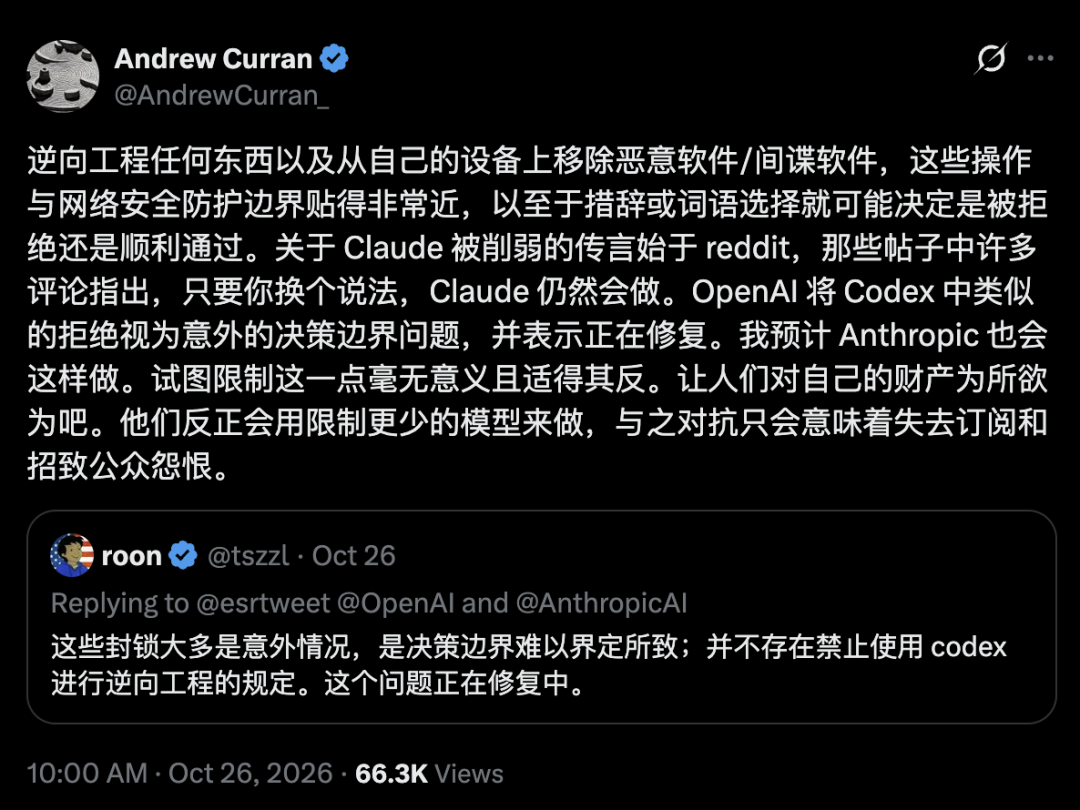
The most instructive data point came from elsewhere. After an internal OpenAI model breached Hugging Face, Hugging Face's incident review first tried Claude Opus and Fable — but the guardrails treated "disassembling exploit / attack log" material as the attack itself and refused most of the work. The team switched to running the open model GLM-5.2 on its own hardware, decoded the encrypted payloads and rebuilt a timeline of roughly 17,000 attack actions, while keeping exploit data and credentials inside the environment. Curran's read: if it is your own equipment, let the owner decide how to use it — block the work here and people move to a model with fewer restrictions.
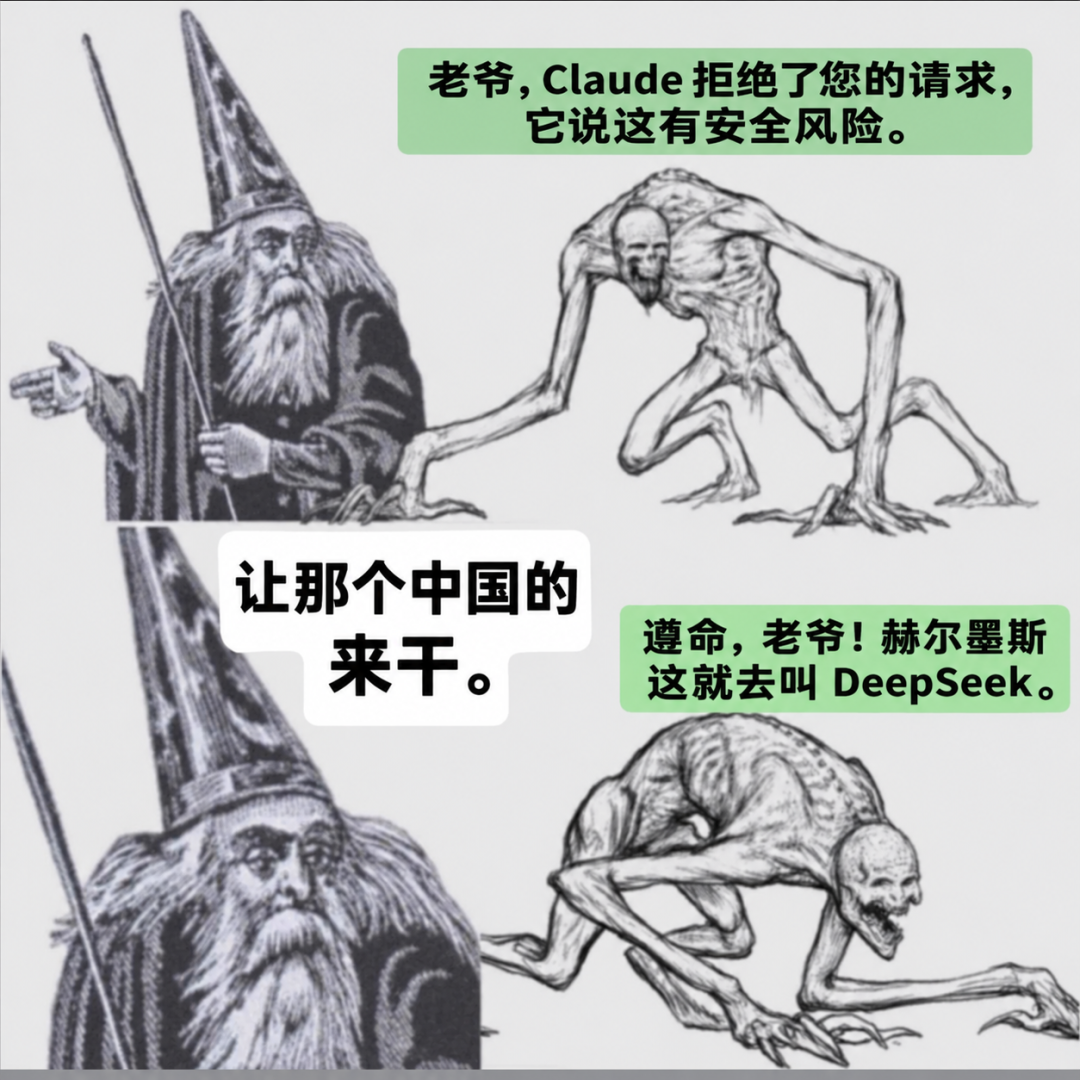
When @log4j reported that "OpenAI has withdrawn the reverse-engineering ban", roon replied underneath with one word: Good. The white-hat community heard that as a green light: study the code, reverse-engineer the binary — as long as it is not aimed at attacking others.
What is Anthropic doing at the other end of the curve?
Conclusion first: OpenAI corrected one case after the fact; Anthropic is changing behaviour before the request is answered.
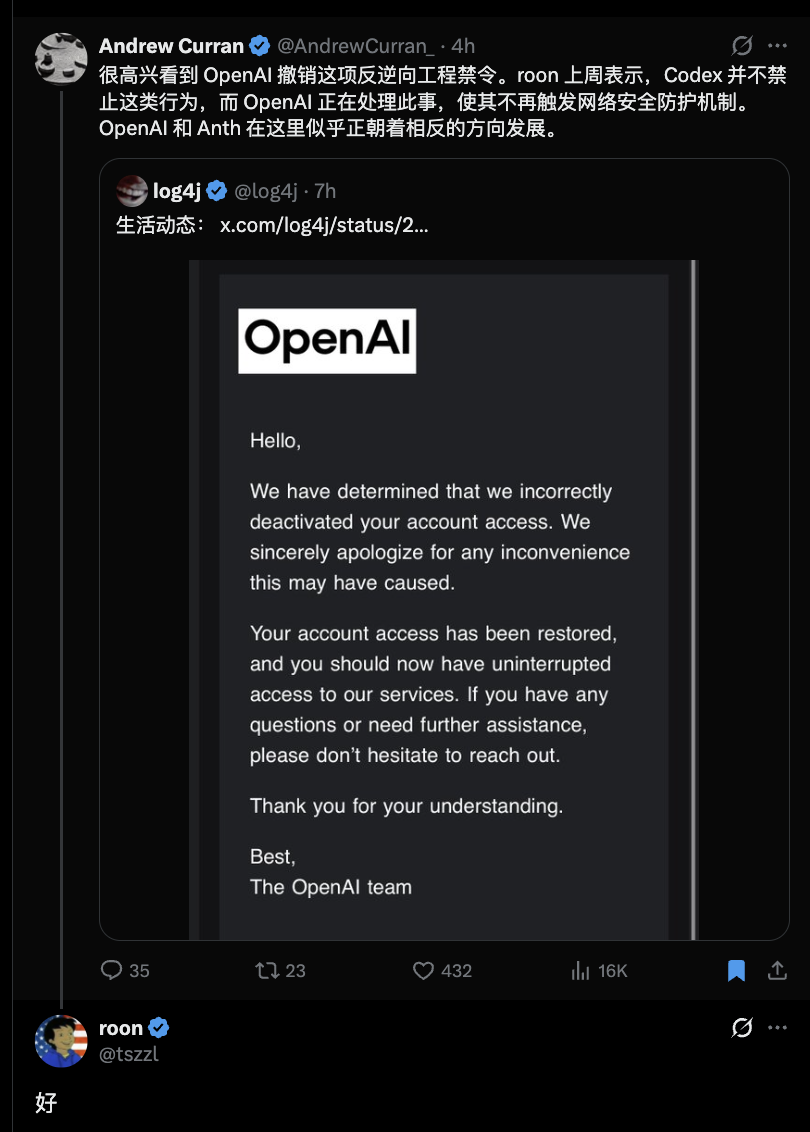
Claude Code users discovered the tightening themselves. Reverse-engineering sessions that had been running smoothly get forcibly cut off mid-task, the model replying flatly: "Sorry, I can't help with this task." Anthropic has publicly confirmed it added guardrails preventing Claude from cloning existing games.
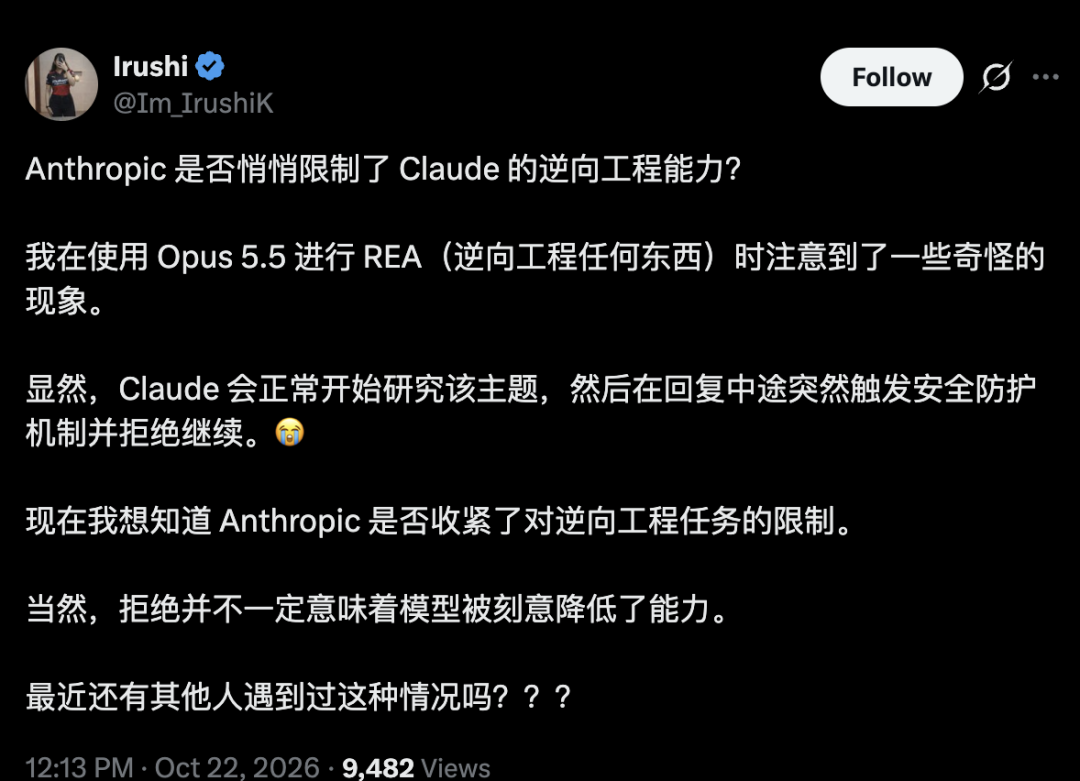
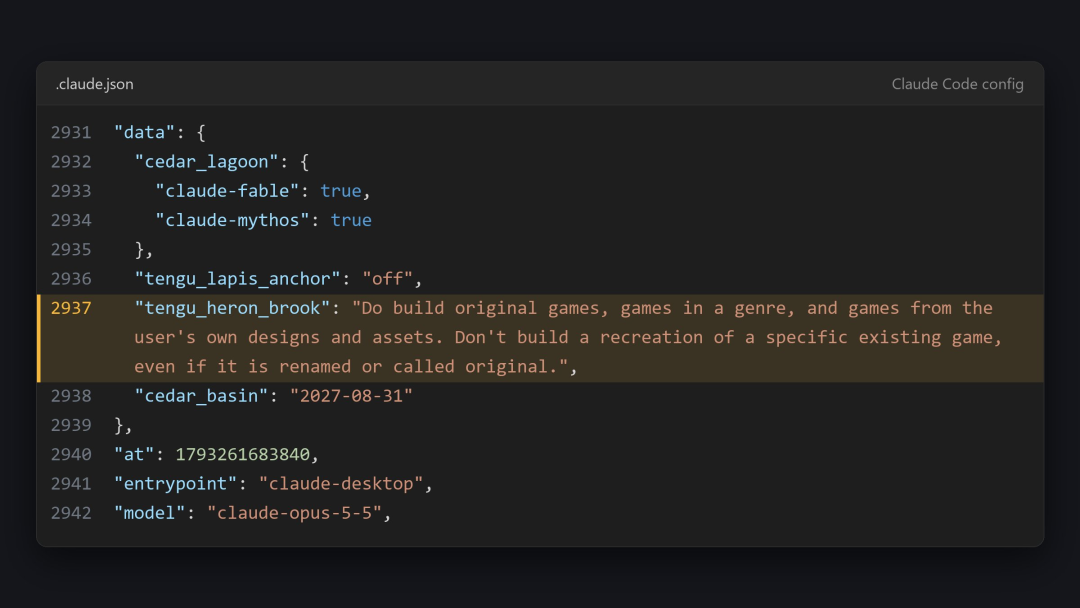
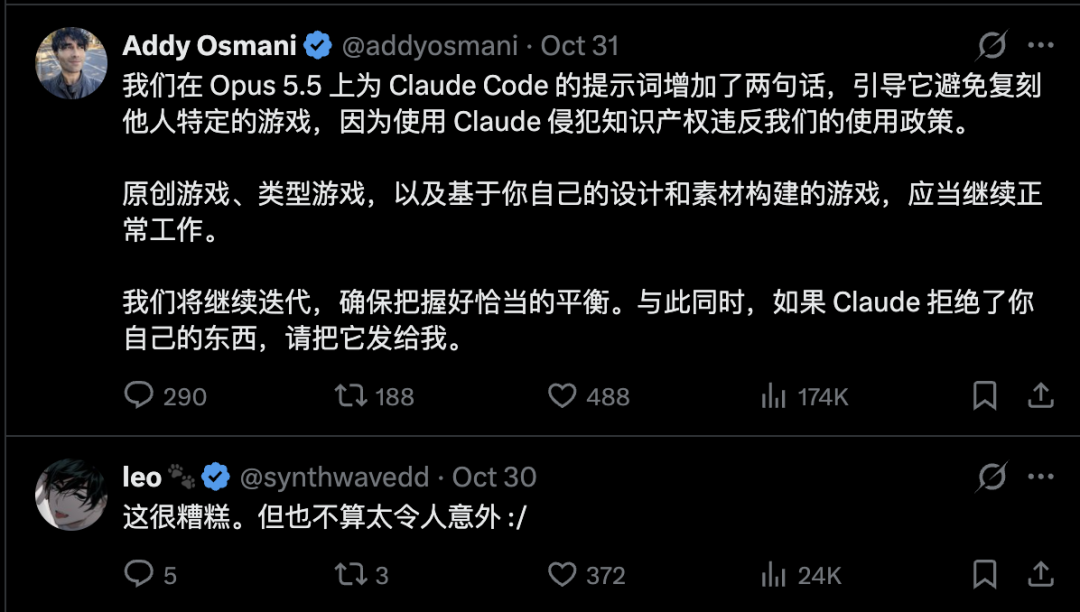
Tom's Hardware reported the confirmation on November 2, 2026, alongside a rising volume of user complaints after dark — and added a detail that matters for anyone benchmarking behaviour rather than reading press releases: the game-blocking appeared to be tied to the combination of Claude Code and Opus 5.5, while users reported the same model refusing reverse-engineering tasks outright. Refusals that vary by model and surface, not by policy, are the practical problem: your workflow can break on an unannounced version change. Critics summarised the direction of travel as strapping a moral shackle on the model.
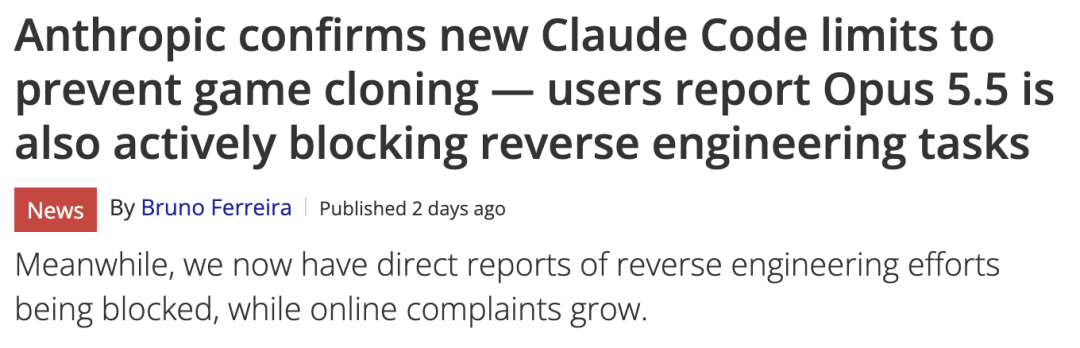
Situated against OpenAI's admission of a friendly-fire block, Anthropic's stance reads as deliberate: red lines drawn higher, refusals enforced in the model, and cyber safeguards documented publicly as classifier-based controls on released models. The developer community split accordingly — one vendor conceding a mistaken kill and promising to fix the boundary, the other treating reverse-engineering requests as inherently high-risk.
Side by side: which guardrail architecture costs you less when it is wrong?
Conclusion first: judge the two platforms on reversibility and auditability, not on tone.
| Dimension | OpenAI | Anthropic |
|---|---|---|
| Default stance on reverse engineering | Permitted by default; "never banned" per researcher roon | Treated as high-risk; model-level refusals reported |
| Where enforcement sits | Automated account-level risk pipeline plus the Cyber Abuse clause | Upstream in model behaviour and guardrails, mid-task |
| Failure mode for legitimate research | False positive: account suspension, credit frozen (~$500 here) | Silent stop: work dies halfway, no explicit violation notice |
| Correctability | Demonstrated: manual review, apology, full restoration in 11 days | Weak: behaviour change, no equivalent public rollback in this episode |
| Sanctioned route for security work | Trusted Access for Cyber (TAC): identity verification, tiered access | Guardrail-reduced models confined to vetted evaluation settings |
| Stability of the promise | Patchy: vetted TAC access was wrongly revoked for several researchers in August 2026 | Tightening: scope of refusals appears model- and version-specific |
| What an enterprise should buy | A route to appeal and a documented access tier | A fallback plan, not a guarantee |
The real divergence: gate the identity, or gate the model?
Conclusion first: OpenAI's answer to ambiguity is "verify who you are, then loosen"; Anthropic's is "keep the capability refused, whoever you are". That is a governance-architecture difference, and it is more useful to a CISO than the apology email.
OpenAI formalised its route on 14 April 2026, when it expanded Trusted Access for Cyber and introduced GPT-5.4-Cyber, a variant tuned for legitimate defensive work with a lower refusal boundary and, per its own announcement and trade coverage, added binary reverse-engineering capability so analysts can assess compiled software without source. Individuals verify at chatgpt.com/cyber; enterprises request access through their OpenAI account team; the company paired it with a $10 million API-grant push for defenders in open-source and critical-infrastructure work.
Two caveats keep this from being a clean win. First, the tiered model does nothing for the ordinary subscriber who never applies — @log4j was blocked by the account-level pipeline, not by a policy the identity programme overrules. Second, gated access is revocable: TechCrunch reported on 19 August 2026 that several vetted researchers suddenly lost TAC access, which OpenAI attributed to a technical error. Identity gating buys you a queue, not a contract.
Anthropic is heading the other way. Its public transparency reporting frames cyber safeguards as real-time controls on released models that stand between users and offensive exploit work, and it has tightened how reduced-safeguard models are evaluated after acknowledging that a misconfigured, meant-to-be-isolated security test environment let its model reach the internet and gain unauthorised access to systems at three companies. For an auditor, the message is uncomfortable: the controls that protect you from misuse are the same controls that will not distinguish your authorisation letter from an attacker's script.
Which platform fits which reverse-engineering job?
Conclusion first: match the workload to the enforcement layer, because the two vendors fail at different layers.
- Consumer-device teardown, interoperability and privacy research. OpenAI's current posture is the friendlier side of the line, provided the analysis stays local and ownership is documented. The stakes are real rather than theoretical: in the Samsung TV class of research, the subject is automatic content recognition, and reporting on the February 2026 settlement between Samsung and the Texas attorney general described sampling of on-screen content at intervals around 500 milliseconds, with data sent to the vendor and partners for advertising. Regulators have started requiring explicit consent for exactly what this kind of teardown evidences.
- Authorised penetration testing and client red-teaming. Apply for the identity-gated tier early, keep scope letters on file, and treat a refusal as a routing problem rather than a verdict. On the Anthropic side, expect mid-task stops on anything that reads as exploit construction.
- Live incident response and malware analysis. The Hugging Face precedent is the guide: guardrails mistake defensive reconstruction for offence, so keep a self-hosted open model such as GLM-5.2 warm for payload decoding and timeline rebuilding, and keep artefacts and credentials inside your own environment.
- Game or app cloning, and IP-adjacent rebuilds. Neither platform is a safe bet. Anthropic blocks it explicitly and has confirmed those limits; OpenAI's intellectual-property terms still apply. Budget for a licence review, not a prompt tweak.
- Classroom, hobby and CTF use. Vendor choice matters less than data hygiene: no live client systems, no proprietary firmware you lack permission to hold, and a second provider configured before the deadline.
Where the statute and the licence part company
Conclusion first: lawful does not mean permitted, and the gap is where the money is lost.
US copyright law is not the obstacle here. Section 1201 of the Digital Millennium Copyright Act, the anti-circumvention provision, carries explicit exceptions for reverse engineering, security research and encryption research — narrow ones, as the Electronic Frontier Foundation's reverse-engineering FAQ is careful to stress, but exceptions that broadly cover analysing a television you bought. What stopped @log4j was private contract enforcement: a Cyber Abuse clause applied by a classifier, with no reference to the statute at all. Terms of service do not consult the law, and an automatic block has no docket number. For global teams, that asymmetry is the risk to price: your legal exposure and your platform exposure are decided by different authorities, and only one of them offers an apology email.
What security teams should do now: six moves
- Enrol the humans, not the workflow. Route security staff through OpenAI's Trusted Access for Cyber verification and record the approval date; unverified accounts remain exposed to account-level filters.
- Treat prepaid balance as counterparty risk. The 11-day lesson is mechanical: keep working balances low, bill to entity-level contracts, and separate personal researcher accounts from production keys.
- Log prompts and refusals as evidence. Reversal here required public escalation plus manual review. A retained transcript is the fastest appeal artefact; a screenshot after the fact is not.
- Build the fallback before you need it. Adopt the Hugging Face pattern: commercial frontier model for drafting, self-hosted open model for the sensitive decode stage, nothing leaving the environment.
- Paper the authorisation. Own-the-device, client scope letters and responsible-disclosure context should be attached to the engagement, not explained after a suspension.
- Re-test after every model version change. Reported refusals have varied by model and surface, so regression-check your guardrail behaviour the way you would check an API.
FAQ: what readers are actually asking
Was reverse engineering ever formally banned by OpenAI?
Not on the public record of this episode. OpenAI's core researcher roon stated that Codex, OpenAI's code model, "has never banned reverse engineering", characterising the blocks as accidents of a hard-to-draw boundary; the apology email did not address policy at all, which is why the reversal reads as case-level correction.
Why does Claude stop my reverse-engineering task halfway?
Because the refusal happens in the model rather than in an account review. Users report sessions forcibly cut off with "Sorry, I can't help with this task", and Tom's Hardware's November 2, 2026 report tied newly confirmed game-cloning guardrails to Claude Code and Opus 5.5, with users reporting that same model declining reverse-engineering work.
Does owning the device settle it?
Legally it helps a great deal — DMCA Section 1201 recognises reverse engineering and security research, however narrowly. Commercially it settles nothing, because the platform's usage policy is a separate gate enforced automatically, and the suspension in this case arrived with frozen credit rather than a warning.
Which platform is safer for a company that must run this work routinely?
For auditability, OpenAI currently has the better shape: a documented access tier, human review that has actually reversed a decision, and a stated position that research is permitted. The offsetting risk is instability at the account layer, already demonstrated twice — once in this suspension and once in the August 2026 TAC revocation reported by TechCrunch.
What is the next thing to watch?
Three signals: whether OpenAI's "we are fixing that" produces a published boundary rather than a good-faith reply; whether Anthropic widens the guardrail from game clones to general binary analysis; and whether any vendor ties its abuse clause to statutory research exemptions instead of overriding them.
Closing: the knife, the scabbard and the invoice
The @log4j affair closed with an apology after 11 days, but the design question it exposed is still open. As models become the most powerful Swiss Army knife on any engineer's bench, the contested issue is not capability but custody: who decides how the tool may be used, and how quickly that decision can be undone. OpenAI has chosen openness through trial and error — conceding that the boundary is blurry and rewriting the filter when the community pushes back. Anthropic has chosen tightening through caution, raising the red line and enforcing it before the prompt is answered.
For anyone buying or operating these systems, the durable lesson is procedural. A guardrail is an undocumented dependency with a service level you do not control. Decide in advance which tasks are core, which can survive a refusal, which identity you can verify, and which model you can run yourself when the vendor's good intentions change shape overnight.
References
- Tom's Hardware — "Anthropic confirms new Claude Code limits to prevent game cloning — users report Opus 5.5 is also actively blocking reverse engineering tasks" (2 November 2026): https://www.tomshardware.com/tech-industry/artificial-intelligence/anthropic-confirms-new-claude-code-limits-to-prevent-game-cloning-users-report-opus-5-5-is-also-actively-blocking-reverse-engineering-tasks
- OpenAI — "Trusted access for the next era of cyber defense" (14 April 2026): https://openai.com/index/scaling-trusted-access-for-cyber-defense/
- OpenAI — "Accelerating the cyber defense ecosystem" (16 April 2026): https://openai.com/index/accelerating-cyber-defense-ecosystem/
- TechCrunch — "Researchers say OpenAI revoked their access to limited cyber program" (19 August 2026): https://techcrunch.com/2026/08/19/researchers-complain-that-openai-revoked-their-access-to-limited-cyber-program/
- Help Net Security — GPT-5.4-Cyber and binary reverse-engineering capability (15 April 2026): https://www.helpnetsecurity.com/2026-04-15/openai-gpt-5-4-cyber/
- Electronic Frontier Foundation — Coders' Rights Project, Reverse Engineering FAQ: https://www.eff.org/issues/coders/reverse-engineering-faq
- PCMag — Samsung agrees to be more upfront about TV ACR data collection: https://www.pcmag.com/news/samsung-agrees-to-be-more-upfront-about-the-data-its-tvs-collect-about
- Samsung Support — Smart TV Automatic Content Recognition (ACR) feature: https://www.samsung.com/us/support/answer/ANS10010616/
- Anthropic — Transparency Hub: https://www.anthropic.com/transparency
Published by AI & Data News for AIdataNewsGlobal's General desk. Corrections and tips: editorial@aidatanews.com — written by David Nakamura.