
Five Filings, One Preliminary Probe: How the Oulu Police Investigation Into Finland's Muos Data Center Raises the Stakes for Google's €13 Billion Buildout
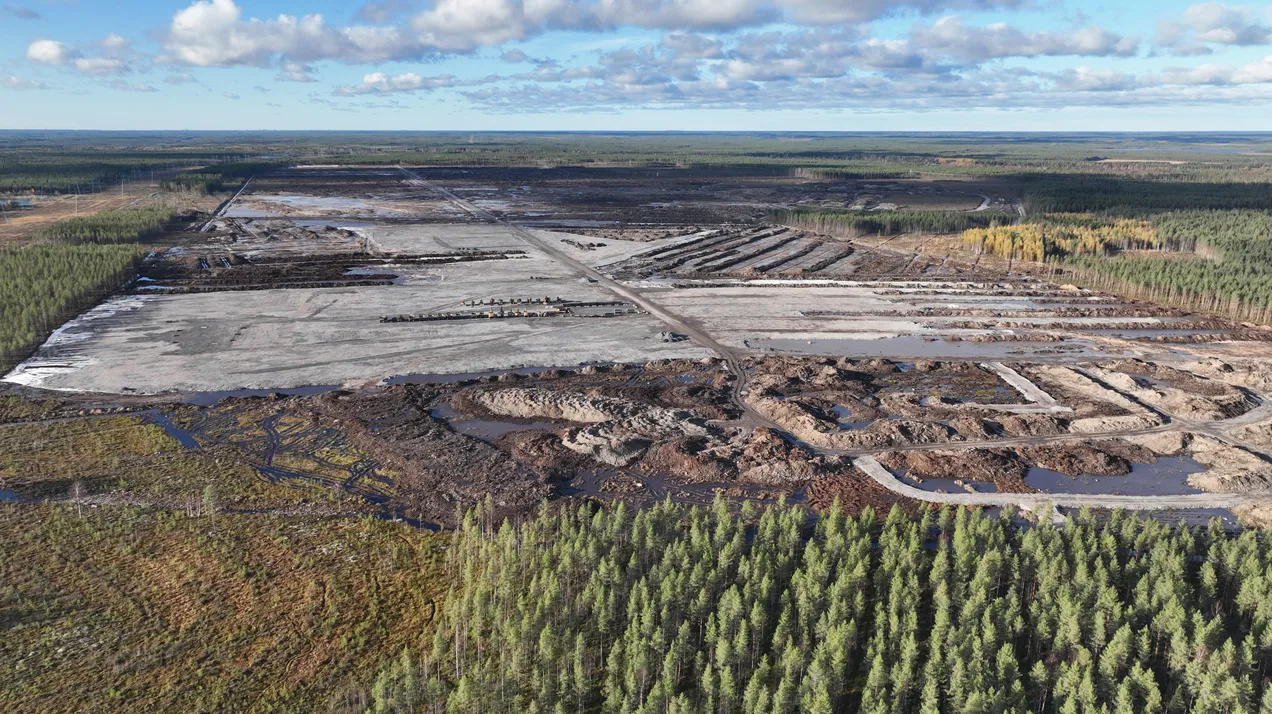
Europe's artificial intelligence infrastructure race has a fresh regulatory stress test, and it is unfolding in northern Finland. A report published on October 29 by Yle, Finland's national public broadcaster, says Oulu police have received five separate investigation requests concerning the Muos data center construction project and have chosen to fold them into a single round of preliminary investigation. Officers handling the matter describe the available information as indicating irregularities and shortcomings in how drainage and water resources have been managed at the worksite. The inquiry is currently framed around suspected environmental damage, with the explicit caveat that other possible offenses may come into view as the work deepens.
The construction effort in question is being carried out by Tuike Finland, Google's local subsidiary in the country. Police anticipate a drawn-out process and have set completion of the preliminary investigation within 2027 as their working target, while further information is planned for release this December.
Fast Facts: The Numbers Anchoring the Case
- Five investigation requests were filed over the Muos data center project and have been consolidated into one preliminary probe by Oulu police.
- Two data center projects are affected by the regulatory stop: Muos and Kajaani–Otamäki.
- October 14 is the date Tuike Finland confirmed it halted preparatory works at both sites.
- By November 5 the company must hand Finnish regulators a considerably more detailed water resource management plan.
- This December the police plan to publish additional information; the investigative target runs within 2027.
- €13 billion in additional Finnish investment, announced in September 2026, sits behind the data center expansion now under scrutiny.
All figures and dates cited in this article — five investigation requests, the two halted data center projects, the October 14 work stoppage, the November 5 filing deadline, the December update window, the within-2027 investigation target and the €13 billion investment announced in September 2026 — trace back to the October 29 report by Yle, Finland's national public broadcaster, and to the regulatory statements described below.
Timeline of the Case So Far
| When | What happened | Whose move |
|---|---|---|
| September 2026 | Additional €13 billion committed to Finnish data center infrastructure | |
| Earlier regulatory review | Necessary environmental impact assessments found incomplete for Muos and Kajaani–Otamäki; construction required to pause | Finnish supervisory authority |
| October 14 | Preparation works stopped at both project sites | Tuike Finland |
| By November 5 | Submission of a more detailed water resource management plan | Tuike Finland to Finnish regulators |
| October 29 | Existence of five merged investigation requests disclosed | Yle, citing Oulu police |
| This December | Further information planned for publication | Oulu police |
| Within 2027 | Working target for completion of the preliminary investigation | Oulu police |
From Permitting Gaps to a Police File
The criminal strand of this story did not appear out of nowhere. It sits on top of an administrative dispute: Finnish regulators determined that the Muos and Kajaani–Otamäki projects had not completed the environmental impact assessments required of them, and the company was told to suspend related construction activity. Tuike Finland subsequently confirmed that site preparation at both locations had been stopped on October 14.
Within that review, one issue was singled out. Regulators stated that the water resource management plan submitted by Google did not sufficiently demonstrate that the water-related effects the projects could generate would be kept under control. The mechanics behind that concern are straightforward: erecting a data center campus involves large-scale land grading, excavation and reconfiguration of surface drainage systems. Without adequate hydrological assessment and management measures, local surface water flows can be redirected, and the surrounding ecological environment can absorb the consequences.
What the November 5 Filing Has to Contain
Under the supervisory order, a new and more detailed water management plan must reach Finnish regulators by November 5. As set out in the requirements, the revised submission has to specify:
- the drainage facilities the company intends to build;
- the engineering timetable for those works;
- arrangements for independent water quality monitoring;
- how local extreme conditions are handled, including the possibility of heavy rainfall and snowmelt.
Underground Risk: Acidic Black Shale
Soil conditions at the sites form the second pressure point. Regulators specifically required Google to assess the environmental risk posed by acidic black shale soil in the construction zones. Material of this geological type, once exposed by excavation, can undergo sulfide oxidation, generate acidic drainage, and carry metals and other substances into neighboring water bodies. Wherever major earthworks touch such ground, the practical implications are well understood: soil handling, drainage pathways and water quality monitoring all demand heightened attention.
Enforcement exposure is real. The supervisory authority warned that if Google fails to take sufficient measures to address these problems, further formal enforcement proceedings may be opened — a category that includes the imposition of conditional fines.
Where the Criminal Inquiry Actually Stands
An important distinction for readers tracking the investment angle: what Oulu police have launched is a preliminary criminal investigation, and that does not mean Google or its local subsidiary has been found guilty of any crime. The next phase of the work is meant to establish whether the construction activities breached environmental legislation and, if so, how responsibility should be allocated.
The Investment Layer Behind the Headlines
These developments arrive shortly after Google announced a major step-up in its Finnish commitment. In September 2026, the company said it would add €13 billion of investment in Finland, directed at expanding data center infrastructure. As a component of Google's long-term Finnish development program, the money also illustrates a broader pattern: the Nordic region, with comparatively ample electricity resources, low temperatures and natural conditions suited to data center operation, has become a key territory for global technology giants building artificial intelligence infrastructure.
Finland's specific appeal rests on abundant hydropower and wind generation plus a cold climate that reduces cooling costs. Google already operates a large data center in Hamina, Finland, and has been steadily increasing local infrastructure spend. On paper, the new investment was set to reinforce the country's position in Europe's cloud computing and artificial intelligence value chain.
Why This Changes the Operator's Calculation
- Environmental compliance is a gating item, not paperwork. A halt order predates the police file, showing how quickly permitting deficiencies translate into schedule loss.
- Water now sits beside power in the siting conversation. Land use, groundwater protection, surface drainage and ecosystem impact are all under supervisory attention, alongside energy consumption.
- Site geology is a project risk. Acidic black shale turns excavation into a water quality question for surrounding areas.
- Multi-site exposure. One deficiency pattern covers two data center projects at once, so remediation has to be programmatic rather than local.
- Timeline uncertainty for committed capital. Restart depends on the company completing environmental impact assessments and the water management plan to the regulator's satisfaction, which casts a new question mark over the €13 billion program.
FAQ: The Questions Readers Are Asking
Is Google itself the entity under investigation?
The Muos project is implemented by Tuike Finland, Google's local subsidiary. The preliminary inquiry currently runs in the direction of suspected environmental damage, and how responsibility is ultimately divided is precisely what the investigation is meant to determine.
Does the stoppage cover all of Google's Finnish data center activity?
The reported halt concerns two data center projects — Muos and Kajaani–Otamäki — following the finding that required environmental impact assessments were incomplete. Nothing in the disclosures indicates measures taken against other facilities, including the large data center Google already operates in Hamina.
What happens if the water plan due by November 5 does not satisfy regulators?
The supervisory authority has warned that insufficient measures could trigger further formal enforcement proceedings, including conditional fines. Restart of the two projects is tied to completing the environmental impact assessments and a satisfactory water resource management plan.
When is the next hard update expected?
Oulu police plan to publish further information this December, and the working target for completing the preliminary investigation is within 2027.
Why does water management matter so much for AI-era data centers?
Because the construction phase physically rewires the landscape: large-scale land leveling, digging and rebuilding of surface drainage systems can change where water goes. Where soil such as acidic black shale is exposed, sulfide oxidation can produce acidic drainage that carries metals into nearby water bodies — hence the demand for defined drainage works, engineering schedules and independent monitoring.
What to Watch Next
Three markers will tell the story over the coming months: whether the November 5 water resource management plan meets the supervisory bar and unlocks a restart for the two sites; what Oulu police disclose this December, including whether the file spreads beyond suspected environmental damage; and how quickly the €13 billion Finnish expansion announced in September 2026 absorbs a schedule it can no longer control. For readers watching the wider map of artificial intelligence capacity in Europe, the episode in Oulu is a reminder that strict environmental protection and land development rules apply in full to whoever pours concrete — regardless of corporate size. Even the most energy-rich, climate-favored destinations must satisfy the hydrologists and soil scientists before the servers arrive.
Reporting and analysis for AIdataNewsGlobal, General desk. By David Nakamura, AI & Data News. Corrections and story tips: editorial@aidatanews.com.