
Bloomberg Report: Planned United States AI Data Centers Could Offset 15 Years of Power Sector Emissions Reductions
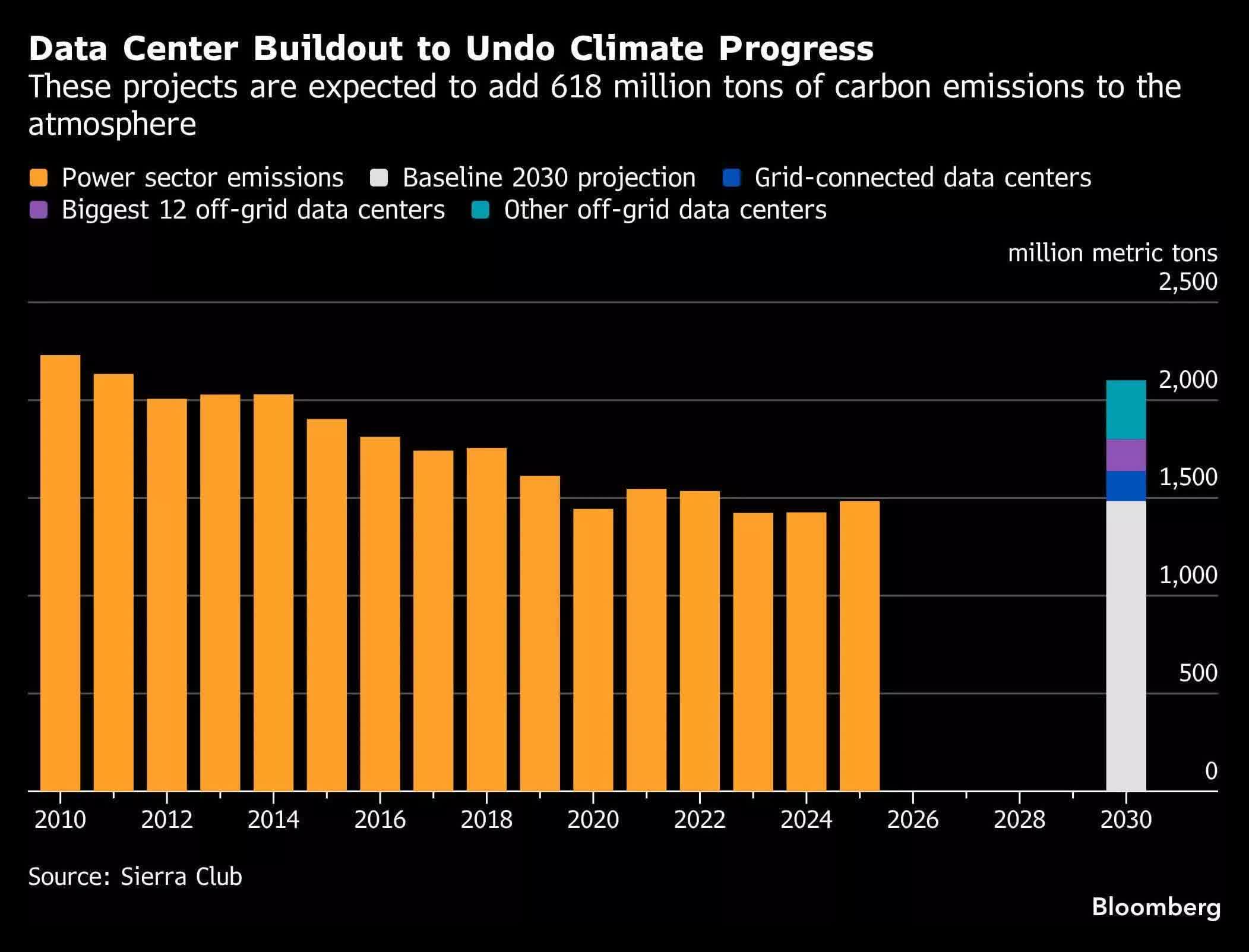
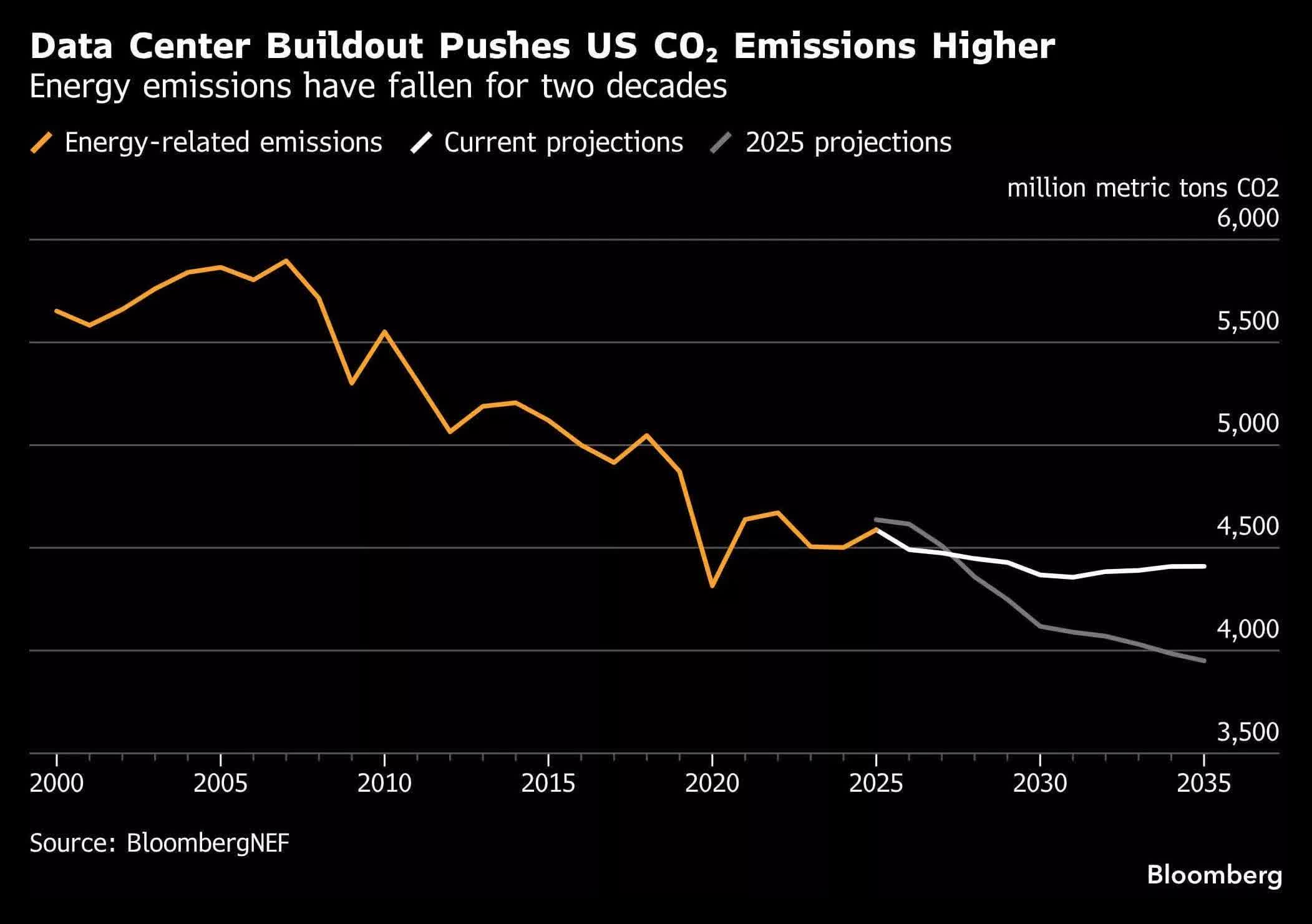
A report reviewed by Bloomberg, prepared by environmental group Sierra Club, places the climate cost of the artificial-intelligence construction boom into sharp perspective. Its central warning is that data centers already planned in the United States could emit about 618 million tons of carbon dioxide between 2025 and 2030, while related power-sector emissions rise by 42%. If that outcome occurs, the greenhouse-gas reductions the United States electricity system achieved over 15 years through retiring coal plants, improving efficiency and expanding renewable capacity could be largely neutralized.
For global AI observers, the finding matters because it links AI growth to electricity constraints and climate policy, moving the discussion beyond hardware alone.
Key figures from the report
The Sierra Club estimate focuses on announced and planned AI-related data center capacity rather than treating every project as equally uncertain. The figures reported by Bloomberg include:
- about 618 million tons of additional carbon dioxide from already planned United States AI data centers during 2025 to 2030.
- a 42% rise in power-sector emissions connected to that expansion.
- a possible total of 2.1 billion tons of carbon dioxide for the United States electricity industry by 2030.
- a projection two to four times higher than the estimate made a year and a half ago.
That gap between the current projection and the earlier one is the clearest signal that AI infrastructure demand is developing faster than many analysts anticipated.
Off-grid power may ease bills while adding emissions
Grid connection queues have become long enough that many data center operators are exploring self-supplied energy facilities to avoid waiting for conventional interconnection. This approach can reduce pressure on residential grids and may limit effects on local electricity prices, but the report says those off-grid energy systems could still contribute more than 460 million tons of additional carbon emissions.
The scale is large: more than 460 million tons is roughly comparable to the national carbon emissions of Mexico in one year. In other words, a strategy intended to speed up AI construction could shift part of the climate burden away from visible utility planning while still creating new emissions.
Forecasts remain wide
The disagreement among institutions is substantial. The distance between the highest and lowest future emission projections is so wide that it exceeds the combined electricity demand of California and Florida. Not every model points to the same conclusion: some researchers argue that deploying renewable energy at scale could significantly ease the pressure.
As an example of that more optimistic line, the Rhodium Group projects that even in the most pessimistic emissions scenario, United States power sector emissions in 2040 would still be 24% lower than they were in 2025. That view does not erase the near-term risk, but it suggests that energy sourcing choices could determine whether AI demand becomes a permanent setback or a temporary spike.
There is also project uncertainty. Sightline Climate previously estimated that about one-third to one-half of United States data center projects scheduled to become operational this year may be delayed or canceled. If fewer announced facilities are built, the final emissions outcome could differ from the report’s upper-bound concern.
Energy limits are already affecting deployment
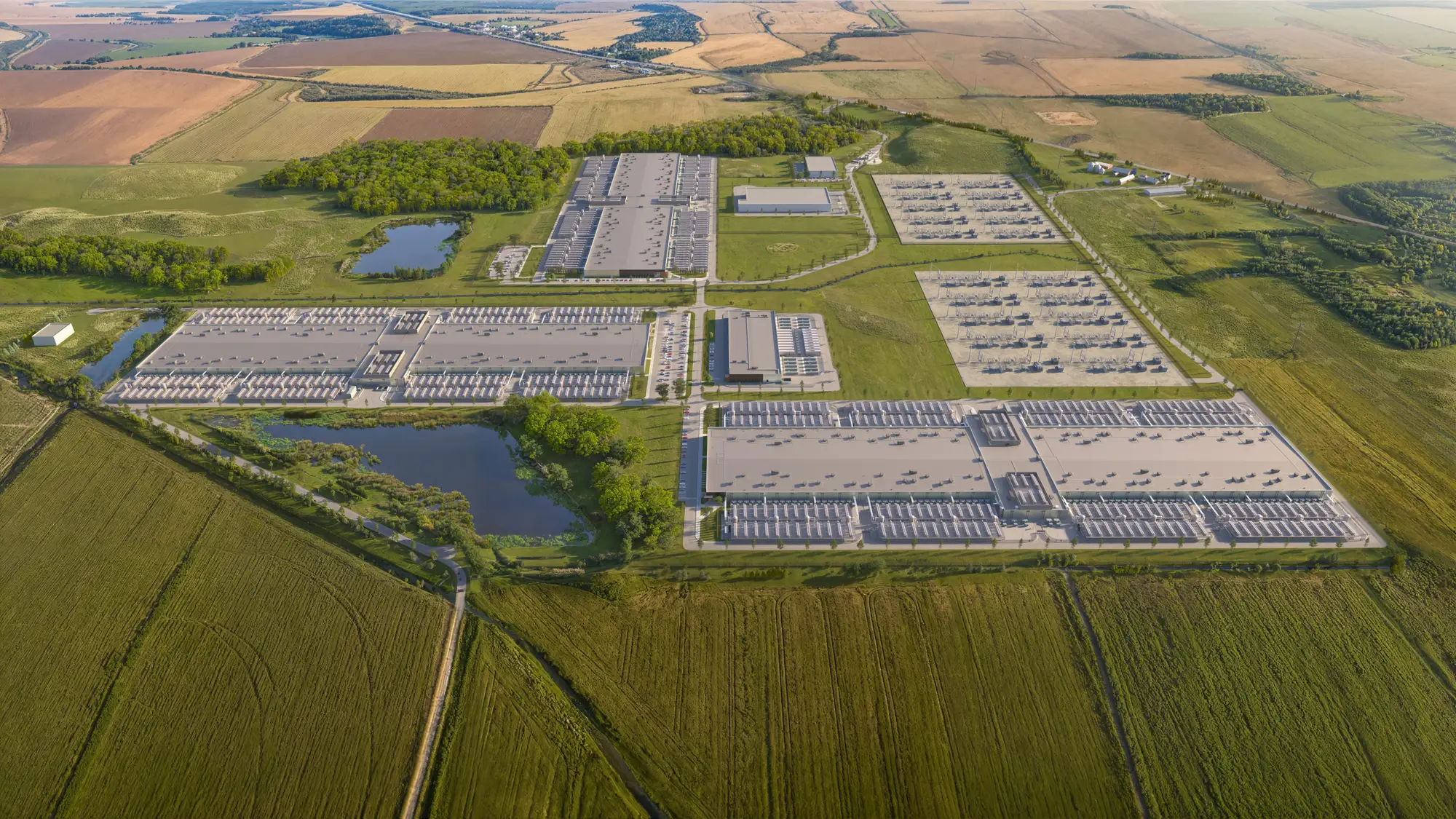
The practical constraint is no longer only a future climate question. Power infrastructure is lagging behind the pace at which AI hardware is being ordered, and some data center GPU deployments have slowed as a result. In cases described in the report, companies have purchased high-performance computing equipment that remains idle because suitable data centers cannot yet obtain enough electricity.
A concrete example is the planned Amazon data center project in Texas, which the report says would be served by a natural gas power plant with 7.65 gigawatts of capacity. According to approved documents, the plant could emit as much as 33 million tons of carbon dioxide annually. If it reached that level, the facility could become one of the largest single carbon emission sources in the United States.
Why this matters beyond data centers
Recent years have brought wider scrutiny of data centers for their surging electricity demand, large water use and pressure on local infrastructure. As AI model sizes continue to grow, the question is no longer only whether new models can be trained, but whether the power system can support them while climate targets remain intact. For technology companies, energy firms and regulators, the balance between computing expansion and emissions reduction has become a shared planning problem.
FAQ: reading the report carefully
What is the central number?
The central figure is about 618 million tons of additional carbon dioxide from planned United States AI data centers between 2025 and 2030, along with a 42% increase in related power-sector emissions.
Is the estimate guaranteed?
No. The report is based on current plans, while Sightline Climate’s estimate that about one-third to one-half of projects scheduled this year may be delayed or canceled shows that the final buildout could be lower.
Why do forecasters differ so much?
Because assumptions vary on how fast new data centers are built, how much electricity comes from renewables versus gas, and whether efficiency gains can limit load growth. The spread is wide enough to exceed the combined electricity demand of California and Florida.
Does the Rhodium Group view cancel the Sierra Club warning?
Not exactly. Rhodium Group’s projection that United States power sector emissions in 2040 would remain 24% lower than in 2025 highlights possible mitigation through clean energy deployment, but it does not remove the near-term emissions risk flagged by Sierra Club.