
AIdataNewsGlobal General Report: Solidigm Weighs $45 Billion U.S. NAND Plant While Dalian Equipment Permits Remain Central
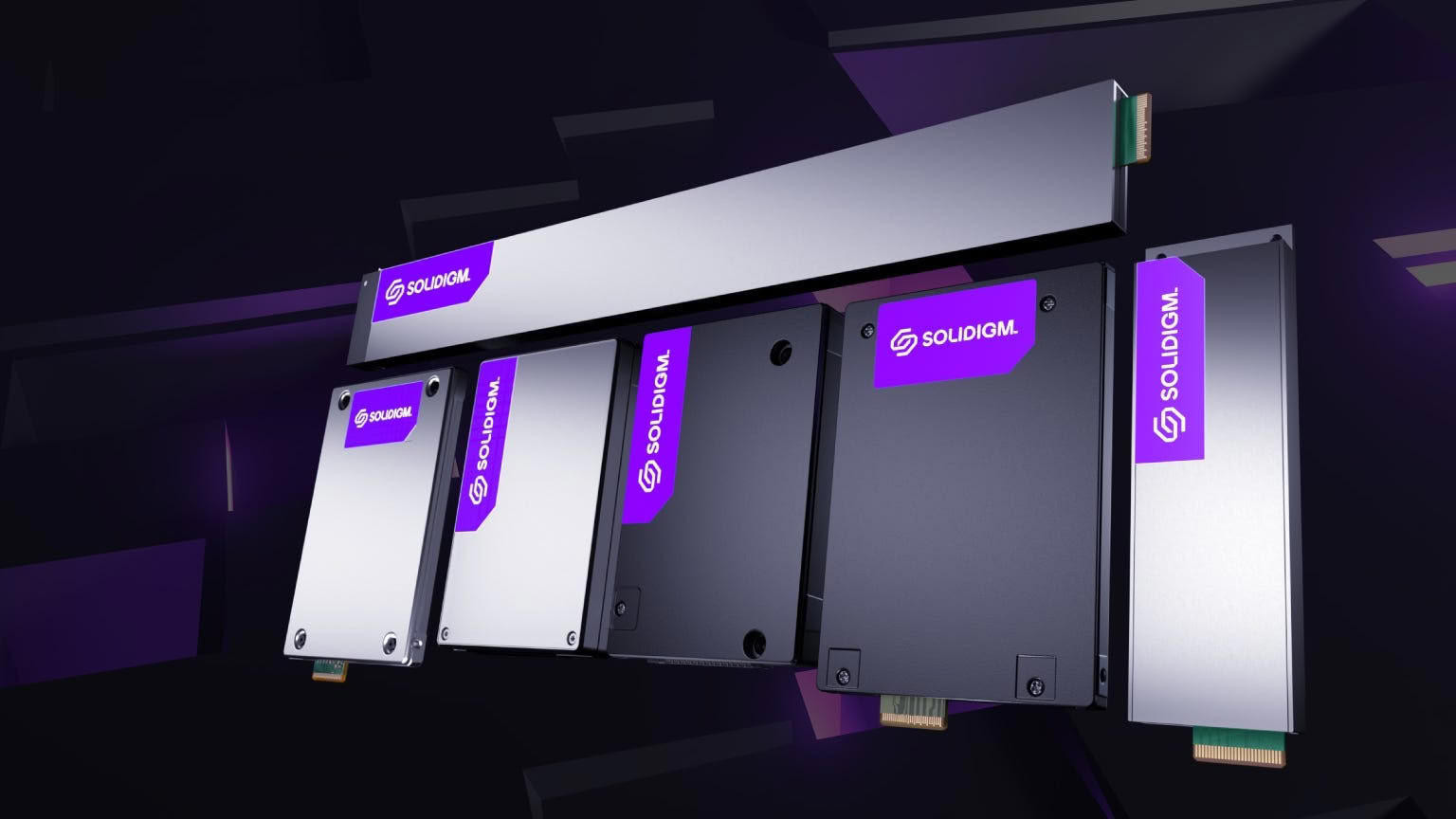
A fresh investment discussion around Solidigm is best understood as one proposal that carries two linked regulatory and production goals: a possible $45 billion NAND flash plant in the United States, and permission from the US government to move equipment into the company's Dalian facility in China. The initiative remains in negotiation, but its outline has already connected export controls, AI storage demand, and SK Hynix's global supply-chain planning.
According to people familiar with the matter, Solidigm is seeking US government approval to send relevant equipment to China for an upgrade at the Dalian plant. The planned US investment has been presented as part of the same set of discussions, with the company hoping the two elements can advance together.
Why the Dalian Plant Matters to NAND Supply
The Dalian plant plays an important role in SK Hynix's NAND flash business. The site originally belonged to Intel's NAND flash business, and after SK Hynix acquired the related business, the plant became part of its storage operations. Solidigm's products are mainly aimed at enterprise solid-state drives, with heavy use in data centers and enterprise storage applications.
AI infrastructure construction has increased demand for data storage, making it necessary to expand flash capacity and upgrade existing production facilities.
Data Citation: The Numbers Behind the Proposal
- $45 billion: the potential U.S. NAND plant investment being evaluated.
- $100 billion: a possible long-term total investment if the U.S. project expands beyond the initial proposal, as described to the U.S. Commerce Department.
- 2027: the earliest possible construction start for the U.S. facility.
- 2025: the year the U.S. government revoked portions of the validated end user arrangements previously available to some SK Hynix and Samsung Electronics plants in China.
- 2023: the completion year for the Mod B area at the Dalian plant.
Potential Scope, Site Choices and Uncertainty
Solidigm also told the U.S. Commerce Department that the long-term total investment for a U.S. plant could reach $100 billion, and northern New York is among the sites under consideration. The earliest possible construction date has been described as 2027. However, the $100 billion figure represents a potential long-term scale, not an approved or committed full funding decision. The site, schedule and detailed investment structure have not been finalized.
Export Controls Are the Main Bottleneck
U.S. restrictions on semiconductor manufacturing equipment exports to China are a central variable. In 2025, the U.S. government removed some of the previous validated end user exemptions covering certain SK Hynix and Samsung Electronics plants in China. From then on, companies must apply for permits on an annual basis to bring relevant equipment into Chinese plants.
Washington has signaled that equipment needed to maintain existing plant operations may be approved, but stricter review applies to equipment aimed at expanding capacity or improving technology levels.
Mod B Area: Idle Capacity Becomes a Negotiation Point
The Dalian plant's Mod B area is an important part of the current negotiation. The area was completed in 2023, but because the memory chip market was weak at the time, some space has not yet been fully equipped. Solidigm wants to install more manufacturing equipment in the relevant area to raise NAND flash output.
If the U.S. government approves the equipment export, revenue from added output could help fund the U.S. plant and serve as a transition toward broader U.S. production.
AI Demand Reshapes Memory Priorities
The arrangement also reflects how the AI boom has affected the memory chip industry. As AI data centers expand, demand for enterprise SSDs and high-performance storage continues to rise, while global memory supply tightens. Samsung Electronics, SK Hynix and Micron are adjusting capacity allocation, directing more resources toward higher-margin data-center products.
NAND flash is the core storage medium inside SSDs, and its supply conditions directly affect the cost of cloud computing and AI infrastructure.
Strategic Gains and Cost Risks for SK Hynix
For SK Hynix, a new U.S. NAND plant could add production capacity and reduce reliance on Dalian as a single base, lowering future trade-policy risk. U.S. construction costs are typically higher than in South Korea and other existing bases, and semiconductor fabs take long periods to build, so whether the investment can earn enough long-term return remains uncertain.
Financing Route Changes, Need Remains
Earlier, SK Hynix considered pushing Solidigm toward a public offering to raise funds through an initial public offering. The company has recently paused the evaluation of Solidigm's IPO and pre-IPO financing plans, citing capital market conditions and stock performance.
Even with the financing path changing, SK Hynix has still said Solidigm needs new production facilities to meet capacity requirements created by rising AI storage demand, and it will continue to assess investment scale, timing and funding sources.
FAQ
What is being proposed?
Solidigm is evaluating a $45 billion NAND flash plant in the United States while also seeking approval to export equipment to upgrade its Dalian plant in China.
Has the project been approved?
No. The plan is still in negotiation and assessment. The site, timing and investment structure for the U.S. facility are not final.
Why does U.S.-China equipment export policy matter?
The Dalian upgrade depends on whether Washington permits semiconductor manufacturing equipment exports to China. In 2025, parts of the previous validated end user arrangements for SK Hynix and Samsung Electronics plants in China were revoked, making annual permit applications necessary.
What could change next?
Key signals will be U.S. permit approvals, equipment deployment in the Dalian plant's Mod B area, selection of a U.S. site, and final decisions on funding for the proposed U.S. fab.
Bottom line: The $45 billion U.S. NAND plant idea is one proposal with two linked parts, and it sits at the intersection of U.S. semiconductor localization, AI storage demand, and U.S.-China export controls. Whether it advances will depend not only on project economics, but also on Washington's approval for Dalian equipment and whether SK Hynix can balance U.S. costs, global supply-chain placement and future demand.