
AIdataNewsGlobal General | Tyler Shultz: AI Funding Frenzy Could Let Theranos-Style Claims Slip Through
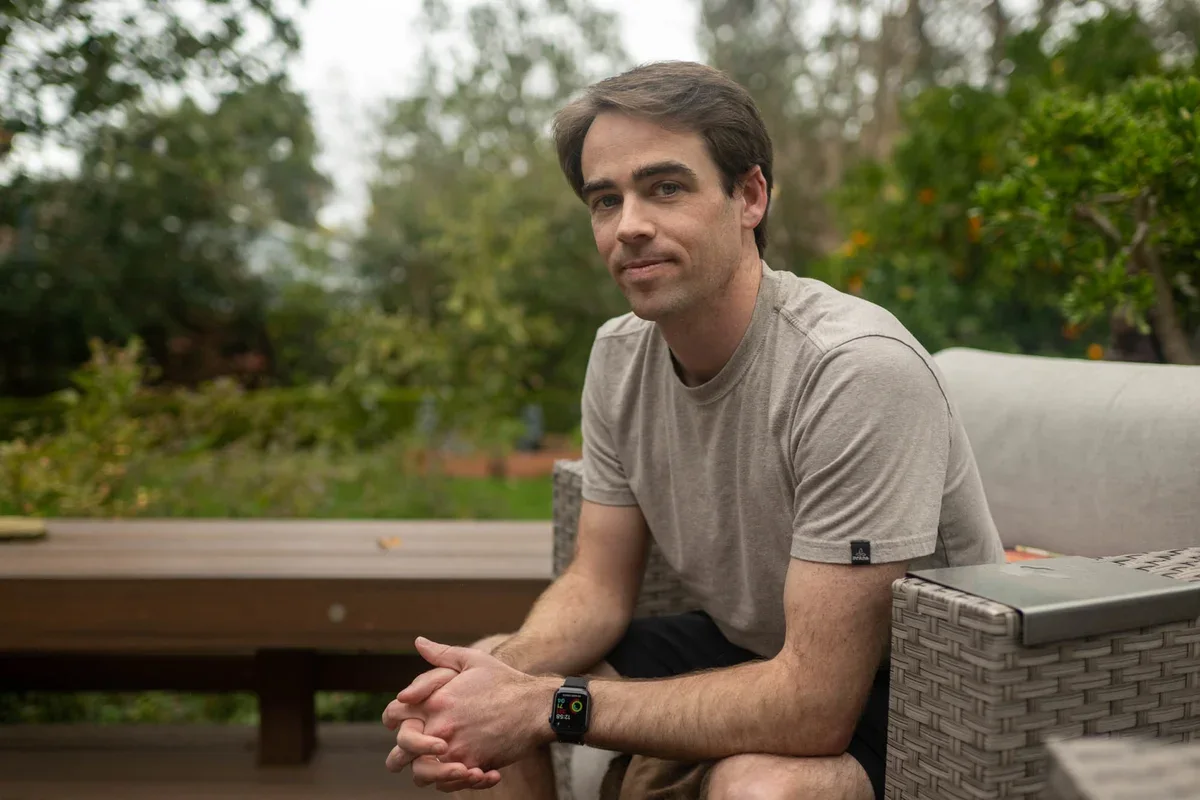
The investor who helped unravel the Theranos story says the United States is entering another period in which hard-to-test technology may outrun hard-to-test accountability. Tyler Shultz recently argued that the current AI investment boom can make it difficult for outsiders to distinguish substantive capability from marketing, a condition he links to the environment that once allowed Elizabeth Holmes to attract hundreds of millions of dollars.
Speaking to The San Francisco Standard, Shultz said the real ability of AI systems is not easily assessed. In his account, an audience may have trouble telling whether a product contains distinctive technology or is simply an interface placed on top of models such as ChatGPT. “If you want to deceive people, I think this is a good opportunity for fraud,” he said.
Shultz’s warning draws on his personal history with one of Silicon Valley’s most closely watched failures. He met Elizabeth Holmes at Stanford University, later worked inside Theranos, and became part of the effort that exposed the company’s claims about its blood-testing technology.
The Theranos precedent as a warning for AI valuation
Theranos was marketed around a promise that a small quantity of blood could support multiple tests. That narrative helped Holmes win investors, fame and a reputation as “the female Steve Jobs.” The promised technology, however, did not materialize as described, and the fraud allegations became a public lesson in how charisma, urgency and limited technical review can operate together.
From Shultz’s perspective, the issue is not simply that investors may have been misled once before. He suggests that the conditions which reduced scrutiny in that earlier episode have now become more widespread. AI systems, by design, can hide their underlying capabilities behind outputs that look competent to users, even when the origin of those outputs is unclear.
The comparison is not about treating all software as identical to medical diagnostics. It is about a recurring pattern: a high-profile founder, a technically complex promise, limited independent verification and a capital environment that rewards speed and narrative cohesion. In that pattern, the question is not merely whether a company is dishonest, but whether the public can reasonably test its claims.
Data citation: reported facts that frame the concern
- Reported interview: Tyler Shultz spoke to The San Francisco Standard about AI verification, investor expectations and the Theranos analogy.
- Reported fraud benchmark: Elizabeth Holmes’ Theranos raised hundreds of millions of dollars before the full technical picture was publicly available.
- Reported verification problem: Shultz said it can be hard for observers to determine whether an AI product uses unique technology or is wrapped around existing systems such as ChatGPT.
- Reported public memory shift: Holmes has recently received renewed cultural attention after Nathan Fielder’s film “You Can See Everything.”
Checklist: Why the next Theranos may be difficult to spot
- Capability is obscured by output: Users may see answers, summaries or predictions without seeing whether the product is built on proprietary technology or on a wrapper around ChatGPT-style systems.
- Investment heat compresses diligence: When capital moves quickly around AI, the question becomes whether the model can do something genuinely unique, not merely whether it can be demonstrated.
- Founder image can substitute for evidence: Shultz’s Theranos experience points to a pattern in which public charisma, media packaging and a compelling mission may receive less challenge than the underlying claims require.
- Truth is harder to test in software: Unlike a physical device, AI capability can be presented through selected demonstrations, benchmarks or user experience, making independent verification a continuing issue.
- Recent nostalgia for Holmes may blur accountability: The renewed attention to Holmes after Nathan Fielder’s film “You Can See Everything” shows how cultural products can shape sympathy around a fraud narrative.
- Media attention can outrun technical explanation: The Theranos case illustrates how a persuasive headline can travel faster than a careful audit, while AI products add another layer of opacity because the model’s reasoning process is not always visible to users.
Renewed attention to Elizabeth Holmes
Shultz’s comments also returned to Holmes’ current public image. After Nathan Fielder’s film “You Can See Everything” sparked discussion, some viewers expressed sympathy for Holmes. Shultz disagrees with that framing. He described Holmes as someone skilled at managing how others view her and attentive to her own public persona.
He noted that, while Holmes remains serving her sentence, she appeared on the cover of People magazine and has featured in a widely discussed film. He also alleged that Holmes is involved with a new blood-testing startup created by her partner, Billy Evans.
“I think the only reason we are now talking about Elizabeth Holmes is that she wants us to talk about her,” Shultz said.
This part of the interview matters because it shows why Shultz sees public attention as inseparable from accountability. If a company’s founder controls the story, and audiences consume the story without access to evidence, the line between innovation reporting and reputation management becomes blurred.
What this means for global AI and data governance
For a General audience, the point is not to accuse every AI startup of fraud. It is to highlight why verification, disclosure and independent review have become central issues in the United States and elsewhere as AI remains a global industry focus. The data economy surrounding AI models depends on trust: what data is used, how models are evaluated, whether performance claims are reproducible, and whether investors can see through polished demonstrations.
Shultz’s argument implies several practical questions that should follow any AI funding announcement:
- What problem is the model claimed to solve better than existing tools?
- Is there independent testing or third-party verification, rather than curated demonstrations?
- How much of the value is attributed to proprietary technology, and how much depends on existing systems such as ChatGPT?
- What data inputs, limitations and failure modes are disclosed to users, regulators and investors?
- Who benefits from uncertainty, and who is asked to accept the story because it is difficult to inspect?
FAQ: The main questions behind the warning
Why compare AI investment to Theranos?
Shultz compares them because, in his view, both settings contain a difficult verification problem. In Theranos, investors backed a blood-testing story without full technical proof. In AI, the question is whether an application is more than a layer around ChatGPT-style existing models.
What makes AI products hard to assess?
The reported concern is that an outside observer may see a functioning product while missing whether its underlying technology is distinctive, copied from or dependent on existing models, or insufficiently documented. This uncertainty can make marketing claims look more solid than they are.
Does Shultz think every AI company is fraudulent?
No. His warning is broader: he is concerned that a heated investment environment can make it easier for a misleading story to attract support, as happened in the Theranos case. He also suggests that Holmes may not be the last fraud-related issue Silicon Valley faces.
What role does Elizabeth Holmes play in the current discussion?
Holmes is used as a reference case. Shultz said the environment that once allowed her to raise hundreds of millions of dollars with limited scrutiny now appears more common. He also argued that renewed public coverage is shaped by her own desire for visibility.
Why is The San Francisco Standard interview relevant to readers?
It gives the reported context for Shultz’s warning. The interview connects his Theranos experience to a current AI concern, helping readers understand why a founder-side account can become a governance issue rather than a single-company story.
Conclusion: The verification gap is the story
For readers tracking AI news, the value of Shultz’s warning lies in its simplicity: before treating an AI product as unique, ask what is being measured, what evidence supports the claim and who can independently verify it. The Theranos lesson is that capital can move faster than technical reality; his broader point is that AI may make that gap harder to detect.
As a General-column summary, the article’s takeaway is factual rather than sensational: Tyler Shultz, speaking recently to The San Francisco Standard, says AI’s hype can obscure capability, and his Theranos experience makes him cautious about another Silicon Valley episode involving Elizabeth Holmes, ChatGPT-style wrappers, hundreds of millions of dollars and public sympathy for a story that may deserve more scrutiny than celebration.