
AIdataNewsGlobal General Briefing: Waymo and Toyota Take bZ4X Robotaxis From the Assembly Line
AIdataNewsGlobal General covers a change in the Waymo and Toyota Motor plan: the expanded partnership goes beyond putting autonomous equipment into existing cars. Under the described route, a Toyota bZ4X is integrated with Waymo Driver hardware at the same factory that produces the vehicle. Japan is the first market named for testing, with the target year set at 2027, and the United Kingdom (UK) is listed as a later market.
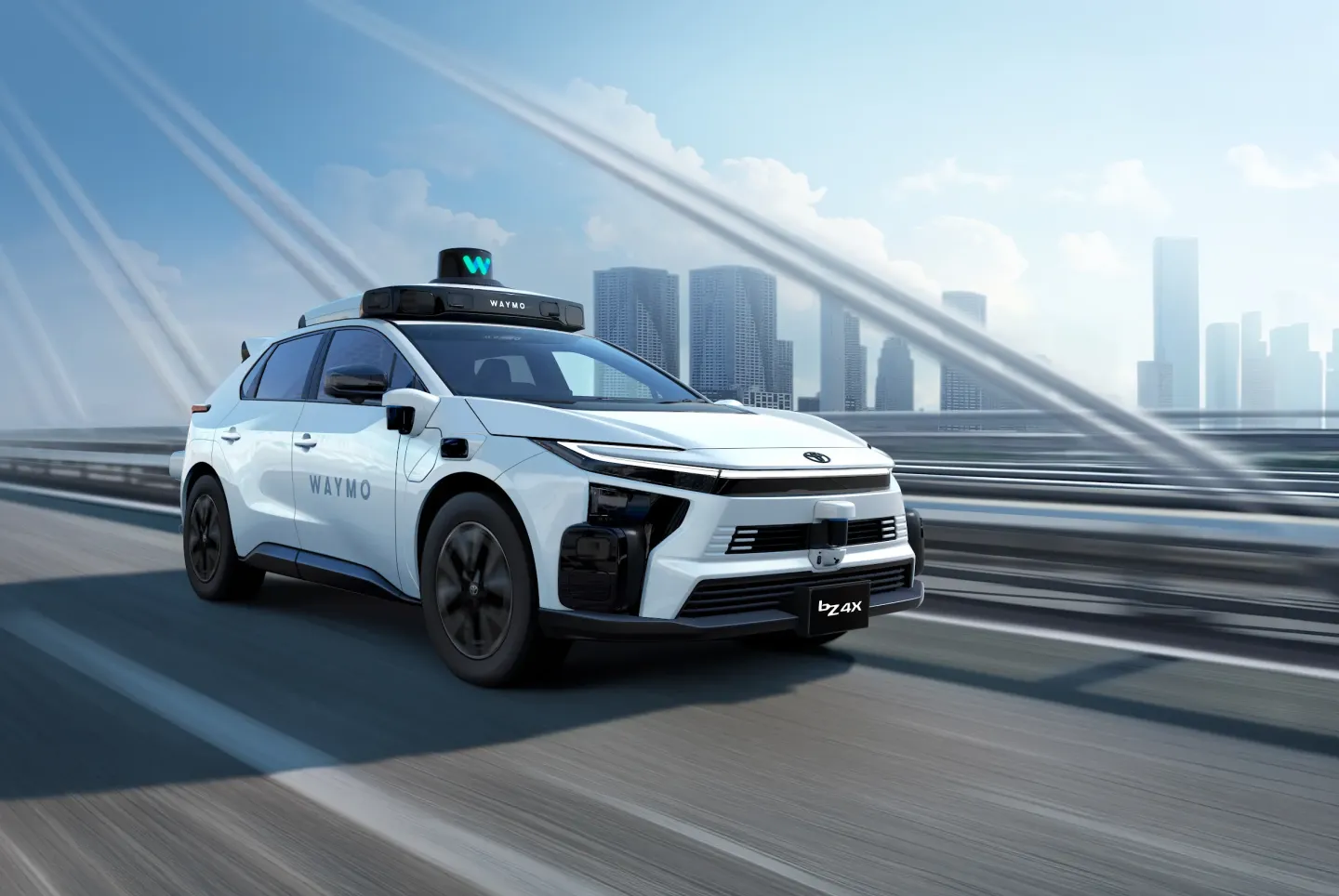
From retrofit project to line-integrated vehicle
Waymo, a unit of Alphabet, the parent company of Google, has used retail vehicles, most visibly Jaguar I-Pace models, as robotaxis. The Toyota bZ4X plan changes that pattern: the base vehicle and the autonomous system are meant to meet inside the production process rather than after the car has already left the factory.
The location of that process is specific. Toyota will produce the vehicles at the Takaoka plant in Toyota City, Aichi Prefecture, Japan, and Waymo hardware will be installed at the same site. Keeping body manufacture, hardware fitting and system integration in one facility is intended to reduce the later work of taking cars apart, modifying them and putting them back together. It also cuts the labor, movement of goods and service complexity that can grow as a robotaxi operation scales.
Inside the car, the hardware package is described around the Waymo Driver system and includes cameras, lidar, millimeter-wave radar and on-board computing. The companies have not said which generation of Waymo hardware the Toyota bZ4X will use. They have not published a sensor count or a full technical parameter sheet either. That gap matters for readers because the exact cost, maintainability and performance profile of the vehicle remains unconfirmed.
What the passenger cabin is supposed to do
The modified bZ4X is being shaped for driverless ride-hailing scenarios. Waymo’s described changes include more rear-seat legroom, automatic doors, a powered tailgate and ambient lighting. Those features target the moments that matter most when no driver is present: entering the car, loading bags, closing up and leaving the vehicle without assistance.
That is one reason the elderly, passengers with mobility constraints and travellers carrying luggage are singled out in the plan. A robotaxi has to solve more than collision avoidance; it also has to make the whole door-to-door journey workable for people who cannot rely on a driver to open a door or place a bag in the trunk.
Japan first, then the United Kingdom
The published schedule keeps 2027 as a test and validation year rather than a full rollout date. The first stage is small-scale testing in Japan. That gives Waymo a way to check whether the vehicle and its software behave correctly under Japanese traffic rules, road signs and driving habits.
The United Kingdom (UK) is the next market mentioned. Japan and the United Kingdom both use left-hand traffic and right-hand-drive vehicles, which creates some shared operating assumptions. Still, the plan does not treat the UK as a simple copy of Japan. The car and the service model will need separate validation against UK road conditions and regulatory requirements.
The relationship rests on an April 2025 preliminary agreement, when the two sides said they would explore a shared autonomous-vehicle platform. As the discussions developed, Toyota’s role became clearer: it is now positioned as one of the vehicle suppliers supporting Waymo’s international expansion.
Woven by Toyota, the company’s software and mobility subsidiary, is also listed as a participant. The stated aim is to use Waymo’s real-road operating data to study how to improve overall safety for vehicles and road infrastructure. Beyond robotaxis, the two companies also intend to keep examining whether Waymo technology could be applied to private passenger cars.
Key data references
| Topic | What the plan states | Editorial implication |
|---|---|---|
| Vehicle platform | Toyota bZ4X electric SUV adapted for Waymo Driver | Shifts Waymo toward factory-integrated robotaxi design. |
| Factory path | Takaoka plant in Toyota City, Aichi Prefecture, Japan performs manufacturing and hardware installation | Reduces later retrofit work and can support scaling. |
| Timeline | 2027 testing and validation begins in Japan; United Kingdom (UK) is later | Initial year is verification, not a disclosed commercial service start. |
| Fleet mix | Existing and planned vehicles include Jaguar I-Pace, Ojai built with China-based Geely subsidiary Zeekr, and a planned Hyundai Motor Ioniq 5 | Waymo is spreading supplier risk across several automakers. |
| Technology direction | Waymo hopes models can use a common sixth generation system; the bZ4X hardware generation is not disclosed | Software-hardware standardisation may decide future fleet economics. |
| Undisclosed items | First bZ4X quantity, Japan commercial launch date, sensor count and technical specifications | Scale, cost and deployment pace cannot be confirmed yet. |
Quick checklist for readers
- Watch whether the Takaoka plant approach lowers per-vehicle retrofit costs.
- Watch for disclosure of the Toyota bZ4X hardware generation and sensor layout.
- Watch whether 2027 Japan testing expands into any UK service timeline.
- Watch for fleet-size data, because operations need to support tens of thousands of vehicles before the business model becomes durable.
- Watch for signals about private passenger vehicles, Woven by Toyota safety research and shared road-infrastructure findings.
Fleet context and why Toyota matters
Waymo now has several vehicle paths rather than a single automaker bet. Besides the Jaguar I-Pace, it has worked with Zeekr, a Geely-backed brand in China, on Ojai, a small autonomous passenger vehicle built on the Zeekr SEA-M architecture for robotaxi use. Some Ojai rides have already begun with a limited user set. A Hyundai Motor Ioniq 5 route is also part of the disclosed picture. The company’s stated ambition is to place a common sixth-generation autonomous system across different models, reducing dependence on any one manufacturer.
This helps explain the commercial logic. Toyota contributes mature vehicle manufacturing, a global supply chain and long-running experience in producing dependable cars. Waymo contributes L4-level autonomous technology that is already deployed in commercial robotaxi operations. The core value of the deal is simple to state: combine mass manufacturing capability with an autonomous system that has already passed commercial deployment hurdles.
FAQ: what is clear and what is not
Why start in Japan?
Japan is the first named test market because the vehicles are to be produced there and must be validated under local traffic rules, road signs and driving habits. The disclosed 2027 stage is small-scale testing and validation, not a nationwide robotaxi launch.
Why mention the United Kingdom?
The United Kingdom is identified as a later market. Left-hand traffic and right-hand-drive vehicles provide some common ground with Japan, but UK deployment would still require local road-environment and regulatory checks.
What is not disclosed?
The companies have not released the number of bZ4X robotaxis in the first batch, the exact date Japan would begin commercial operation, the hardware generation used in the Toyota vehicle, the number of sensors or a full technical parameter table.
Could this move beyond taxis?
The plan includes continued research into applying Waymo technology to private passenger cars. It also includes work with Woven by Toyota on safety improvements that can draw on real-road operating data.
Bottom line for general readers
For readers following global AI and data news, the Toyota bZ4X move is less about one model name and more about the operating model. It tests whether a robotaxi fleet can be made inside an automotive manufacturing process, with Waymo Driver hardware fitted at the point of manufacture, and then validated first in Japan in 2027 before other markets are considered. The unresolved questions - cost per vehicle, hardware generation, fleet size and regulatory readiness - are the ones that will decide whether this line-integrated approach becomes a template.