
AIdataNewsGlobal General Playbook: Stress-Testing AI Power Reservations After SoftBank's $3.7 Billion Turbine Write-Down
Short answer: treat a turbine slot as a paid option on future capacity, not as a power supply contract, and model three things before signing - the cash at risk, the conversion deadline, and the megawatts you can actually energise. SoftBank Group's $3.7 billion charge against roughly four gigawatts of reservations released implies about $925 of write-down per kilowatt abandoned: a benchmark any team can recompute in a spreadsheet before it commits a deposit.
The Wall Street Journal's report today that the Japanese conglomerate is absorbing that loss on natural gas turbine reservations is usually read as a verdict on AI demand. Heatmap reads it through the equipment instead: the scarce input in this build-out is a confirmed generation slot with fuel behind it, not capital and not GPUs. Both readings are defensible, and neither tells an operator what to do on Monday, which is what this guide is for.
What exactly did SoftBank write down?
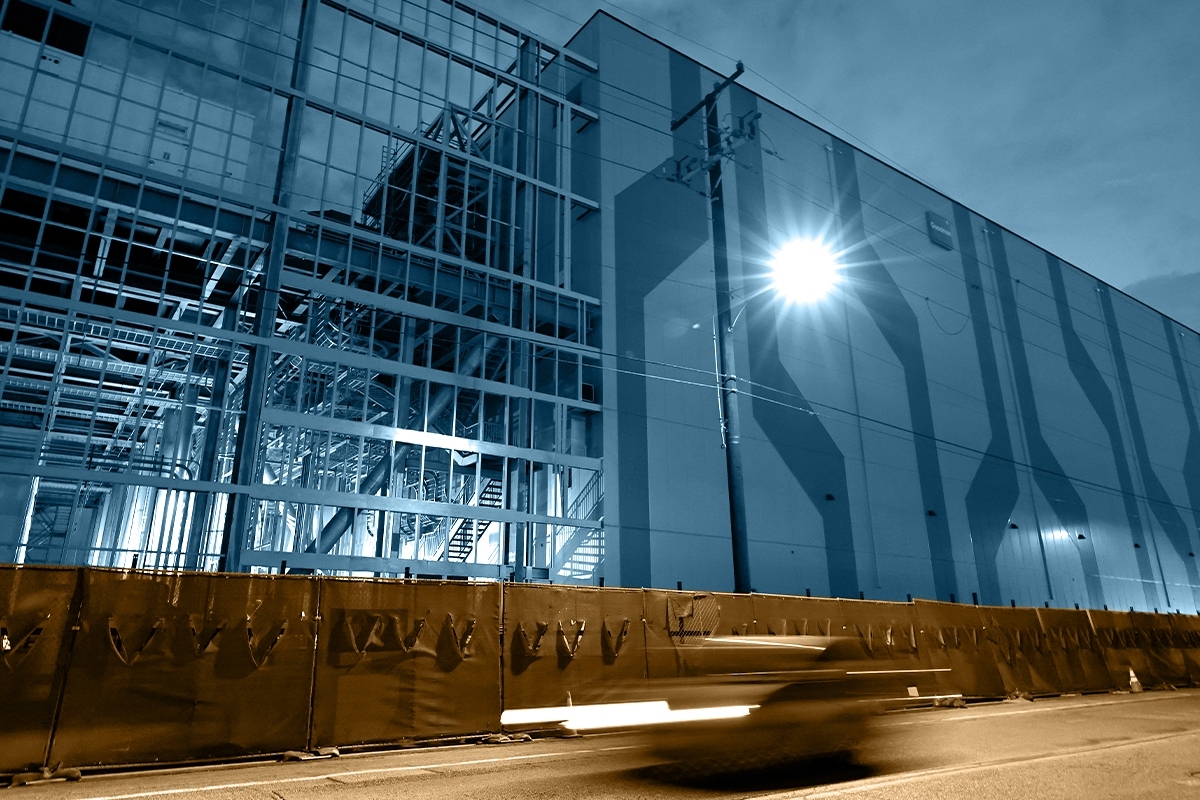
SoftBank had reserved about 13 gigawatts of turbines, according to the Journal. That is a staggering quantity of electricity: roughly New York City's maximum power draw on the hottest part of a summer's day, and, by one trade comparison, more than six Hoover Dams' worth of nameplate capacity at about 2.08 GW each. The group now appears set to release reservations covering about four gigawatts, while planning to send about 9 gigawatts to the OpenAI data center in Pike County, Ohio. Most of those rotors came from GE Vernova, whose gas turbine order book has been full for nearly two years and whose waiting list now stretches into 2031.
Two structural details matter more than the headline. First, the charge is a write-down on a queue position, not on a built asset: the group paid to hold a place, then concluded the place was worth less than the money already down. Second, public filings have suggested the Pike County facility is not planning to use turbines in the more efficient combined-cycle configuration, which would leave its carbon intensity worse than most other new natural gas plants, and the plant is meant to be the largest gas-fired power station in the world if it is built to completion.
Why is a reservation harder to keep than to make?
Because a reservation buys time in a queue, and time is only worth paying for if the rest of the project closes on schedule. Turbine slot reservation agreements are normally secured by fees that hold a production position rather than order a machine, and industry reporting describes those fees as effectively non-refundable deposits (POWER Magazine, April 2025). The structure is rational for a manufacturer, which can hold a frame without carrying the buyer's project risk, and unforgiving for the buyer, because the deposit has no secondary market when offtake, permits or interconnection slip.
Supplier disclosures show how much of the visible order book is optionality rather than commitment. GE Vernova's combined gas equipment backlog and slot reservation agreements reached roughly 100 GW in the first quarter of 2026, and on the accompanying earnings call CEO Scott Strazik split the number into 44 GW of firm equipment backlog and 56 GW held in slot reservations. By the end of the second quarter the combined figure was reported at 116 GW (Utility Dive, July 24, 2026). A headline backlog that mixes the two categories overstates how much capacity is actually committed.
Demand is not the variable that broke. The IEA's Energy and AI analysis projects that data centre electricity consumption grows by around 15% per year from 2024 to 2030, more than four times faster than total electricity demand, taking generation for data centres from about 460 TWh in 2024 to over 1,000 TWh in 2030 in the base case (IEA, April 2025). What changed is the path between a reservation and an energised load: FERC's large-load interconnection docket, No. RM26-4, has become the venue for that argument, with the Commission signalling action by June 2026.
What are six checks to run before you sign?
This is the sequence we use when reviewing a power position. It is deliberately front-loaded with the items that are cheapest to fix before signature and most expensive to fix afterwards.
- Separate firm megawatts from nameplate megawatts. A frame rated at 250 MW in ISO conditions delivers less at 40C ambient with parasitic load attached. Size the conversion against design ambient and PUE, not against the brochure.
- Price the deposit as a share of project equity. Ask what percentage of equity the non-refundable fee consumes, and who funds it if first drawdown slips a quarter. The SoftBank number is a usable ceiling: about $925 per kilowatt of capacity abandoned.
- Put the conversion date beside the interconnection milestone. A reservation with a two-year conversion window and a four-year study queue is a scheduled write-down unless the contract carries an extension mechanism you have already tested.
- Fix the configuration in the model. Decide combined-cycle or simple-cycle before the filing, because heat rate and carbon intensity change both the fuel bill and the permitting narrative.
- Negotiate assignment rights at signature. SoftBank's failure to sell the turbines to a higher bidder is the practical case: a reservation nobody else can buy is a reservation you cannot exit.
- Require measured proof of load reduction before any flexibility clause is allowed to affect interconnection decisions, cost allocation, or public comment. A demand-response promise that nobody audits is not capacity.
Which failure modes actually bite operators?
Across the projects we review, losses cluster in five places. None of them is exotic, and all of them are cheaper to fix in a term sheet than in a quarter-end charge.
| Failure mode | What triggers it | Early warning | Cheapest fix |
|---|---|---|---|
| Deposit treated as the whole risk | Reservation signed before offtake | No named tenant at conversion date | Tie conversion to an executed capacity contract |
| Queue position confused with grid rights | Utility study not yet scoped | No signed facilities study agreement | Map the reservation date onto the study calendar |
| Simple-cycle by default | Speed of energisation prioritised | Filing shows no combined-cycle configuration | Model heat rate and intensity in the base case |
| No assignment mechanism | A partner exits the project | Reservation is non-transferable in the draft | Add assignment and substitution clauses up front |
| Single-chain concentration | Turbine, fuel and EPC from one counterparty | Change orders start stacking | Separate fuel supply from equipment supply |
The pattern repeats: optionality is bought centrally and lost locally. SoftBank bought 13 gigawatts of it centrally; the roughly four gigawatts coming back to manufacturers is the local part of the story, and the write-down is the price of discovering that the option had been mispriced.
What does the tape say about the wider AI power trade?
Equipment is only one leg. In the same window, reports traced to The New York Times described Nvidia preparing to remove Jensen Huang as CEO, and the market reaction was immediate: Nvidia was already down 11% over the past five days and fell a further 8% in after-hours trading once the report circulated. Under Huang the balance sheet has been the quiet underwriter of the whole trade, with positions in Emerald AI, a startup that helps data centers flex their electricity consumption, and in Redwood Materials, the battery recycler led by former Tesla executive J.B. Straubel, among the examples. A lower risk appetite at the top of that network reprices everything downstream of it.
The drawdown is broad but not uniform. Alphabet, Meta, and Microsoft are all down on the month; Nvidia was lagging by about 10% before its worst week began; Micron and Applied Materials are down more than 25% over roughly the same stretch; GE Vernova and Oklo have fallen nearly 20%; Coreweave is still down 24% on the month and nearly 50% since May despite an earnings beat. The offset is real: Anthropic looks likely to price one of the largest IPOs ever in the next week, and the underlying capability keeps improving. But the politics of data centers now look set to dominate the new Washington, and Heatmap Pro analysis suggests the latest round of local restrictions was not a sudden break. For a project team, that is a scheduling risk with a permitting date attached, not a verdict on demand.
Frequently asked questions
Is a gas turbine slot reservation refundable?
Usually not in cash. The fee buys a production position, and published descriptions of these agreements treat the deposit as non-refundable once the slot is held. What is negotiable is the mechanism around it: extension windows, substitution of a different frame, and assignment to another buyer. Ask for those three before asking for a discount.
Does the SoftBank write-down mean the AI power build-out is over?
No. It means the price of holding unused optionality went up. The IEA base case still has data centre electricity consumption more than doubling by 2030, and GE Vernova's combined backlog plus reservations reached 116 GW by mid-2026. What the charge does show is that reservations were priced as cheap options in a period when everyone assumed conversion. That assumption is now testable project by project.
How long does it take from reservation to an energised megawatt?
Longer than the reservation contract usually assumes. GE Vernova's waiting list extends into 2031, and large-load interconnection studies in the main US markets have historically run for years beyond that. Any plan that treats a reservation as an energised date carries an unhedged gap.
What should a smaller operator without a turbine slot do?
Buy verifiable flexibility before buying generation. Behind-the-meter capacity, load-shifting clauses and staged energisation all arrive earlier than a 2031 frame, provided the reduction is measured and auditable. The verification standard is the step that usually gets skipped, which is why it sits in check six above.
What are the reproduction points and the failure boundaries?
Reproduction points, in the order we would re-run them: recompute the write-down per kilowatt from the charge and the released capacity; confirm how much of a supplier's combined backlog sits in reservations rather than firm orders; and place the conversion deadline against the interconnection milestone on one timeline. Those three calculations take an afternoon, and they turn a news story into a term-sheet test.
Three boundaries. The SoftBank case does not tell us what turbine configuration the Pike County facility will actually use, so any emissions comparison stays a filing-based inference. It also cannot separate a demand signal from a financing signal: one company releasing about four gigawatts is consistent with softer demand and with a balance sheet that needed relief, and the public record does not settle which. And it says nothing about the released capacity once it returns to the market, whether those frames are re-marketed to other buyers or sit idle, which is the number that would actually confirm the trade has cooled. Until that number appears, treat the reservation market as still clearing, and treat your own deposit as the only variable you control.
Sources
- IEA, Energy and AI, energy demand from AI (April 2025): https://www.iea.org/reports/energy-and-ai/energy-demand-from-ai
- Utility Dive, GE Vernova gas turbine backlog climbs to 116 GW (July 24, 2026): https://www.utilitydive.com/news/ge-vernova-gas-turbine-backlog-climbs-to-116-gw/826039/
- GE Vernova, 2Q 2026 results webcast transcript: https://www.gevernova.com/sites/default/files/gev_webcast_transcript_07222026.pdf
- FERC, Docket No. RM26-4, interconnection of large loads: https://www.ferc.gov/rm26-4
- POWER Magazine, Gas Power's Boom Sparks a Turbine Supply Crunch (April 2025): https://www.powermag.com/gas-powers-boom-sparks-a-turbine-supply-crunch/
- Tom's Hardware, SoftBank loses $3.7 billion on canceled AI data center gas turbine orders: https://www.tomshardware.com/tech-industry/data-centers/softbank-loses-usd3-7-billion-on-canceled-ai-data-center-gas-turbine-orders-days-after-denying-elon-musks-claim-it-was-defaulting-company-kills-reserved-13-gigawatts-of-power-more-than-six-hoover-dams-worth-of-capacity
- w.media, Ohio data center power equipment writedown pushes SoftBank to US$7 billion loss: https://w.media/ohio-data-center-power-equipment-writedown-pushes-softbank-to-us-7-billion-loss/