
Case Post-Mortem: How OpenAI's Device Caps, Card Flags and Token Pool Reset Triggered a Wave of Suspensions
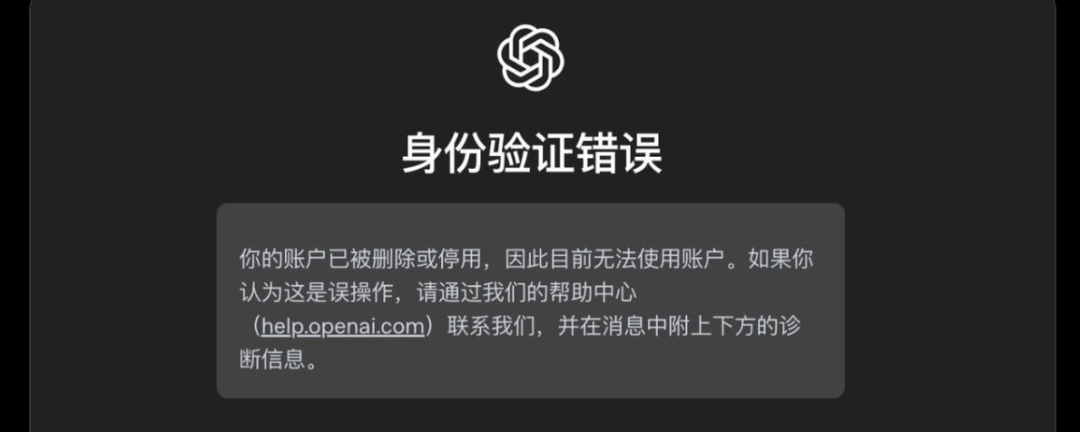
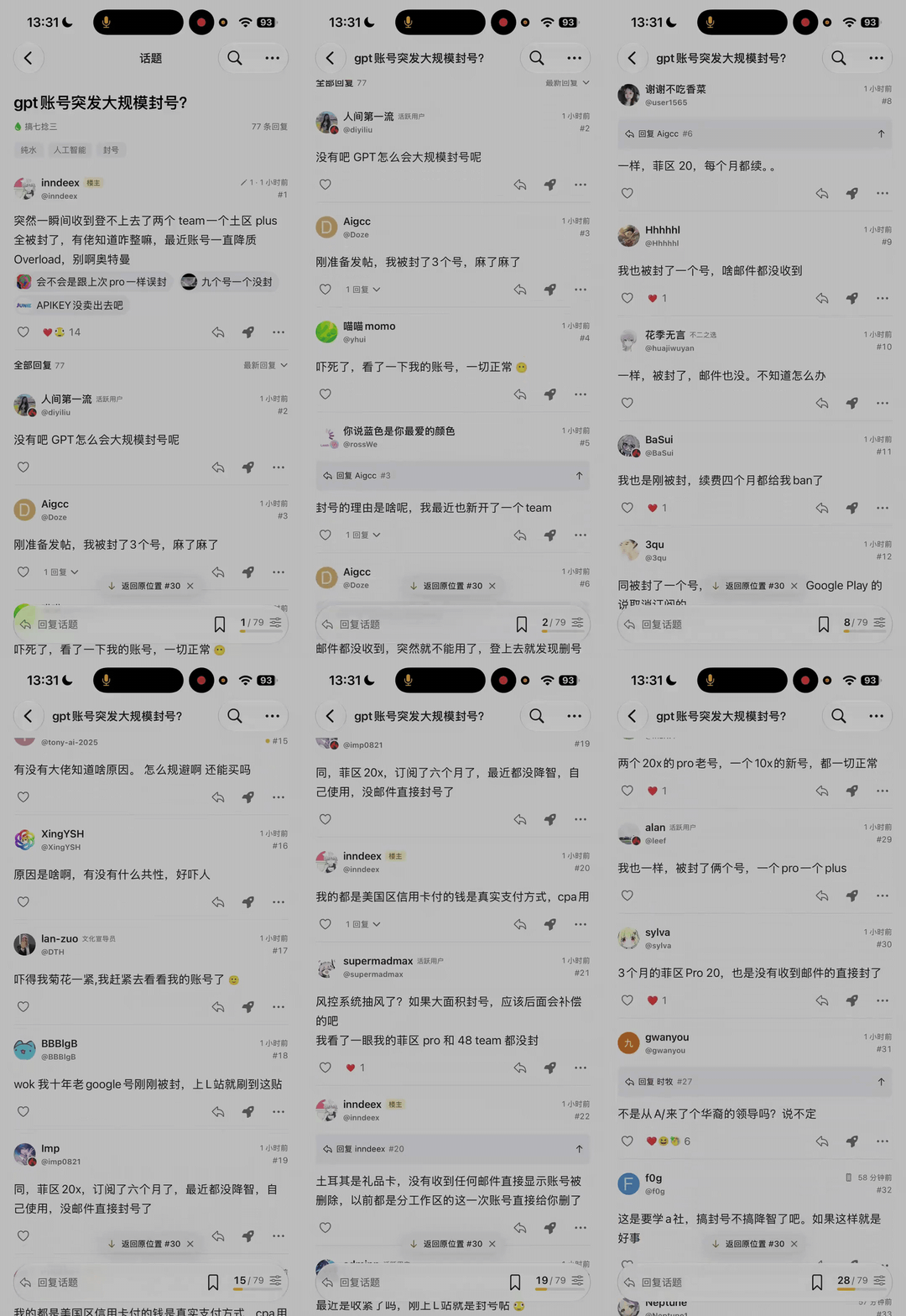
Quick answer: the current OpenAI suspension wave is not arbitrary enforcement. It is a three-step sequence — card and device caps that went live on November 2, a bulk sweep of stacked and shared subscriptions today, and a policy plus quota reset in late November and early December. The reusable defence is boring but real: export your data before you need it, keep one paid identity per person and card, and file appeals through OpenAI's official form with the Request ID.
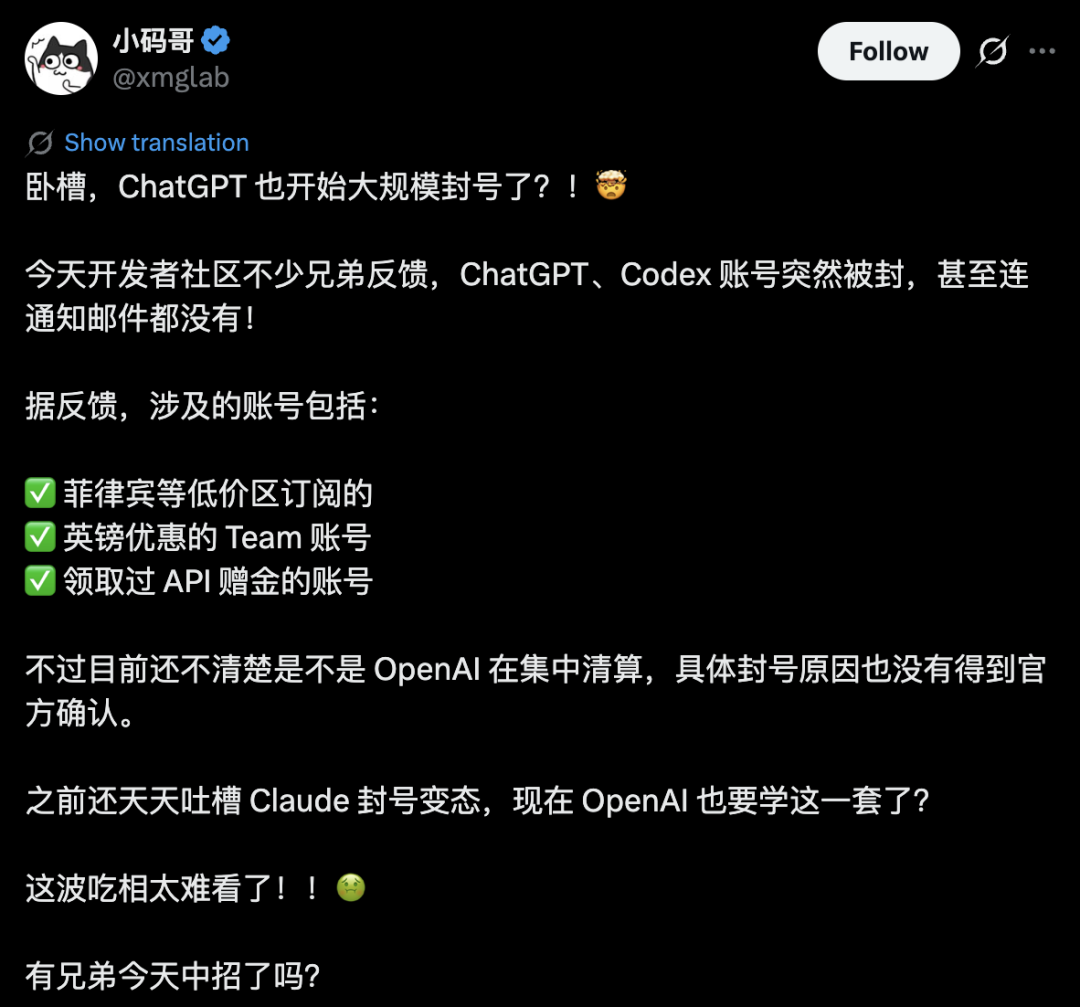
The hardest-hit clusters are the Philippines region, the Turkey region, low-priced Team plans and accounts routed through reverse proxies; even long-running accounts with four or five months of renewals were caught. Cat Wu had barely moved from Anthropic to OpenAI when ChatGPT switched on the mass ban campaign. The user reaction, repeated across forums, was a single line: 'Please, spare us.'

Which accounts were actually affected?
Unlike Anthropic's narrower crackdown, OpenAI's sweep crossed every price tier: free API accounts, shared team accounts, and the $200 per month Pro plan were all included. Confirmed suspensions so far cover Pro 20x, Pro, Team, Plus and student-verified accounts.
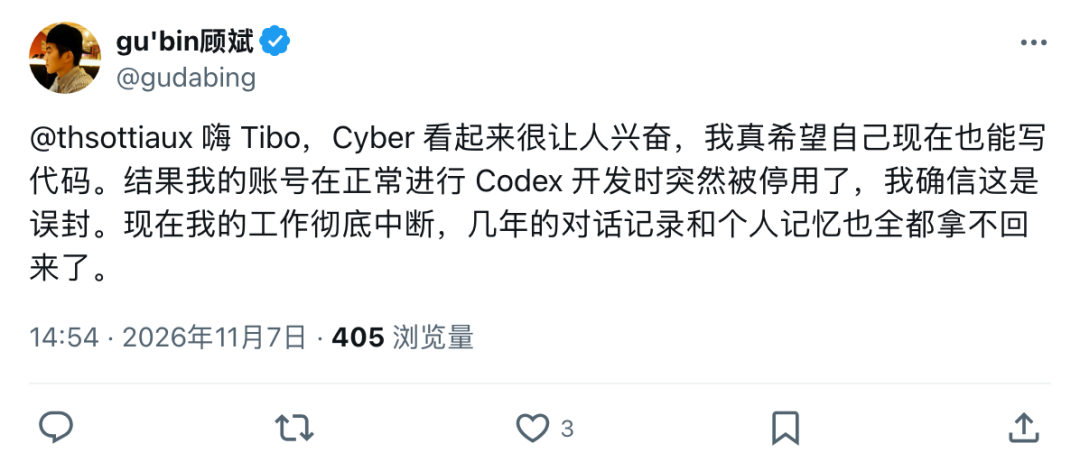
Programmers mid-commit reacted first, flooding the X comment section of Tibo, the former OpenAI Codex lead, to demand a fix. A developer described spending several years building up conversation history and personal memory that stayed locked in the cloud, unreachable behind the deactivated login. Some accounts, years old, simply stopped existing.
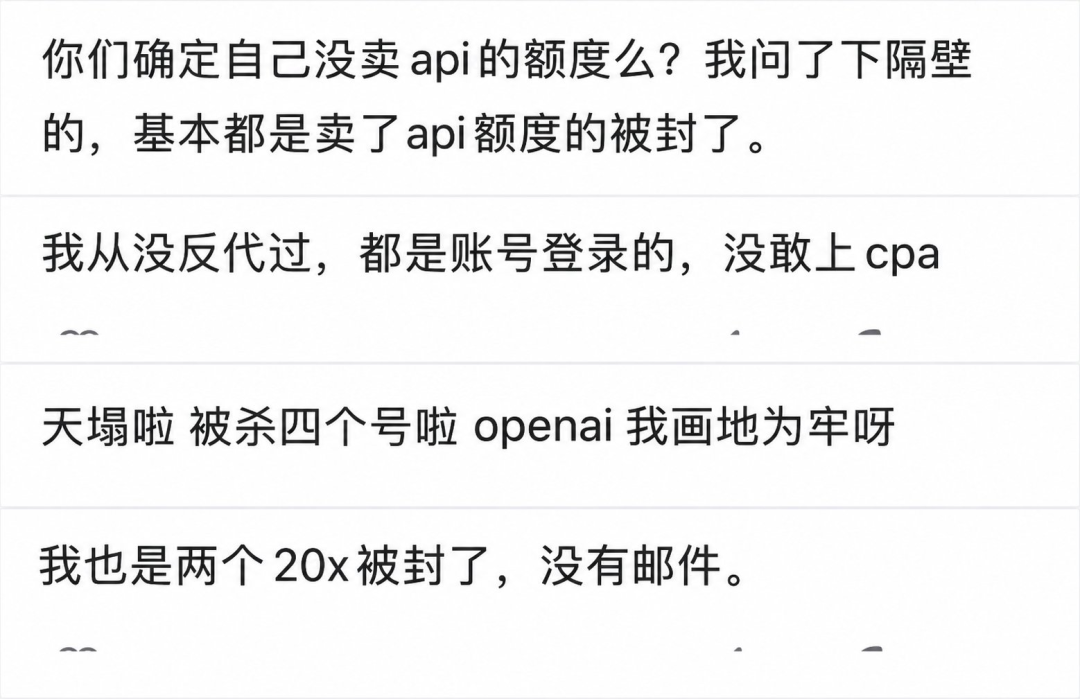
Reports from abroad made the point sharply: ordinary accounts used in normal ways can still be cut off.

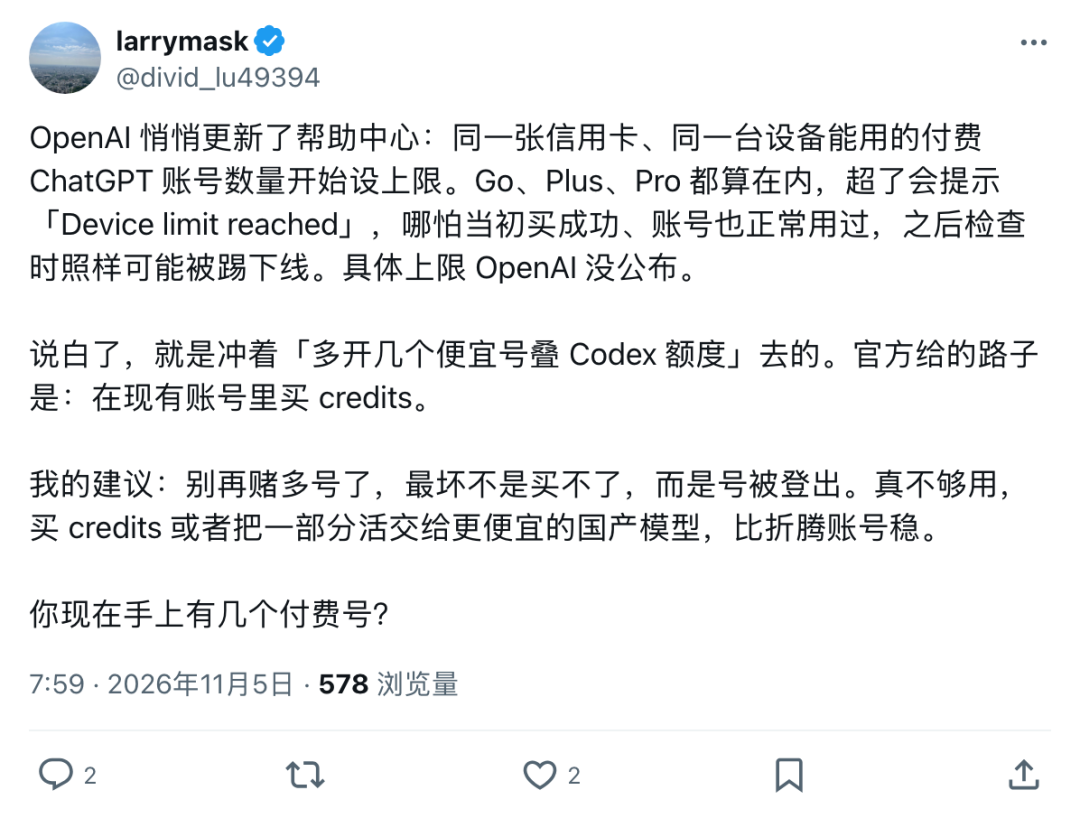
Two explanations circulated. One held that OpenAI was closing off opportunistic discount hunting by capping how many accounts one device may host. The other pointed at the payment layer.
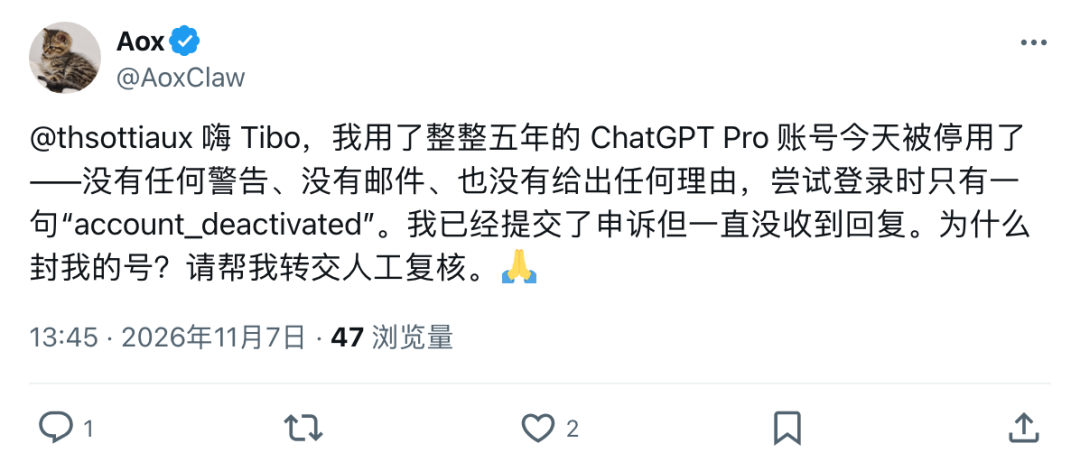
Case one: five years of history sealed by one automated flag
The clearest single case is a five-year Pro account that was deactivated with no warning, no email and no stated reason; the first appeal produced nothing. Read as a process rather than a grievance, it shows three failure modes stacked on top of each other: detection runs in the back office as batch pattern matching, notice is skipped, and the user's own record of work — chats, files, memory — becomes the hostage.
The recoverable lesson is procedural. OpenAI's own help documentation describes a self-serve path — Settings, then Data controls, then Export data — that sends an archive of chat history and account data to the registered email address, and practitioners note the request can take days to arrive. In other words, the backup that would have saved several years of work had to be requested before the account was locked, not after.
Case two: when a card outage looks exactly like a ban
A second case is a diagnostic cautionary tale. Users suspected the payment stack first, and OpenAI's status page confirmed a real but different problem: elevated error rates on some United States commercial Mastercard cards. In the investigation, the affected first six digits were 544015, 546400, 543502, 543799 and 512998, with some cards beginning 513989 also impacted.
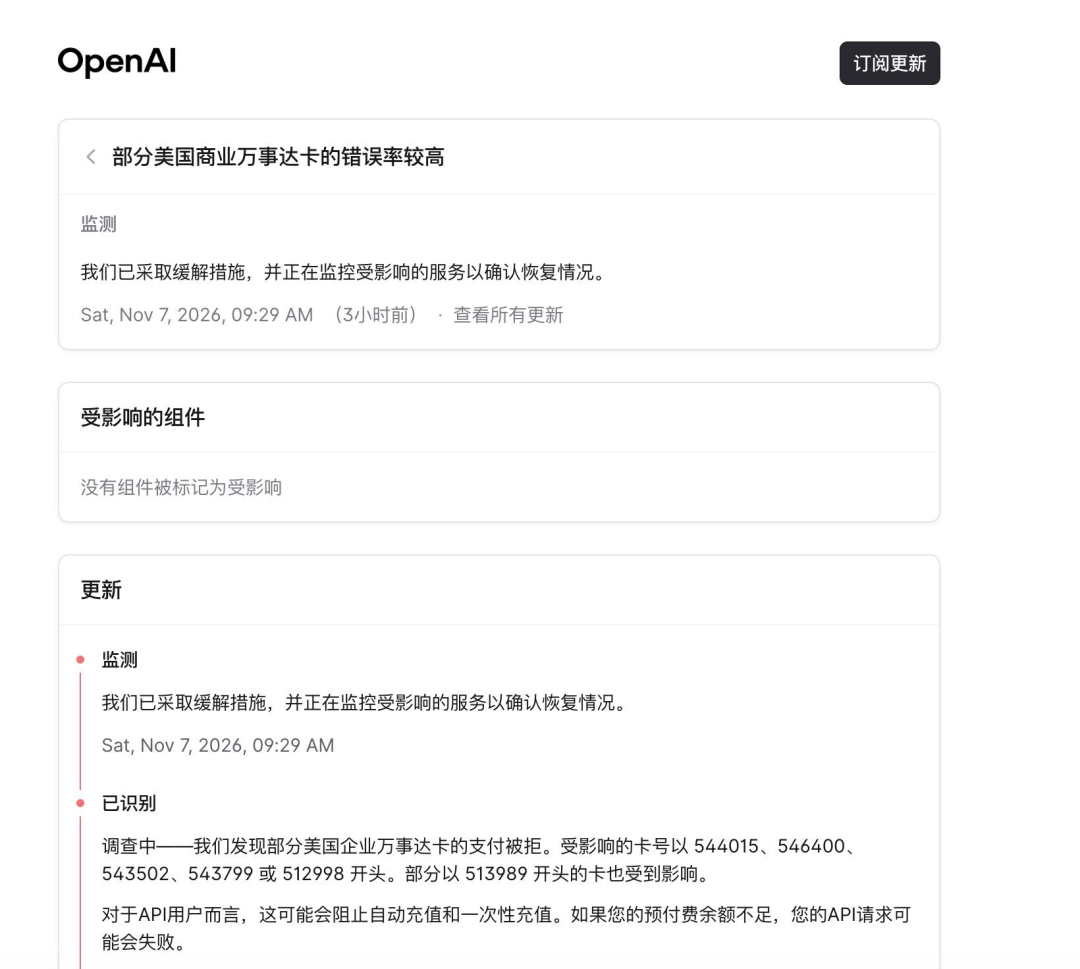
OpenAI characterised that incident as a payment-channel problem and said nothing about account bans. The takeaway for enterprise readers: a failed renewal, a declined checkout and a deactivated subscription are three different incidents with three different remedies, and treating them as one story inflates panic and buries the actual enforcement signal.
Case three: an appeal that worked, and why
The third case ended differently. A user got a student-verified Plus account back, and credited a specific method: an appeal did not have to be sent from the registration mailbox; the official appeal form was enough. The submission had to spell out the deactivated account's details plus the Request ID shown in the notification screen.
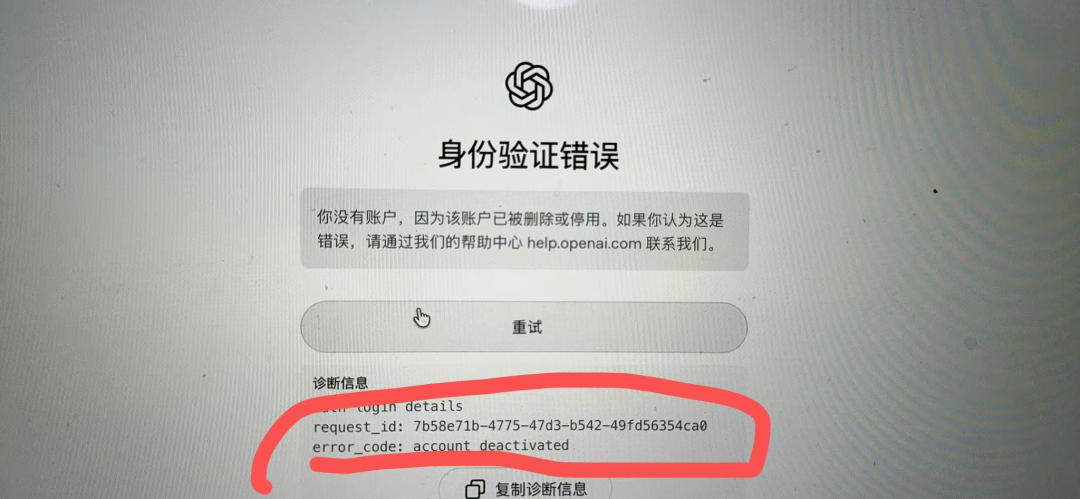
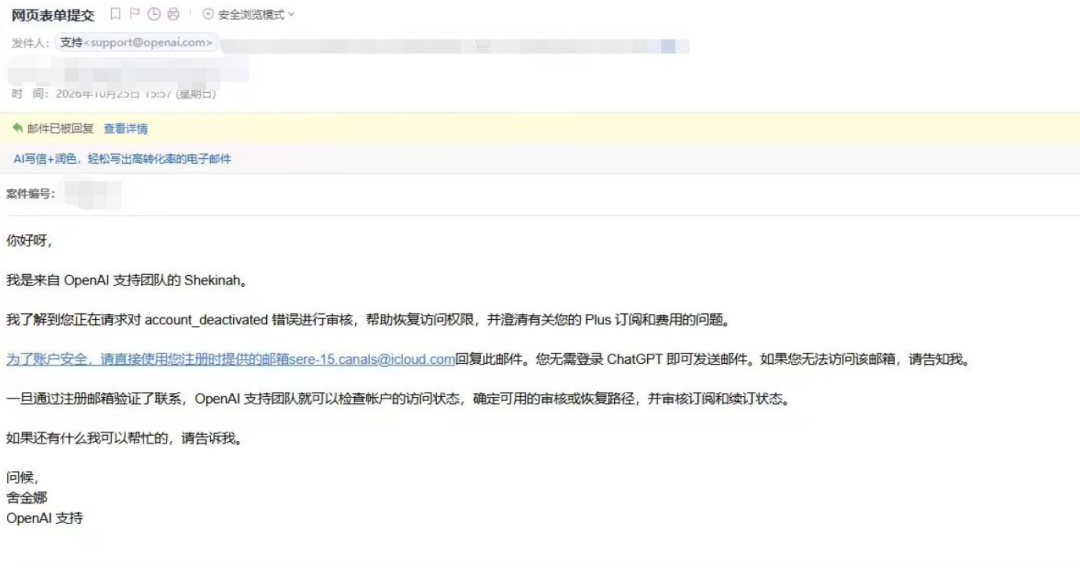
That matches how OpenAI's support staff answer in public: appeals require account-specific information and therefore cannot be handled on community forums, only through the review request in the deactivation notice, the appeal form or the Help Center. Reinstatement is not guaranteed, and it is slower than prevention.
Our own earlier reporting adds a comparative case: a security researcher spent eleven days locked out after local reverse-engineering work on a ChatGPT account, then received an apology email and was reinstated, while Anthropic tightened controls around Claude and Claude Code in the same period — see which AI platform actually allows reverse engineering.
Why the timing was never sudden
OpenAI's moves were telegraphed. Before this, the company enabled reverse-proxy detection and merged ChatGPT and Codex into one token pool. Five days ago it quietly locked the number of paid accounts allowed on a single device. Cheap accounts used to harvest quotas became steadily harder to keep; today the enforcement hammer fell in full.
Step one dates to November 2, when OpenAI started plugging account stacking at the hardware and bank-card layer. A help document published five days ago, Understanding card and device limits in ChatGPT, put the Go, Plus and Pro 100, Pro 200 and Pro 500 tiers under hard quota control.
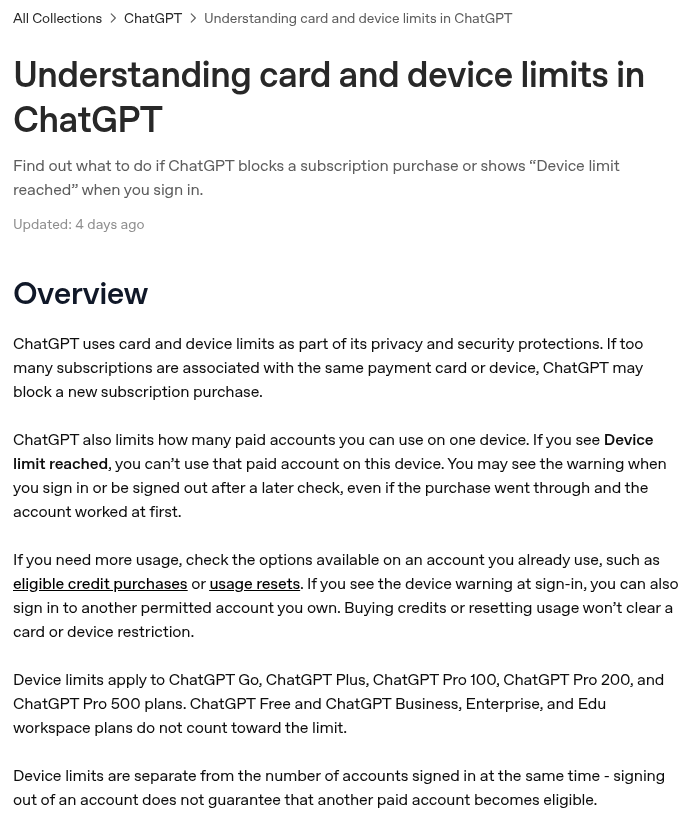
Once one payment card or one device is associated with too many paid subscriptions, checkout returns 'Too many subscriptions associated with this card or device' and the purchase is blocked.
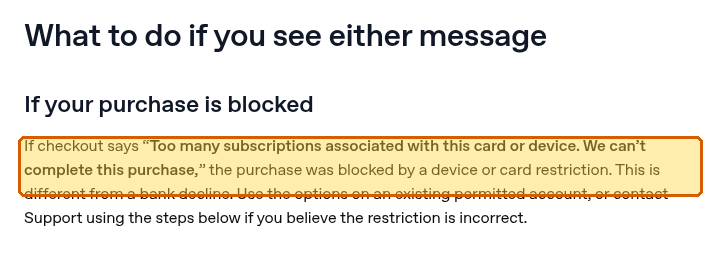
Paid accounts per device are capped as well. When 'Device limit reached' fires, logging out of older accounts — or paying extra for Credits — does not free a slot on that device. The combination removes the ability to open several cheap accounts and stack Codex quota on them.
Step two is today's purge of shared accounts: users trying to consolidate several subscriptions through one API integration were swept in a single pass.
Step three, the one that matters most for procurement teams, closes the compute exit in late November and early December. From November 20, OpenAI's updated usage policy takes effect, requiring third-party API gateways and model-routing intermediaries to hold official authorisation, which shuts unofficial reseller relay stations out at both the legal and interface level — the effective date is published on OpenAI's usage policies page. From December, the Plus, Pro and Business plans' ChatGPT and Codex allowances share one budget measured by token consumption.
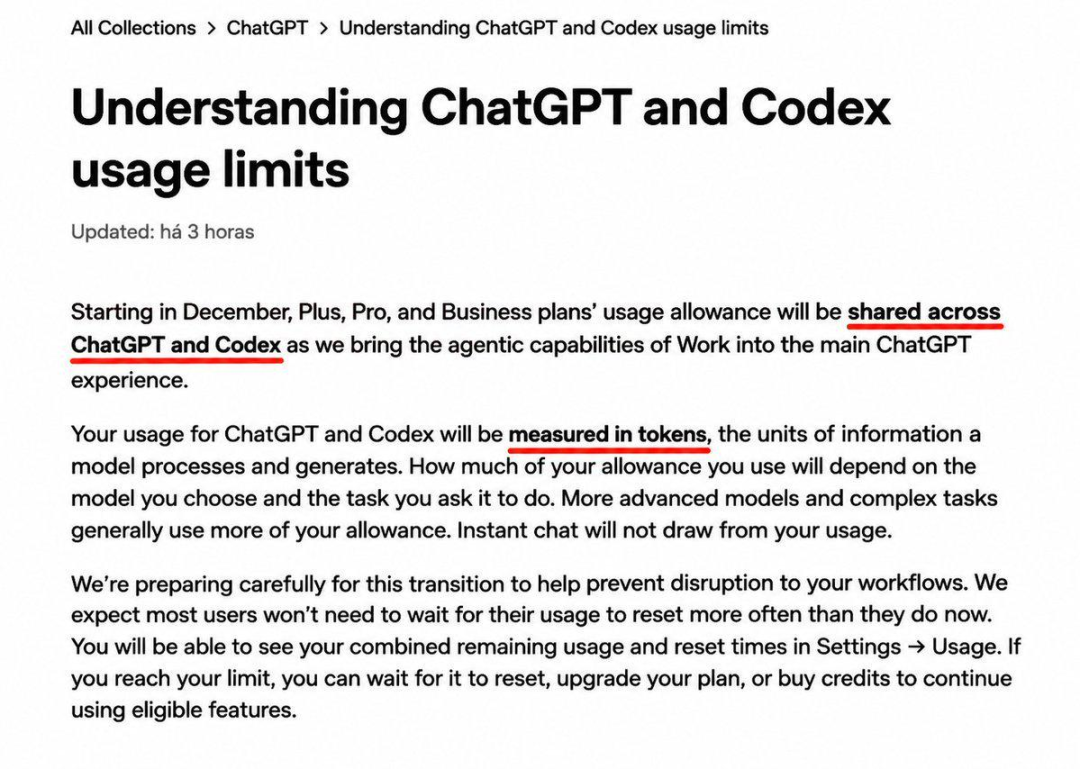
Once the token pool runs dry, switching to a smaller account no longer buys more work: the only routes are upgrading the plan or buying official Credits. Our earlier analysis of how one shared allowance changes the buying math for Plus, Pro and Business sets out the cost side.
What the three cases have in common
Each case is a version of the same asymmetry: detection is automated and instant, remedy is manual and slow, and the asset at risk is user-side data and pre-paid capacity that no notification obligation forces the platform to protect.
| Case | What failed | Result | Reusable mitigation |
|---|---|---|---|
| Five-year Pro | Batch association flag, no notice | History and memory locked; first appeal rejected | Standing export cadence; local mirror of Codex projects |
| Card outage | Payment authorisation, not enforcement | Failed renewals misread as bans | Check status page and first-six-digit BIN prefixes before appealing |
| Student Plus | Unclear appeal path | Restored via official form | Submit account details plus Request ID; no registration mailbox needed |
| Shared accounts | Device and card quota caps | Sweep across tiers today | One paid identity per person; retire relay and resale setups |
Playbook for individuals and teams
For individual users:
- Request a data export now, while login still works, and store the archive locally.
- Keep one subscription per person, per card, per device — stacking is the trait the new rules target.
- Save every deactivation or error screen: the Request ID is the key field for an appeal.
- File through the official appeal form or Help Center rather than forum threads; account-specific review is impossible there.
- Mirror Codex work to a local repository so a suspended login does not freeze an in-progress build.
For teams and businesses:
- Inventory which seats ride on shared cards, shared devices or unauthorised gateways before December.
- Re-check any intermediary routing traffic to OpenAI models against the authorisation requirement effective November 20.
- Re-budget for token-based metering: one shared ChatGPT plus Codex allowance means coding bursts now consume chat quota too.
- Treat pre-paid Credits as exposure, not a buffer, in accounts that could be flagged by association.
FAQ: what readers are asking
Why did paying users get suspended with no warning?
Because the sweep runs as batch backend recognition against linked signals — device, payment card, shared access, relay traffic — rather than case-by-case human review, so compliant accounts sharing an identity cluster with a flagged one can be caught.
Is the wave aimed at API resale and model distillation?
OpenAI has not said so. Market speculation centres on curbing API resale, relay proxies and the reuse of model outputs to train rival systems, plus the new device and card caps aimed at bulk account farming. Treat the motive as analysis, not confirmed fact.
Do I need the registration email to appeal?
No. At least one restored account was won through OpenAI's official appeal form, with the account details and the Request ID supplied in the submission.
What should I expect after December?
Expect quota pressure, not more bans, to be the binding constraint: Plus, Pro and Business draw on one shared, token-metered allowance, and unofficial gateways face the authorisation rule from November 20.
What users can still do is narrow: export cloud sessions on a schedule, keep Codex projects in local repositories, and stop relying on top-ups, shared rides and unofficial relay. Practices familiar from Anthropic's own enforcement cycle are now repeating here. The era of freely stacked AI compute is over.
Sources and further reading
- OpenAI Help Center, Understanding card and device limits in ChatGPT — https://help.openai.com/en/articles/20001559-understanding-card-and-device-limits-in-chatgpt
- OpenAI Help Center, Understanding ChatGPT and Codex usage limits — https://help.openai.com/en/articles/20001625-understanding-chatgpt-and-codex-usage-limits
- OpenAI Help Center, OpenAI account closures and safety suspensions — https://help.openai.com/en/articles/10562188-openai-account-closures-and-safety-suspensions
- OpenAI Help Center, Exporting your ChatGPT history and data — https://help.openai.com/en/articles/7260999-exporting-your-chatgpt-history-and-data
- OpenAI Usage Policies, effective November 20, 2026 — https://openai.com/policies/usage-policies/
- OpenAI Community forum, staff replies on deactivation appeals — https://community.openai.com/t/what-is-the-logic-behind-the-account-suspension/1384877